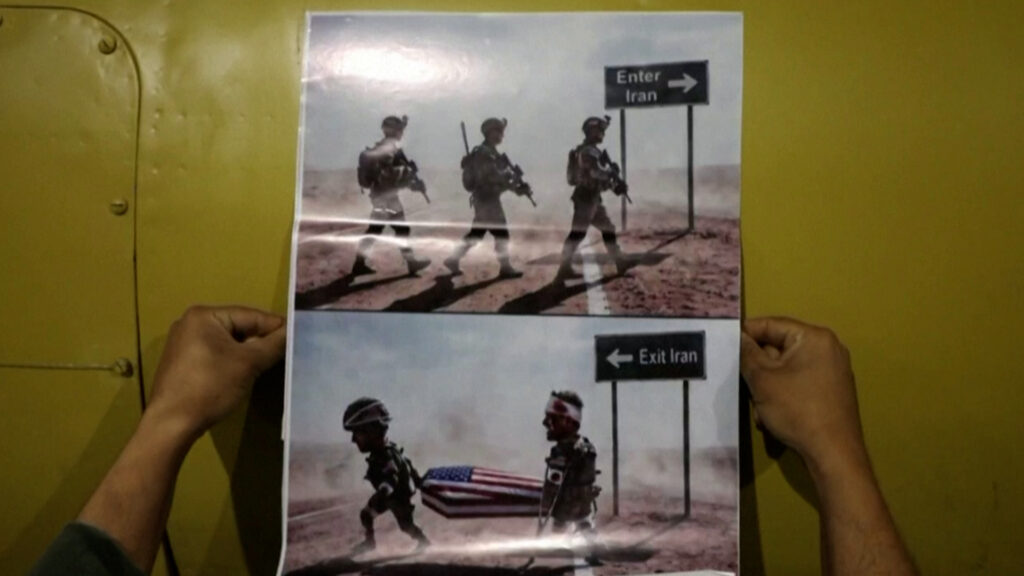
In a recent escalation of the ongoing conflict narratives, Iran’s military has taken an unusual step by releasing a video that shows a message being inscribed on a missile prior to its launch. This move highlights the intensifying war of narratives as different parties use symbolic gestures to convey their messages beyond the battlefield.
The video, circulated widely across media platforms, depicts the careful placement of the message on the missile’s body. The act is seen as a psychological tactic aimed at both domestic and international audiences, emphasizing Iran’s assertiveness and resolve in the face of external pressures.
Historically, messages on missiles have been used to communicate defiance, warnings, or political statements directly tied to the context of the conflict. In Iran’s case, this practice aligns with its broader strategy of leveraging military imagery to reinforce nationalistic sentiments and project power.
Military analysts point out that such acts serve a dual purpose. Firstly, they bolster the morale of the country’s armed forces and citizens by showcasing readiness and determination. Secondly, they send a clear signal to potential adversaries, suggesting that Iran is prepared to escalate its military options if necessary.
The war of narratives goes hand in hand with physical confrontations, as each side seeks to control the storyline and influence perceptions globally. In the complex geopolitical landscape of the Middle East, where tensions remain high, these symbolic actions gain added significance.
Experts note that the imagery of messages on missiles is carefully crafted. It is intended to inspire, intimidate, or challenge, often tailored to resonate with specific audiences. For Iran, a nation under various sanctions and international scrutiny, such acts are also a form of resistance through communication.
International reactions to Iran’s missile message release have been mixed. Some view it as a provocative display that might escalate tensions, while others interpret it as a defensive posture in response to perceived threats. Regardless, it underscores the intricate interplay between military power and information warfare.
The video’s timing is particularly telling. It comes at a moment when diplomatic efforts are stalled, and regional security remains fragile. Iran’s choice to publicly display such messages reflects an effort to assert control over the narrative amid uncertainty.
The phenomenon of placing slogans or messages on military assets is not unique to Iran. Other nations involved in conflicts have historically used similar methods to communicate intentions or rally support. However, the contemporary media environment amplifies these messages, making them part of a wider strategy to influence public opinion worldwide.
As the situation evolves, observers will be watching closely to see whether these symbolic gestures translate into concrete military actions or remain primarily psychological tools in a broader strategic contest.
In conclusion, Iran’s act of inscribing messages on missiles represents more than just a military procedure; it is a calculated element of the ongoing war of narratives. It reflects the complex dimensions of modern conflict, where messaging and perception play critical roles alongside physical force.