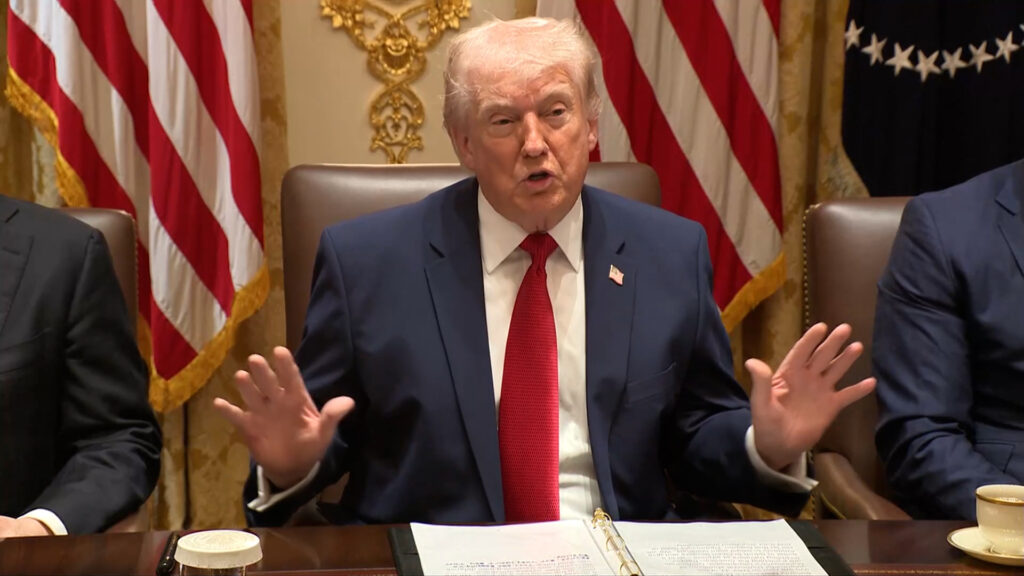
In a recent statement, President Donald Trump remarked on Iran’s position in ongoing international negotiations, describing the country as ‘begging to make a deal.’ He characterized Iran as ‘lousy fighters but great negotiators,’ suggesting that while Iran may not be formidable in combat, they possess significant skill in diplomatic discussions.
Trump’s comments come amid heightened tensions between the United States and Iran, with negotiation efforts aimed at resolving critical issues surrounding Iran’s nuclear program and regional influence. By labeling Iran’s fighters as ‘lousy,’ Trump implies a military weakness; however, by acknowledging their negotiating prowess, he recognizes the strategic patience and tactics Iran employs in diplomatic engagements.
These remarks reflect a complex view of Iran, combining a critique of their military capabilities with a cautious respect for their negotiation skills. This duality highlights the challenges in U.S. policy-making, balancing pressure through potential military strength and the necessity of dialogue to reach international agreements.
Iran’s negotiations with world powers have been fraught with difficulty, balancing demands for nuclear non-proliferation with Iran’s insistence on national sovereignty and economic relief. Trump’s statement adds to the rhetoric surrounding these talks, which remain critical for regional stability and global security.
Analysts suggest that Trump’s characterization may be aimed at bolstering U.S. negotiating leverage by projecting confidence against Iran’s military but acknowledging the complex diplomatic landscape. By painting Iran as eager to strike a deal, Trump signals potential openness for resolution if terms meet U.S. and allied interests.
This approach aligns with Trump’s broader foreign policy strategy, which often emphasizes direct negotiation and deal-making over prolonged conflict. It also reflects the broader U.S. stance of maximum pressure combined with readiness to engage diplomatically.
While critics may view the statement as oversimplified or dismissive of Iran’s military capabilities, supporters argue it underscores the importance of negotiation prowess in modern international relations.
As diplomatic efforts continue, the global community watches closely to see if these negotiations lead to meaningful agreements or further tensions. The interplay between military posturing and negotiation skills remains central to the evolving relationship between the U.S. and Iran.
In summary, President Trump’s statement that Iran comprises ‘lousy fighters but great negotiators’ encapsulates the challenging dynamics in U.S.-Iran relations — highlighting military critiques alongside diplomatic respect, all amid ongoing attempts to secure a deal that addresses longstanding geopolitical concerns.