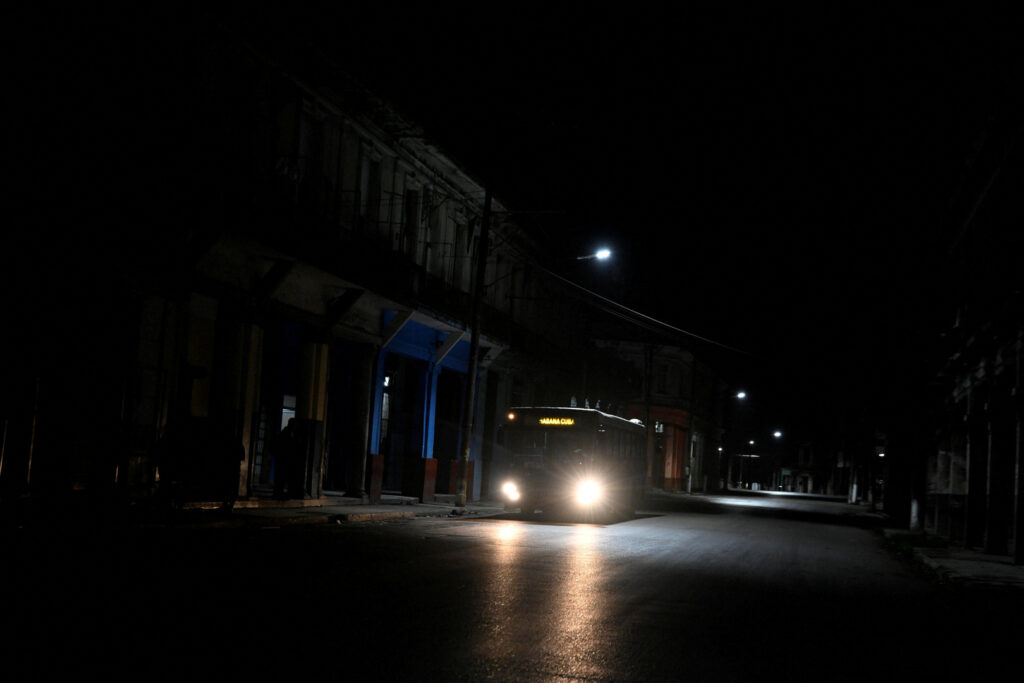
A bus drives along a dark street as Cuba begins efforts to restore power after its grid collapsed for the second time in a week amid a U.S. oil blockade that has dealt a major blow to the island's already ailing energy infrastructure, in Havana, Cuba March 22, 2026. REUTERS/Norlys Perez TPX IMAGES OF THE DAY
Cuba is currently facing a severe energy crisis as its power grid teeters on the brink of collapse, largely due to the impact of the US oil blockade. This embargo has significantly restricted Cuba’s ability to import essential fossil fuels, critical for maintaining its electricity generation and overall energy security.
For decades, Cuba has relied heavily on imported oil to fuel its power plants and sustain daily electricity needs for its population and industries. The US-imposed sanctions and trade restrictions have tightened in recent years, drastically curtailing Cuba’s access to oil supplies in the global market. This has led to repeated fuel shortages, forcing the government to implement rolling blackouts and power cuts across the island.
These power outages have not only disrupted everyday life for millions of Cubans but have also severely affected healthcare, food production, and water systems—all reliant on uninterrupted electricity. The situation is critical as Cuba struggles to maintain the operational stability of its aging power infrastructure without sufficient fuel or the capacity to upgrade energy facilities.
The blockade’s impact extends beyond immediate energy concerns to economic and social dimensions. Energy scarcity undermines industrial productivity, delays transportation, and halts refrigeration of perishable goods, further exacerbating economic hardships for the Cuban population.
Furthermore, attempts by Cuba to diversify its energy sources toward renewable options like solar and wind are constrained by limited access to technology, equipment, and international financing, exacerbated by the ongoing sanctions.
Analysts argue that the US oil blockade’s ramifications on Cuba reflect a broader geopolitical strategy that prioritizes economic pressure over humanitarian considerations, deepening the hardships faced by ordinary Cubans rather than catalyzing political reforms.
In response, Cuba has appealed to international organizations and friendly nations for humanitarian aid and alternative fuel sources, seeking to stabilize the power grid and mitigate the harsh consequences of energy deprivation.
The crisis highlights the critical intersection of energy policy, international relations, and human rights, raising urgent questions about the long-term viability of embargoes as an instrument of foreign policy._
In conclusion, the US oil blockade has significantly weakened Cuba’s power infrastructure, plunging the nation into darkness and hardship. Without an easing of restrictions or substantial international support, Cuba faces a deteriorating humanitarian situation rooted in energy failure, emphasizing the profound ripple effects of geopolitical strategies on vulnerable populations.