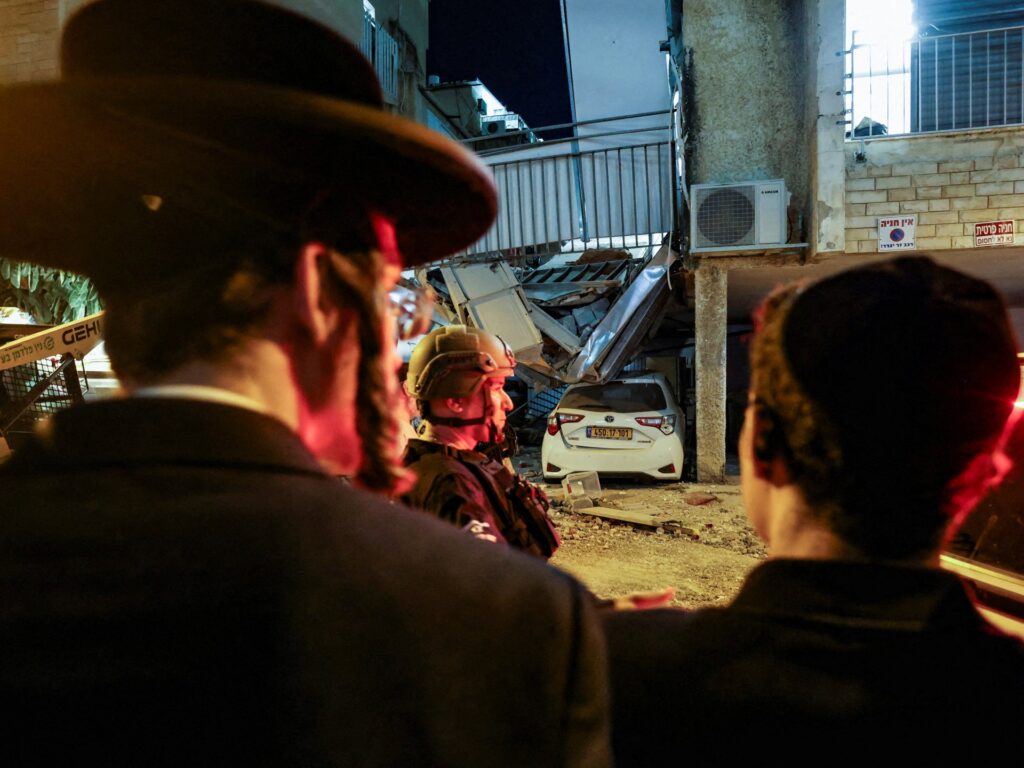
In the tense atmosphere of escalating conflict, Israel’s home front demonstrates remarkable resilience despite the looming threat posed by Iran. As missiles streak across the sky, enveloping the region in a harrowing display of military might, a profound silence prevails on the ground. This silence is not merely the absence of noise but a complex blend of censorship and unity that marks the Israeli response to the ongoing war with Iran.
Israel finds itself entrenched in a prolonged conflict with Iran, a state that has consistently been at odds with its sovereignty and security. The war has subjected Israeli civilians to relentless aerial threats, creating an environment fraught with danger and uncertainty. Yet, amidst these challenges, the population showcases an unwavering resolve to maintain normalcy and support national defense efforts.
Central to this stoicism is a culture of controlled information dissemination. Israeli authorities, wary of the psychological impact of warfare on the public, have implemented stringent censorship measures. These controls aim to prevent the spread of panic and misinformation that could undermine social cohesion and readiness. While this leads to restrictions on public discourse, it also cultivates a collective focus on solidarity and resilience.
The unity among Israelis, spanning diverse communities and political lines, emerges as a critical pillar supporting the home front. This cohesion is reinforced by shared narratives of survival and national identity, which are amplified in times of external threat. Public campaigns and community initiatives emphasize the importance of staying resolute and vigilant, fostering a spirit of collective defense.
However, beneath this apparent unanimity, some dissenting voices exist but remain largely subdued. The interplay of social pressure and legal frameworks discourages open criticism or opposition to government strategies during the conflict. This suppression of dissent is a double-edged sword; while it prevents fragmentation and confusion, it also raises concerns about human rights and democratic freedoms.
Economically, the ongoing conflict has imposed significant strains, yet Israeli society has mobilized to sustain critical infrastructure and services. Efforts to safeguard essential industries and support displaced communities highlight the nation’s commitment to endurance. The resilience extends to the cultural sphere where artistic expressions subtly reflect the tensions and hopes of a nation at war.
Internationally, Israel’s steadfastness amid the Iranian threat has garnered varied responses. Allies express solidarity, while adversaries seek to exploit internal challenges. Diplomatic engagements continue, underscoring the geopolitical complexity of the conflict.
In summary, Israel’s home front remains a portrait of durable strength characterized by a strategic blend of censorship and unity. This unique dynamic, forged in the crucible of conflict with Iran, sustains the nation through missiles overhead and silence below, embodying a collective determination to endure and prevail.