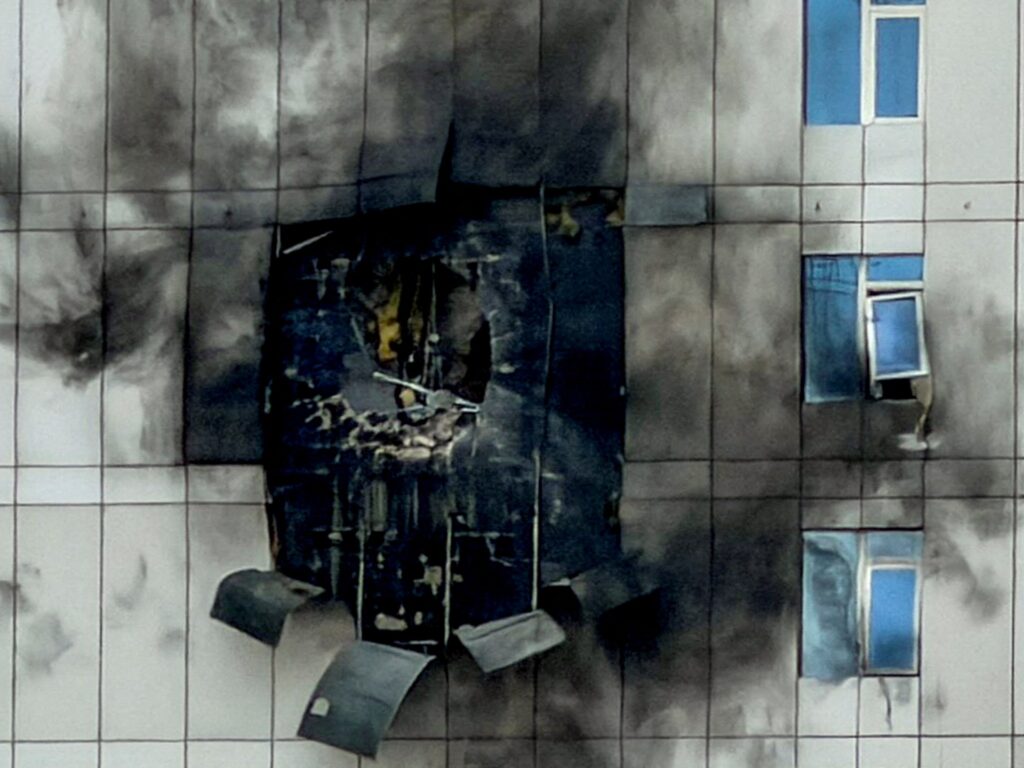
The Gulf Cooperation Council (GCC) member states have formally condemned recent attacks carried out by Iran, describing them as clear violations of sovereign territories and calling for urgent international intervention. During a high-level session at the United Nations, representatives from the GCC voiced their grave concerns about the escalating tensions in the region, attributing the recent hostilities to Iran’s aggressive policies.
The GCC’s address emphasized the need for regional stability and security, warning that the continuation of such attacks could lead to severe repercussions not only for Iran but for the entire Middle East. They urged the UN Security Council to take decisive action to prevent further destabilization.
United Nations High Commissioner for Human Rights, Volker Türk, also weighed in on the matter, expressing deep concern over the human rights implications of the conflict. He highlighted the potential for increased civilian casualties and humanitarian crises resulting from ongoing confrontations. Türk called for all parties to adhere strictly to international law, particularly the principles of sovereignty and non-interference.
The GCC’s statement underscored the impact of recent Iranian actions on maritime security, trade, and economic development in the Gulf region. They noted disruptions in shipping lanes and threats to energy infrastructure as particularly alarming, suggesting these acts undermine broader global economic stability.
In recent months, tensions have surged following a series of incidents involving Iranian-backed militias and naval forces targeting GCC countries’ assets and interests. The GCC attributes these provocations to Iran’s broader strategy to exert influence and challenge the authority of neighboring states.
Experts warn that if unchecked, such aggressive behaviors could escalate into larger regional conflicts. The international community is called upon to support conflict resolution initiatives and diplomatic engagement to de-escalate tensions.
The UN has responded by intensifying diplomatic efforts, including deploying envoys to the region and encouraging dialogue among conflicting parties. Multiple rounds of talks are scheduled with the aim of reducing hostilities and fostering a framework for peace.
Meanwhile, Gulf leaders stress the importance of unity among Gulf states and alliance partners to counter any external threats effectively. They advocate for enhanced cooperation in defense, intelligence sharing, and economic resilience.
Civil society groups in the Gulf have also voiced their concerns regarding the potential worsening of human rights conditions due to prolonged conflict. Efforts to protect vulnerable populations and maintain humanitarian support are being prioritized.
The tension comes at a time when the Middle East is also facing numerous other challenges, including economic recovery post-pandemic, energy market fluctuations, and ongoing geopolitical rivalries.
Despite the gravity of the situation, diplomatic channels remain open, and there is cautious optimism that constructive dialogue may lead to peaceful resolutions.
In conclusion, the GCC’s denunciation of Iranian attacks at the UN marks a significant moment in international efforts to address the Gulf region’s security and human rights challenges. The call for respect of sovereignty and adherence to international law resonates as a foundational appeal amid complex geopolitical dynamics.
The international community’s response in the coming weeks will be pivotal in determining whether the region can avoid further escalation and move towards a stable and peaceful future.