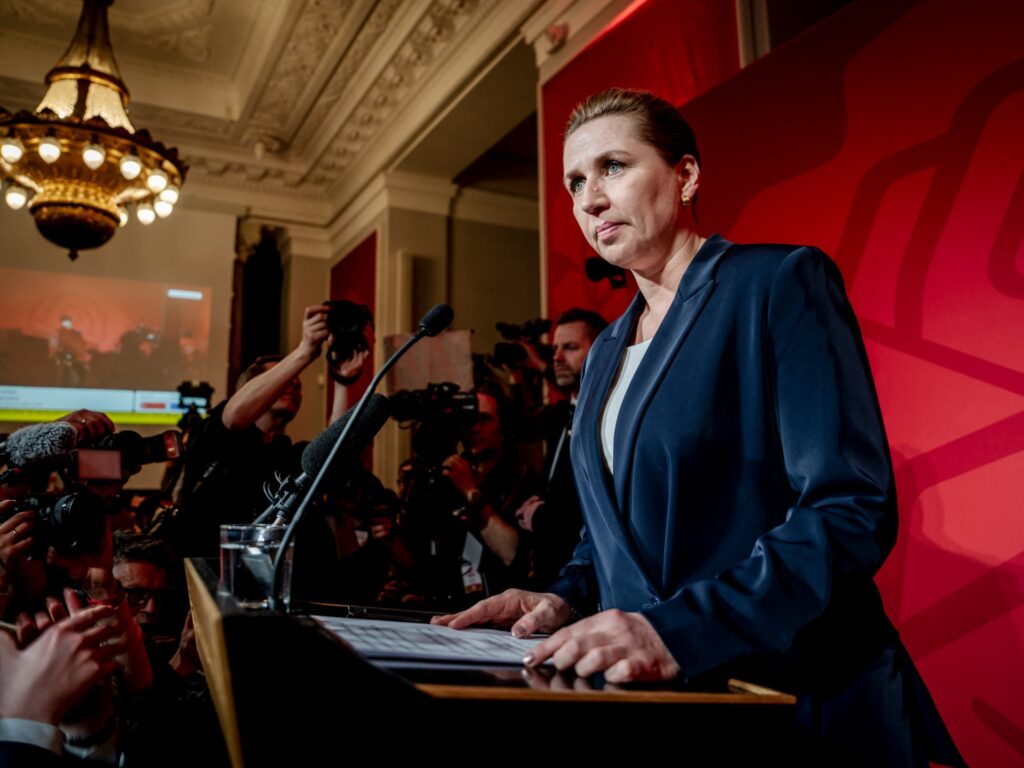
Denmark’s Prime Minister Mette Frederiksen has resigned after her party failed to secure a majority in the recent general election. The election results have left the political landscape uncertain, prompting Frederiksen to step down as she navigates the complex coalition talks necessary to form a government. Despite the setback, there is still a possibility that Frederiksen could return for a third term as prime minister if she successfully negotiates a coalition agreement. The general election revealed significant challenges for her party, as no single faction gained enough support to rule outright. This has led to extensive discussions among various political groups, each seeking to build alliances that can guarantee a stable government moving forward. Frederiksen’s resignation marks a critical moment in Danish politics, reflecting the difficulties of governing in a fragmented parliament. The process of coalition-building will be pivotal in determining Denmark’s political future and the priorities of the next administration. Observers note that Frederiksen’s experience and leadership could be crucial in bridging differences and securing a workable coalition. However, the talks remain tough, with disagreements over policy and leadership roles. The Danish public awaits the outcome with anticipation, as the stability and direction of the country hinge on these negotiations. Frederiksen’s potential return would hinge on her ability to persuade other parties to join her coalition, balancing diverse interests and policy goals. The election has underscored the evolving political dynamics in Denmark, where consensus-building is increasingly essential. As Frederiksen steps down, she has expressed commitment to working towards a solution that respects democratic principles and the electorate’s will. The opposition and smaller parties also play a significant role in the coalition talks, as their support could be decisive. Frederiksen’s leadership during this period will be closely watched both domestically and internationally. The Danish government faces pressing issues that require effective leadership and cooperation across party lines. Frederiksen’s decision to resign demonstrates political accountability and the challenges of securing parliamentary support in a multiparty system. Analysts highlight that Denmark’s political system encourages such negotiations, promoting collaboration despite differing agendas. The coming days will be crucial in determining whether Frederiksen can assemble a majority coalition or if new elections may be called. The situation reflects a broader trend in European politics towards fragmented parliaments and coalition governments. Frederiksen’s future as prime minister remains uncertain but not out of reach, contingent on successful diplomacy and compromise. The political developments in Denmark will serve as an important case study for coalition governance in contemporary democracies. Citizens and political stakeholders alike are watching the negotiations with a focus on policy stability and government efficacy. As Denmark moves forward, the resolution of this political impasse will set the tone for its domestic and international policies. Frederiksen’s experience in previous governments might offer a foundation for renewed leadership. The next steps will involve detailed discussions on policy priorities, ministerial appointments, and legislative agendas. The election outcome has highlighted the complexities of Denmark’s electoral system and the importance of strategic alliances. Frederiksen’s resignation is a significant editorial moment, representing both a pause and an opportunity for Danish democracy. The government’s ability to form a stable coalition will be pivotal in managing upcoming economic, social, and environmental challenges. Frederiksen’s negotiations are expected to prioritize unity and pragmatic solutions to ensure effective governance. The political process in Denmark is a testament to the country’s commitment to democratic principles despite electoral challenges. Frederiksen’s journey ahead exemplifies the demanding nature of democratic leadership in a multi-party parliamentary system. The resolution of this political episode will have lasting implications for Denmark’s governance and political culture. Overall, Frederiksen’s resignation and the ensuing coalition talks underscore the dynamic and often unpredictable nature of parliamentary democracy.