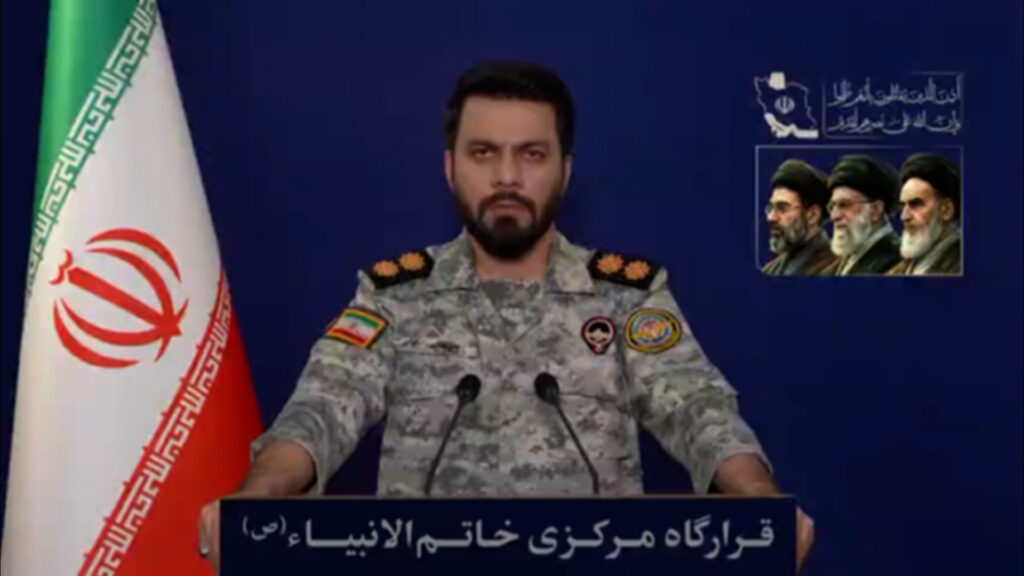
In a recent development that underscores the growing tensions in the Middle East, the Islamic Revolutionary Guard Corps (IRGC) has issued a stern warning to the United States and Israel. The spokesman for the IRGC forcefully rejected assertions made by former US President Donald Trump, who suggested that negotiations with Iran were underway. The statement from the IRGC spokesman emphasized that the recent setbacks faced by the US and Israel should not be misconstrued as an agreement or a diplomatic breakthrough. This declaration reflects the ongoing mistrust and hostility between Iran and these nations amid geopolitical strategies and conflicts in the region.
The IRGC, a powerful military and political faction in Iran, plays a crucial role in shaping the country’s foreign policy, particularly concerning its stance toward the West and Israel. The organization’s spokesman highlighted that any claims implying that Iran has entered into talks with the US were unfounded and misleading. According to the spokesman, these claims aim to create a false narrative that could weaken Iran’s position and resolve.
This rejection comes at a time when the US administration, under President Trump, sought to engage in rhetoric suggesting that dialogue with Iran was possible, potentially as a strategic move amid escalating sanctions and military pressures. However, the IRGC’s response clearly signals that Tehran remains steadfast in its policies and is unwilling to concede to negotiations that do not align with its national interests.
The warning “Do not call your defeat an agreement” serves as a pointed message, insinuating that any perceived US or Israeli setbacks should not be wrongly interpreted as success or progress in diplomatic dealings. It reflects a broader narrative of defiance and resilience championed by Iran’s leadership and military factions.
Experts and analysts note that this rhetoric indicates the persistent volatility in US-Iran relations, with diplomatic overtures being met with skepticism and outright rejection. The IRGC’s stance exemplifies Iran’s broader strategy of resistance against foreign pressure, particularly from the US and its allies in the region.
In addition to dismissing the talks, the IRGC spokesman’s message likely serves as a rallying cry to bolster internal unity within Iran, reinforcing the idea that surrender or wrongful compromise is not an option. The robust language is a clear signal to both domestic and international audiences that Iran intends to maintain its position firmly.
Meanwhile, the geopolitical landscape remains fraught with uncertainty as the US and Israel continue to navigate their strategies regarding Iran. The IRGC’s warning adds another layer of complexity to an already intricate situation, where diplomacy is mingled with military and political maneuvers.
The region watches closely as these interactions unfold, aware that the consequences of misunderstanding or misinterpreting such messages could lead to escalated conflicts and wider instability.
In conclusion, the IRGC’s refusal to acknowledge any negotiations or agreements with the US, coupled with its forceful warning to both the US and Israel, underscores the deep-rooted challenges in achieving any diplomatic resolution. The message is clear: setbacks for the US and Israel in their approach toward Iran are not victories to be celebrated but rather moments of reflection on the enduring resistance Iran embodies.