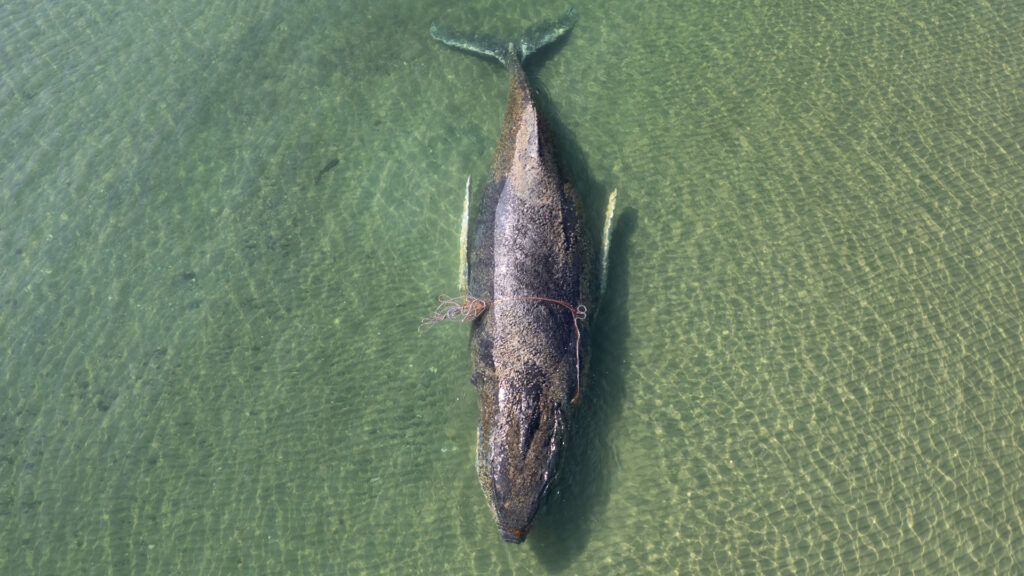
Rescuers in northern Germany are urgently working to save a young humpback whale that has become stranded in shallow waters. The whale was discovered in distress, unable to free itself from the low tide in a coastal area known for its sometimes challenging tidal conditions. Authorities quickly mobilized a team of marine experts, veterinarians, and volunteers to assess the situation and initiate rescue efforts.
The young whale, estimated to be just a few years old, showed signs of exhaustion and difficulty breathing due to its prolonged exposure outside deeper water. Rescuers carefully monitored the whale’s health while trying to keep it hydrated and calm. Specialized equipment, including inflatable pontoons and lifting gear, was brought to the site to help move the whale back to deeper waters where it can swim freely and avoid further danger.
Local authorities and conservation groups emphasize the importance of acting swiftly in such situations, as stranded whales face threats from dehydration, predation, and injury. The area’s tidal changes can rapidly alter water depth, making timing critical for a successful rescue. Volunteers have been helping by ensuring the whale is shaded from direct sunlight and that the surrounding community stays at a safe distance to minimize stress on the animal.
This event has drawn significant public attention, highlighting the ongoing challenges marine animals face due to environmental changes and human impact on coastal ecosystems. Experts believe that increased monitoring and early intervention are essential to improve survival rates for stranded marine mammals.
Efforts continue through the day and night, with hopes that the humpback whale will soon return to the open sea. This rescue mission serves as a reminder of the vital work ongoing to protect marine wildlife and the importance of community involvement in conservation efforts.