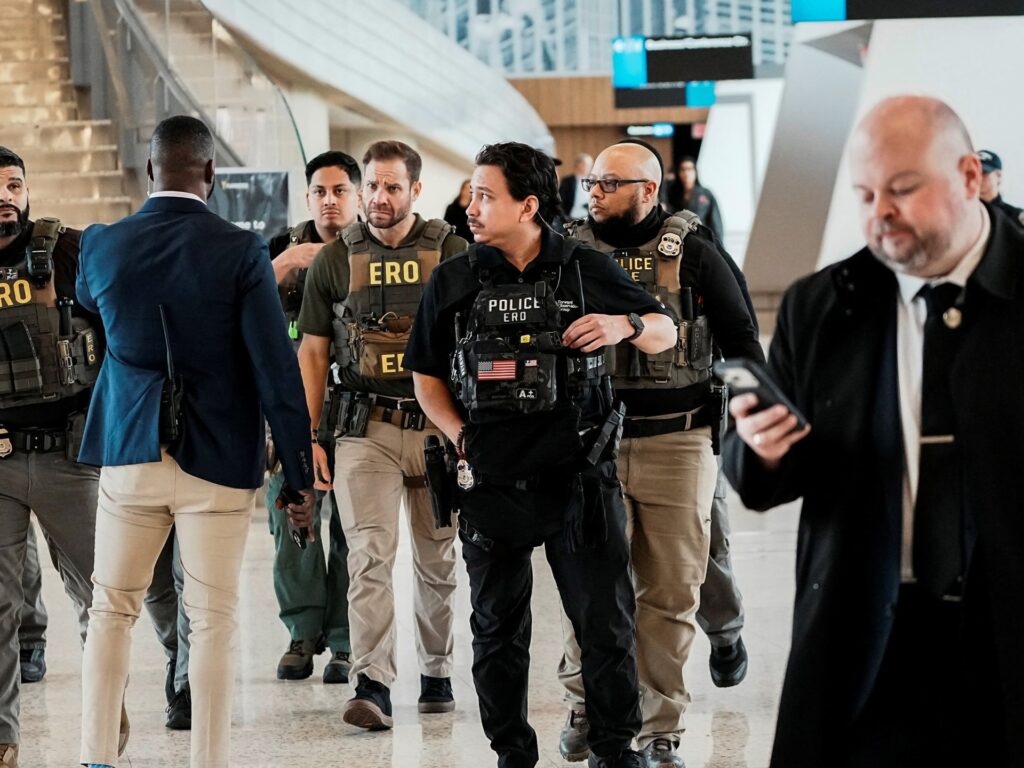
The Trump administration has announced a new security measure involving the deployment of Immigration and Customs Enforcement (ICE) agents at major airports across the United States. This move aims to enhance immigration enforcement and increase security at key points of international entry.
According to official sources, ICE agents are now present at various airports nationwide to carry out their duties more effectively, including apprehending individuals who are in the country illegally and conducting immigration-related inspections. This step follows increased efforts by the administration to tighten immigration controls and enforce federal immigration laws.
The deployment has sparked significant discussion and reactions from various quarters. Supporters argue that placing ICE agents at airports is a necessary action to prevent unauthorized immigration and enhance national security. They believe that airports serve as critical checkpoints where illegal entries can be curtailed before individuals disperse throughout the country.
However, critics of the policy express serious concerns over civil liberties and the potential for increased racial profiling and discrimination. Civil rights groups warn that the increased presence of ICE agents may lead to an atmosphere of fear among immigrant communities, including legal travelers, and might discourage people from traveling or seeking medical care when needed.
Airports impacted by the deployment include several major hubs such as JFK in New York, LAX in Los Angeles, O’Hare in Chicago, and others. At these locations, ICE officers are collaborating with local and federal law enforcement agencies to carry out their operations.
The administration defends the deployment as part of its broader strategy to strengthen immigration enforcement and uphold the rule of law. Officials state that the presence of ICE agents at airports is intended to prevent individuals who are subject to removal orders or who pose security threats from entering or remaining in the country.
This initiative comes against the backdrop of ongoing national debates over immigration policy, border security, and the balance between enforcement and humanitarian concerns. The deployment of ICE agents at airports is a tangible expression of the administration’s resolve to implement stricter immigration measures.
Travelers at affected airports are advised to carry proper documentation and be aware that immigration enforcement activities may occur in these areas. The administration emphasizes that their goal is not to interfere with lawful travelers but to focus on individuals who violate immigration laws.
As the policy unfolds, its impact on travel, airport operations, and immigrant communities will continue to be monitored closely. Both support and opposition will likely shape the ongoing discourse around immigration enforcement and national security in the United States.