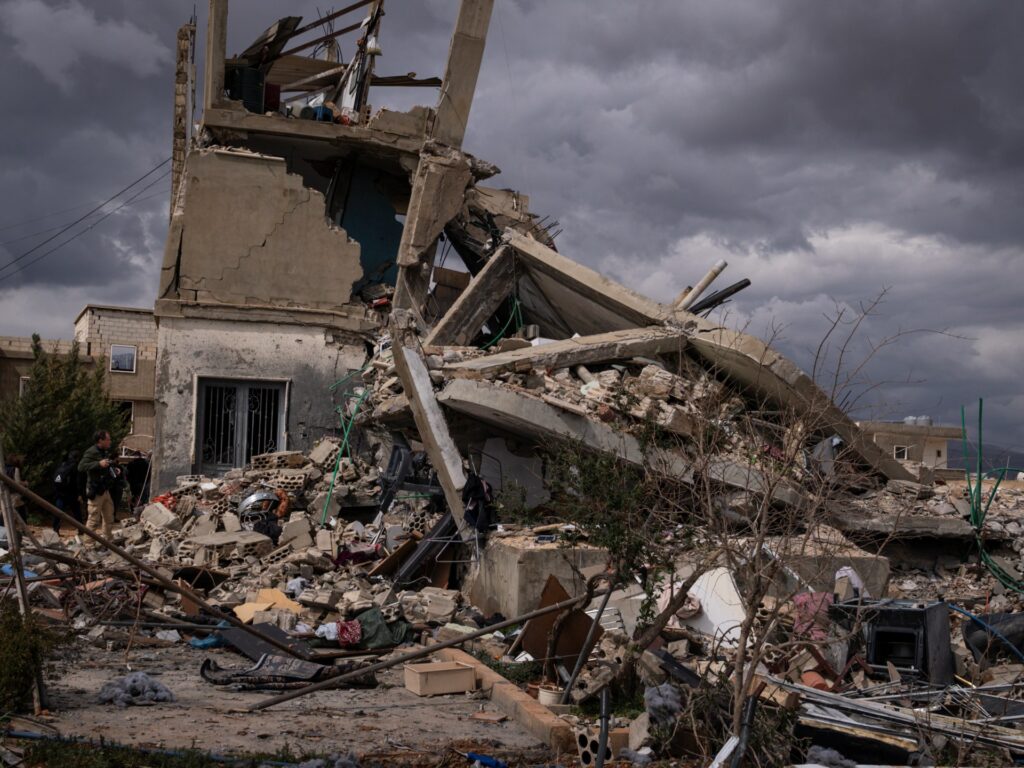
Amid escalating hostilities along the Israel-Lebanon border, Israel’s far-right Finance Minister Bezalel Smotrich has made a controversial call for the annexation of southern Lebanon. Smotrich emphasized that the Litani River should become “the new Israeli border,” reflecting a significant shift in Israel’s territorial ambitions in response to the intensifying attacks.
Over recent weeks, the security situation along Israel’s northern frontier has deteriorated sharply, with numerous attacks attributed to militant groups operating in southern Lebanon. In response, Israel has launched several military operations targeting these groups, which has further heightened tensions in the region.
Bezalel Smotrich, known for his nationalist views, argues that Israel must adopt a more assertive stance to safeguard its national security. “The assault on our northern border cannot be tolerated; it’s time for decisive action,” Smotrich proclaimed during a recent government meeting. By pushing for the annexation of territory up to the Litani River, he believes Israel can establish a stronger defensive line to prevent future incursions.
The Litani River, historically recognized as a significant geographical boundary in southern Lebanon, has been a focal point in previous conflicts. Annexing territory up to this river would entail Israel extending its control over a substantial portion of Lebanese land, a move that could drastically alter the balance of power in the region.
While some Israeli officials have expressed cautious support for hardening the border, the annexation proposal has sparked a wide range of reactions both domestically and internationally. Critics warn that such a step could ignite a broader conflict with Hezbollah and other Lebanese factions, potentially destabilizing the already fragile Middle East peace landscape.
International observers have urged restraint from all parties, emphasizing the need for diplomatic efforts to de-escalate the situation. The United Nations and various global powers have called for negotiated solutions to address security concerns without redrawing national boundaries by force.
The Lebanese government has condemned the aggressive rhetoric and military operations, describing them as violations of Lebanon’s sovereignty. Officials in Beirut stress the importance of preserving national unity and call on the international community to support Lebanon in maintaining its territorial integrity.
Historically, southern Lebanon has been a tense region due to the presence of Hezbollah, a powerful militant and political organization, which Israel regards as a significant security threat. The ongoing conflict has led to recurrent skirmishes, resulting in civilian casualties on both sides.
Smotrich’s announcement furthermore reflects broader political dynamics within Israel, where security concerns increasingly shape government policies amid regional instability. The debate over how to handle threats from Lebanon intertwines with wider discussions about Israel’s security doctrine and territorial ambitions.
Analysts suggest that annexing southern Lebanon could escalate the conflict into a full-scale war, given Hezbollah’s capacity and willingness to retaliate. This possibility raises concerns about the humanitarian impact and the potential for regional spillover, involving neighboring countries.
Despite these risks, the Israeli cabinet is reportedly divided on the annexation issue. Some members advocate for intensified military measures and territorial expansion, while others urge diplomatic engagement and caution to avoid further escalation.
The suggestion to establish the Litani River as the new border is symbolic, highlighting the desire to create a more defensible frontier. However, implementing such a move would require overcoming significant logistical, legal, and diplomatic barriers.
Regional actors, including Syria and Iran, allied with Hezbollah, view Israel’s actions with alarm. They have reiterated support for Lebanese sovereignty and warned of consequences should Israel proceed with territorial annexation.
The current surge in conflict underscores the volatility of the Israel-Lebanon relationship and the fragile balance that has long defined their interactions. Both sides face mounting pressures to assert control and protect their interests, making peaceful resolution increasingly complex.
As the situation evolves, the international community remains vigilant, advocating for de-escalation and the pursuit of long-term peace strategies. The calls for annexation by Smotrich mark a critical moment, one that could reshape the geopolitical map and influence the future stability of the Middle East.