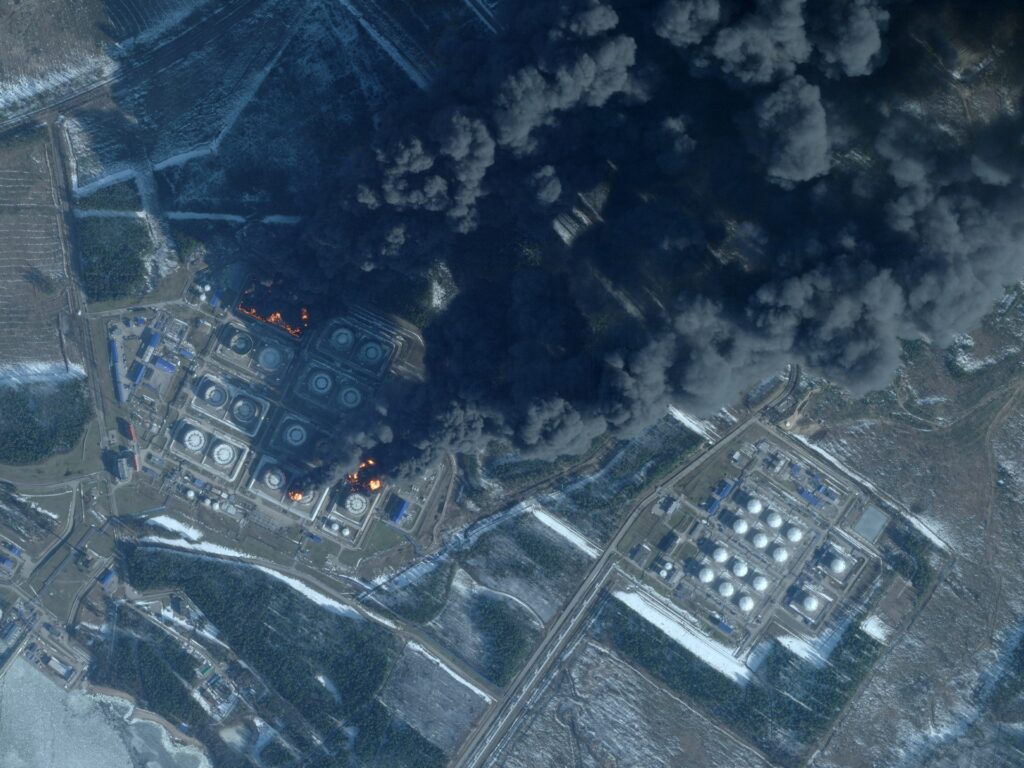
On Monday, Ukraine announced successful strikes against significant Russian oil infrastructure, targeting the Primorsk oil terminal and a refinery in Ufa. The attacks mark a strategic move aimed at disrupting Russia’s oil export capabilities and refinery operations. Primorsk, a critical port for Russian oil exports on the Baltic Sea, plays a pivotal role in Russia’s energy supply chain, with large volumes of crude oil passing through it to global markets. The strike on this port could potentially hamper Russia’s ability to export oil efficiently, impacting both their economy and energy logistics.
The refinery in Ufa is another crucial component of Russia’s oil processing and distribution network. By hitting this facility, Ukraine aims to degrade Russian refining capacity, thereby affecting fuel production and internal oil supply. These operations are part of a broader campaign by Ukraine to target Russia’s energy infrastructure, an effort that reflects the strategic importance of energy resources in the ongoing conflict.
The attacks also underscore Ukraine’s increasing military capabilities and precision targeting. The use of advanced weaponry to strike vital economic assets marks an escalation in the conflict’s economic warfare dimension.
Internationally, these strikes could have broader implications on global energy markets, considering Russia’s significant role as an oil supplier. Disruptions in Russian oil processing and export infrastructure can lead to fluctuations in global oil prices and supply chains.
The geopolitical ramifications of these attacks are significant, adding pressure on Russia while simultaneously highlighting the vulnerabilities within its energy sector. For Ukraine, striking these key facilities sends a strong signal of resistance and determination to undermine Russian operational capacities.
Both Russia and Ukraine have not released detailed statements on the immediate aftermath or the extent of damages. However, experts suggest that such strikes can lead to prolonged disruptions, repairs challenges, and increased operational costs for the Russian oil industry.
The continuous targeting of energy infrastructure in the conflict reflects a modern warfare trend where economic assets are focal points of strategic attacks. It also raises concerns about potential environmental hazards resulting from damage to oil facilities.
Local populations and global stakeholders alike are watching closely, as the situation evolves with potential implications for regional stability and the international energy landscape.
In summary, Ukraine’s strikes on the Primorsk oil terminal and refinery in Ufa represent a significant tactical move to weaken Russian energy export and processing capabilities. These actions highlight the strategic importance of energy infrastructure in the conflict and could influence the broader geopolitical and economic dynamics surrounding the ongoing tensions.