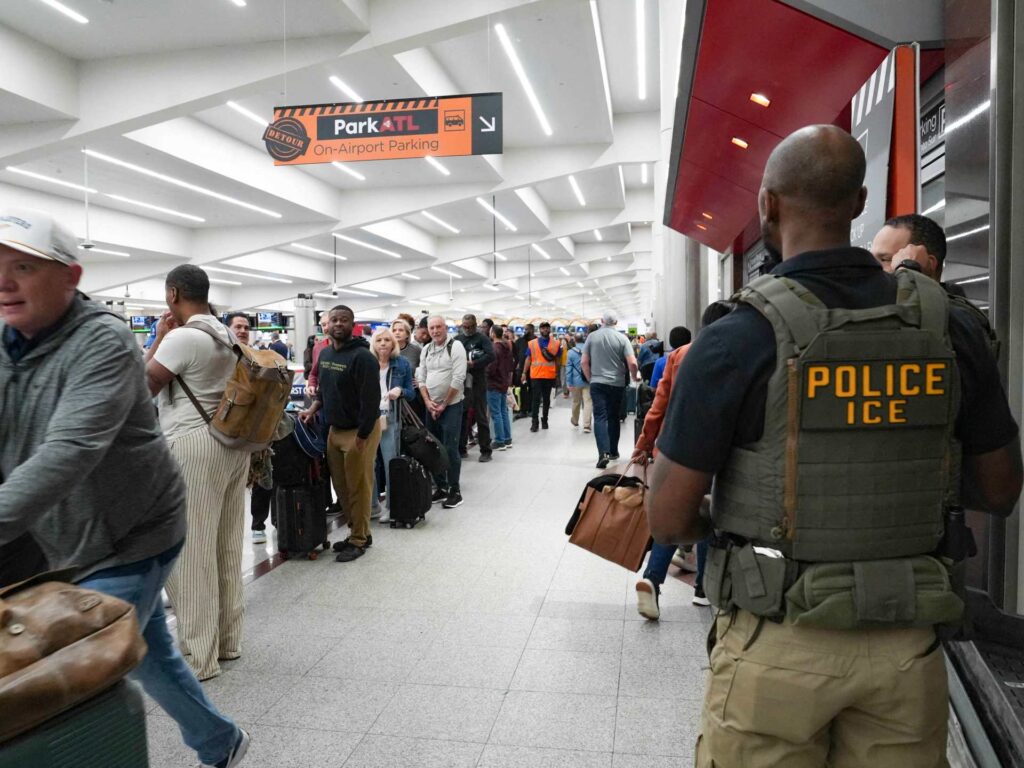
In response to growing staffing shortages and increasing delays at major U.S. airports, the Trump administration has decided to deploy Immigration and Customs Enforcement (ICE) agents to several key airport hubs. This move aims to address operational challenges and expedite passenger processing during a time marked by heightened travel demands and logistical hurdles.
The deployment of ICE agents, primarily known for their role in immigration enforcement, to airport environments traditionally staffed by Transportation Security Administration (TSA) personnel and Customs and Border Protection (CBP) officers has sparked significant controversy.
Democrats and various civil rights organizations have voiced strong criticism, warning that the presence of ICE agents in airports could lead to increased tension, profiling, and fear among travelers, particularly within immigrant communities. They argue that ICE’s notorious reputation for aggressive immigration enforcement could create a hostile environment in transit spaces that should be safe and welcoming for all passengers.
Opponents highlight that the deployment may exacerbate delays rather than alleviate them, as added security measures often result in longer processing times. They also stress that ICE involvement deviates from the primary functions of airport security and customs, potentially causing confusion and inefficiencies.
Supporters of the move, including some Republican leaders and administration officials, contend that ICE agents bring valuable expertise in immigration enforcement that can help counteract staffing gaps at airports, especially with CBP vacancies impacting the efficiency of passport control and customs inspections.
According to the administration, deploying ICE agents is a temporary response to staffing shortages that have been intensified by recent hiring challenges, increased travel volume, and pandemic-era disruptions. Officials assert that this strategy is necessary to maintain national security and border integrity while ensuring smoother passenger flows.
However, the timing of the deployment coincides with heightened political debate over immigration policies and enforcement practices under the Trump administration, adding another layer of public scrutiny and political friction.
Travel industry analysts caution that this measure reflects broader systemic challenges faced by U.S. airport security agencies, including chronic understaffing, budget constraints, and evolving travel patterns. They advocate for more sustainable, long-term solutions rather than quick fixes that could inflame tensions and undermine public trust.
Community groups and immigrant advocates are organizing efforts to monitor the deployment and assist travelers who might face increased scrutiny or discrimination. They call for transparency and accountability measures to ensure ICE agents’ activities do not violate civil rights or exacerbate fear among vulnerable populations.
As the situation develops, federal agencies involved have pledged to provide clear communication and training intended to minimize disruption and ensure the proper roles and limits of ICE agents within airport settings.
The deployment of ICE agents to U.S. airports underscores the complex intersection of immigration enforcement, national security, and public convenience. It highlights the ongoing challenges the government faces in balancing effective border control with protecting individual rights and maintaining efficient travel operations.
With continuing debate and concern from multiple sectors, the success and impact of ICE agents’ presence at airports will remain closely watched by policymakers, advocates, and the traveling public alike.