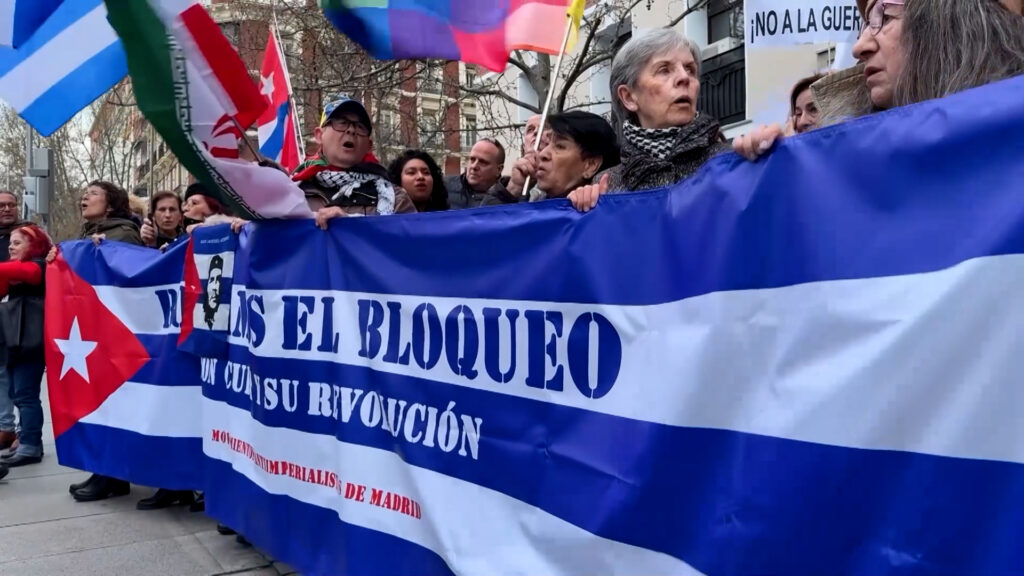
In a demonstration of solidarity with Cuba, protesters gathered outside the United States Embassy in Madrid to voice their opposition to the ongoing US blockade that has significantly impacted the island nation. The protest coincided with Cuba facing a severe electricity blackout, a crisis that protesters attribute largely to the sanctions and trade restrictions imposed by the US government.
The blockade, which has been in place for decades, restricts Cuba’s ability to access necessary goods, technology, and financial resources. Protesters argue that these sanctions have exacerbated Cuba’s economic challenges and directly contributed to the infrastructure failures leading to the blackout.
During the protest, demonstrators held banners demanding an end to the embargo and expressed their support for the Cuban people who are enduring increasing hardships. Many highlighted how the blockade affects daily life in Cuba, including access to medicine, food, and energy supplies.
Activists and human rights organizations have long condemned the US sanctions as a form of collective punishment against the Cuban population. The situation in Cuba, as underscored by the recent electricity blackout, has reignited international debates about the humanitarian consequences of the US embargo.
The Madrid protest attracted a diverse group of participants, from local citizens to members of various political and social organizations. Speakers at the event called for renewed diplomatic dialogue and urged the US government to reconsider its policies toward Cuba.
The electricity blackout itself is symptomatic of broader systemic issues within Cuba, including outdated infrastructure and economic challenges. However, protesters maintained that the US sanctions significantly compound these problems, limiting Cuba’s capacity to maintain and upgrade its power systems.
International observers and some governments have expressed concern over the impact of prolonged US sanctions on Cuba’s civilian population, emphasizing the need for policies that do not penalize ordinary citizens. The Madrid protest is part of a larger global movement advocating for the lifting of economic restrictions against Cuba.
As the US continues to maintain its blockade, activists warn that the humanitarian situation in Cuba could worsen, potentially leading to further crises. They call on the international community to support efforts aimed at alleviating the effects of sanctions and promoting sustainable development in Cuba.
This protest in Madrid serves as a vivid reminder of the ongoing geopolitical tensions influencing Cuba’s economic and social landscape, highlighting the urgent need for policy reconsiderations and greater international cooperation.