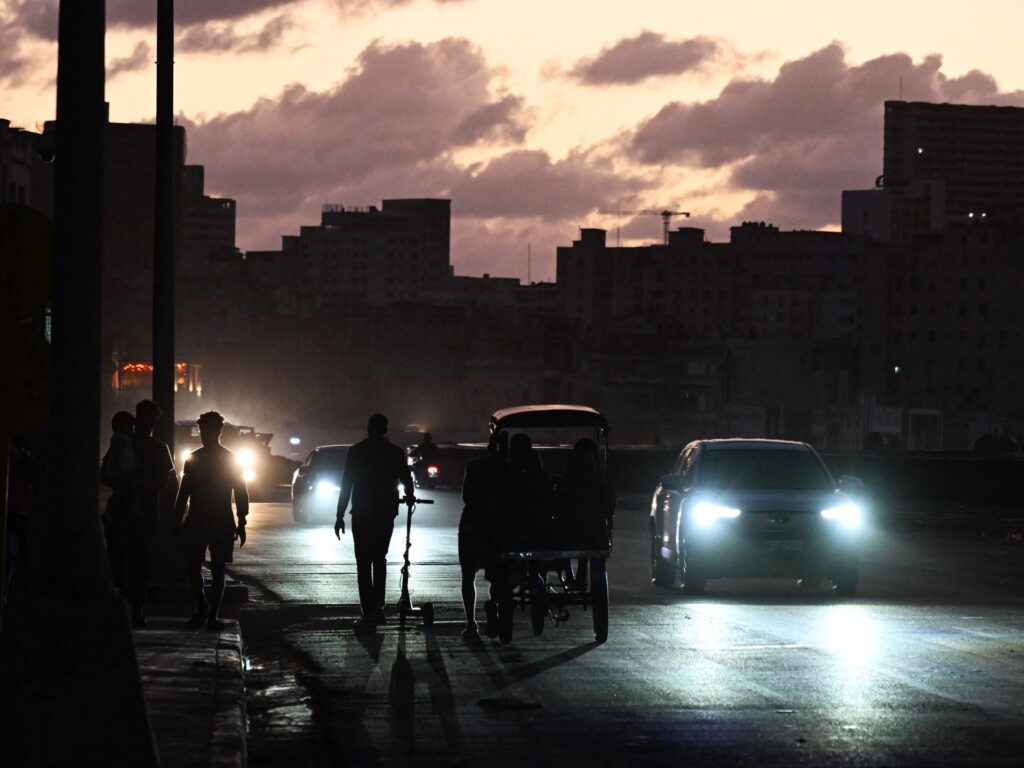
Cuba has been struck by its second nationwide blackout within a week, marking the third collapse of its power grid in March alone. This persistent energy crisis has plunged millions of Cubans into darkness, exacerbating an already dire situation caused by external and internal pressures.
The Cuban government attributes these blackouts primarily to the ongoing U.S.-imposed oil blockade, which severely limits the island’s access to crucial fuel supplies needed to maintain its power infrastructure. With its energy resources critically strained, the nation’s electricity grid has become increasingly vulnerable to failures.
The impact of these widespread power outages is profound, affecting hospitals, schools, businesses, and everyday households. Many residents report extended periods without electricity, disrupting daily life and essential services. The phrase “Can’t live like this” has been echoed by frustrated citizens struggling to cope with the constant uncertainty and hardships brought on by the blackouts.
Officials have acknowledged the challenges and are working to stabilize the grid and improve fuel imports, but solutions remain elusive amid geopolitical tensions and economic constraints. The repeated blackouts not only highlight Cuba’s infrastructural vulnerabilities but also underscore the broader humanitarian issues stemming from political conflicts.
These energy crises pose severe risks to public health and safety, economic productivity, and social stability. Hospitals are forced to rely on backup generators, often with limited fuel, putting patient care at risk. Meanwhile, businesses suffer losses, and the general population grapples with limited access to refrigeration, lighting, and communication.
Cuban authorities continue to appeal for international support and relief while seeking to navigate the complex geopolitical landscape that restricts their oil imports. The situation remains fluid, with the populace anxiously awaiting improvements that can restore some normalcy to their daily lives.
This latest blackout is a stark reminder of the vulnerability of nations dependent on politically sensitive resources like oil and the profound consequences such dependencies can have on a country’s stability and the welfare of its people. As Cuba faces these complex challenges, the urgency for sustainable and diversified energy solutions becomes increasingly clear.
The international community watches closely, recognizing that the resolution of Cuba’s energy crisis could serve as a benchmark for addressing similar challenges in other regions governed by political and economic constraints. Until then, the Cuban people continue to endure the hardships of living in intermittent darkness and uncertainty, hoping for a future where power outages are a thing of the past.