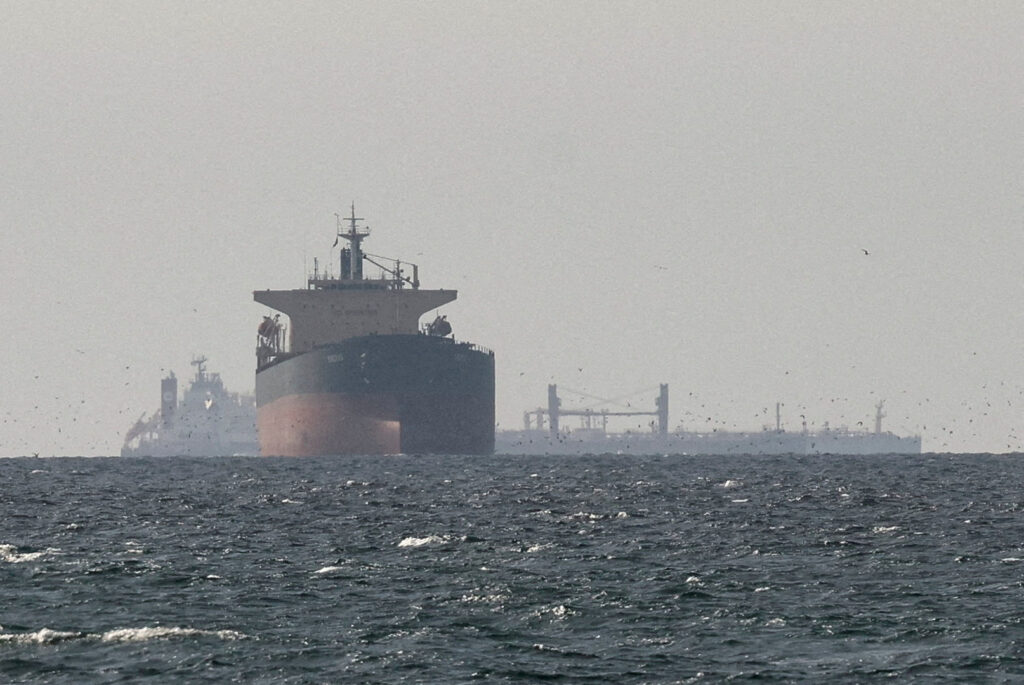
FILE PHOTO: Cargo ships in the Gulf, near the Strait of Hormuz, as seen from northern Ras al-Khaimah, near the border with Oman’s Musandam governance, amid the U.S.-Israeli conflict with Iran, in United Arab Emirates, March 11, 2026. REUTERS/Stringer/File Photo/File Photo
In a significant military development, the United States has announced that it has successfully crippled Iranian threats in the strategically vital Strait of Hormuz. The US military targeted and hit Iranian coastal missile sites and critical infrastructure, effectively diminishing Tehran’s ability to pose a threat in this crucial maritime chokepoint.
The Strait of Hormuz is a narrow waterway that serves as a critical passage for global oil shipments. Ensuring security and freedom of navigation in this region has been a long-standing priority for the US and its allies. Iranian forces have frequently utilized the coastal missile sites along their shores to project power and control over the strait, posing risks to international shipping and energy supplies.
The recent US strikes targeted these missile sites precisely, aiming to reduce Iran’s capacity to launch attacks or intimidate vessels navigating the strait. Officials from the US Department of Defense confirmed that the operations severely degraded the missile launch capabilities and destroyed key command and control infrastructure associated with Iran’s coastal defenses.
This military action is seen as a direct response to escalating tensions in the Gulf region. Iran has, in recent years, increased its assertiveness and military presence along the Strait of Hormuz, including threatening to close the waterway in response to sanctions and geopolitical pressures. The US response signals a commitment to maintaining open sea lanes and deterring any hostile actions that could disrupt global commerce or security.
Analysts suggest that by crippling Iran’s missile sites, the US has neutralized a major threat to the safety of commercial and military vessels transiting the Strait of Hormuz. This action not only protects energy shipments but also reinforces US strategic dominance in the region.
Iran, however, has condemned the strikes as aggressive and provocative, vowing to respond to any continued foreign interference. Iran’s government claims the missile sites were defensive in nature, aimed at safeguarding their sovereign territory from potential aggressors.
International reactions to the US strikes have been mixed. Some allies have expressed support for the US stance on maintaining security in the Strait of Hormuz, while others have called for de-escalation and diplomatic dialogue to resolve underlying issues.
Experts warn that while the immediate threat posed by Iran’s coastal missile sites appears diminished, the underlying geopolitical tensions in the Gulf remain complex and volatile. Continued vigilance and international cooperation will be key to preventing further flare-ups and ensuring the Strait of Hormuz remains open and secure.
In summary, the US military strike against Iranian missile sites along the Strait of Hormuz represents a critical development in regional security dynamics. By crippling Tehran’s ability to threaten this vital waterway, the US has reaffirmed its commitment to protecting global energy routes and maintaining maritime stability amidst ongoing tensions with Iran.