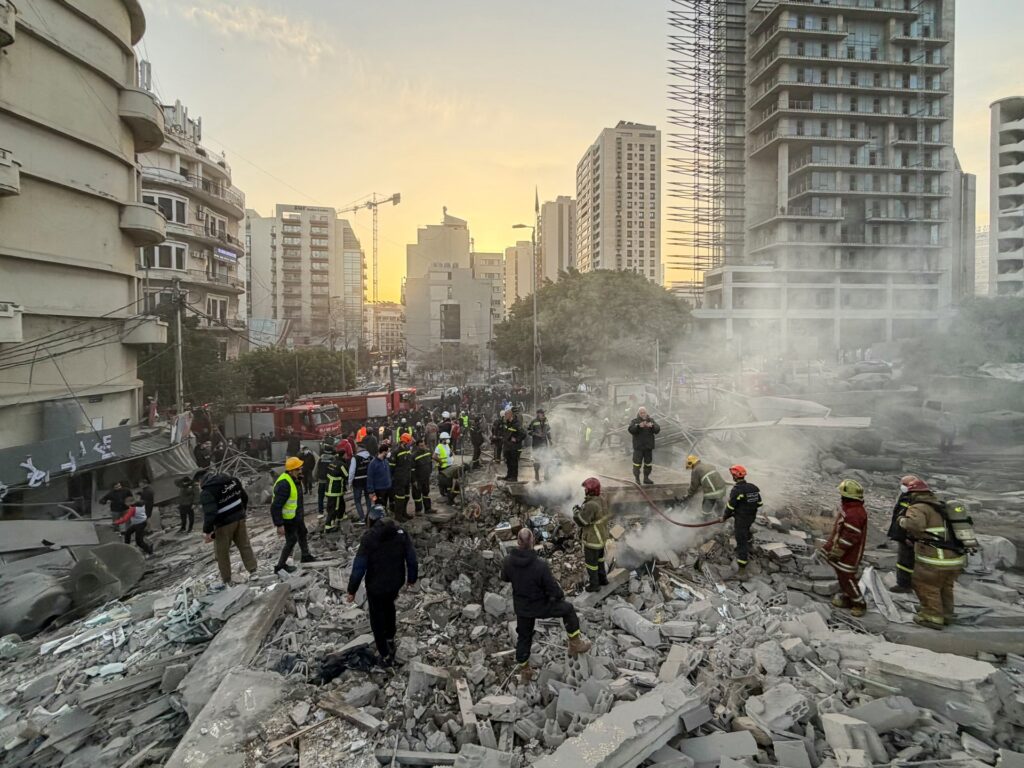
A wave of Israeli air attacks recently struck central Beirut, resulting in the deaths of six individuals, marking a significant escalation in the ongoing conflict in Lebanon. The airstrikes come as Israel intensifies its military operations, expanding a ground offensive in southern Lebanon where Hezbollah fighters are actively resisting Israeli forces.
The Israeli military has conducted concentrated bombardments not only in Beirut but also across southern and eastern regions of Lebanon, targeting Hezbollah strongholds and infrastructure. This increased military activity underscores the growing intensity of hostilities between Israel and Hezbollah, a Shiite militant group backed by Iran and a major player in Lebanese politics.
Reports from the ground indicate considerable damage to civilian infrastructure, escalating concerns about the impact on Lebanon’s fragile stability and the safety of its population. Lebanese health officials have confirmed at least six fatalities in Beirut alone, with additional casualties reported in southern and eastern parts of the country.
The conflict’s recent surge appears linked to broader regional tensions involving Israel and its neighboring countries. The expansion of Israel’s ground offensive into southern Lebanon marks a notable shift from previous military strategies, moving from primarily aerial bombardments to a more aggressive ground confrontation aimed at dismantling Hezbollah’s operational capabilities.
Hezbollah has responded with increased resistance, engaging Israeli forces across multiple fronts, which has transformed parts of southern Lebanon into active war zones. The group’s leadership has vowed to defend Lebanese territory fiercely, warning of more intense confrontations in the days ahead.
International reactions to the recent escalations have varied, with calls for restraint coming from global powers concerned about the broader implications for Middle East stability. The United Nations and various humanitarian organizations have expressed alarm over the humanitarian situation in Lebanon, urging all parties to protect civilians and facilitate the delivery of aid.
The repeated shelling of Beirut, a city that has already endured significant turmoil and reconstruction challenges following previous conflicts and the devastating 2020 port explosion, has raised questions about the long-term prospects for peace and recovery in Lebanon.
As Israel continues its military campaign, analysts note that the conflict could further destabilize the region, potentially drawing in other actors and complicating diplomatic efforts aimed at resolving the crisis.
The situation remains fluid, with ongoing military operations expected to have significant humanitarian and political repercussions. Observers warn that without a de-escalation and renewed dialogue, the risk of a protracted conflict with wide-reaching consequences will increase, affecting not only Lebanon and Israel but the broader Middle Eastern landscape.