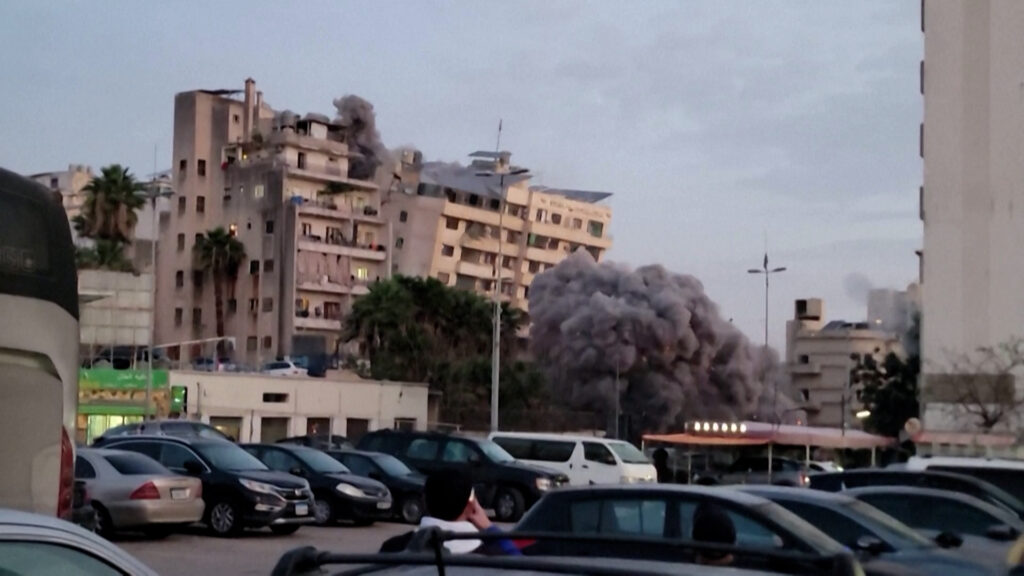
A powerful Israeli air strike has caused the complete collapse of a residential building in Beirut, marking a significant escalation in the ongoing conflict in the region. The strike targeted a densely populated area, resulting in the building being flattened within moments. Video footage circulating online shows the harrowing moment when the structure crumbled to the ground, sparking outrage and grief among the local population.
The air strike reflects rising tensions and hostilities between Israeli forces and groups based in Lebanon. Officials have reported casualties, though exact numbers remain unclear as rescue operations are underway amid the rubble. Emergency responders are working tirelessly to find survivors and provide aid to those affected by the devastation.
Beirut, a city already struggling with economic hardship and previous waves of violence, now faces further destruction and instability following this incident. International communities have responded with concern, calling for restraint and the protection of civilian lives in conflict zones.
The targeted building was part of a residential neighborhood, underscoring the devastating human cost of the clashes. Experts warn that continued air strikes in urban areas increase the probability of civilian casualties and long-term damage to the city’s infrastructure.
This event comes amid a broader backdrop of hostilities in the Middle East, where political, territorial, and sectarian disputes have led to recurrent cycles of violence. The Israeli military has stated that the air strike was aimed at deterring militant activities and safeguarding national security. However, critics argue that such attacks exacerbate tensions and undermine prospects for peace.
Residents of Beirut have expressed shock and sorrow at seeing their homes destroyed and lives disrupted. Humanitarian organizations are mobilizing to provide medical assistance, shelter, and psychological support to those displaced by the bombing.
The international community continues to monitor the situation closely, urging all parties to engage in dialogue and seek peaceful resolutions. Calls for an immediate ceasefire have been made by multiple governments and international agencies, emphasizing the need to avoid further loss of life and destruction.
As Beirut begins to assess the damage and mourn the victims, the incident stands as a stark reminder of the volatility in the region and the urgent need for sustained efforts toward peace and stability. The impact of this air strike will likely have long-lasting repercussions on the lives of Beirut’s residents and the geopolitical landscape alike.