In a significant development amid ongoing geopolitical tensions, Ukraine has dispatched a contingent of 201 military experts to the Gulf region to address the growing threat posed by Iranian drones. This move comes as Ukrainian President Volodymyr Zelenskyy openly criticized the alliance between Moscow and Tehran, describing the two as “brothers in hatred.”
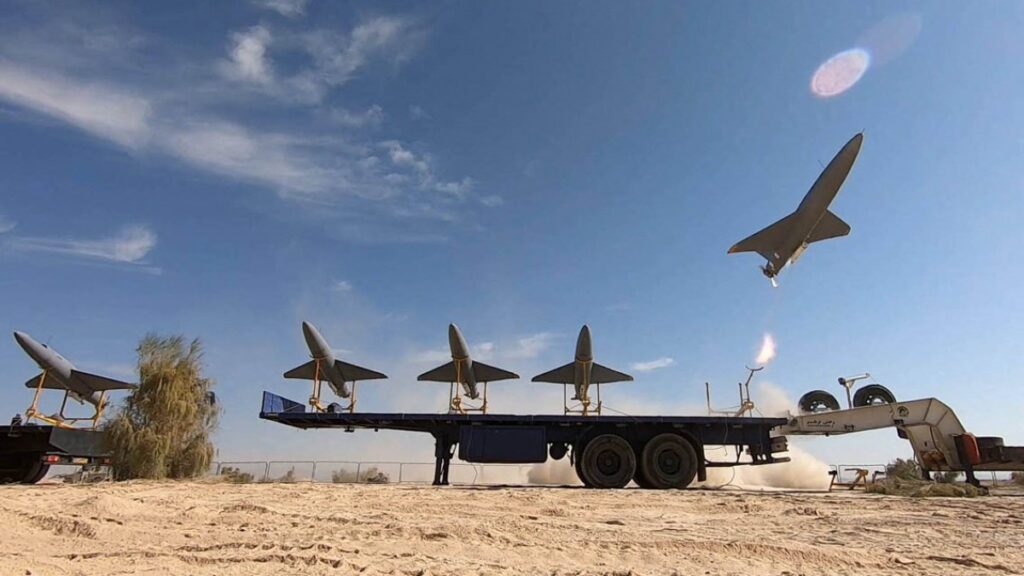
President Zelenskyy highlighted that Iranian drones, reportedly used in the conflict zones, contain Russian components, thereby linking the military capabilities of Iran to Russian technology. This assertion underscores concerns about the extent of cooperation between Russia and Iran, particularly in military technology and strategic operations.
The deployment of Ukrainian experts aims to counter and mitigate the impact of Iranian drone activities, which have been increasingly observed in various conflict theaters including the Gulf. These unmanned aerial vehicles (UAVs) have been used for surveillance, reconnaissance, and potentially offensive operations, raising alarms for regional and international security.
Ukraine’s military specialists are expected to provide expertise in electronic warfare, drone detection, and counter-drone tactics. Their mission involves enhancing the defensive mechanisms of Gulf states and allied forces against drone incursions that could jeopardize maritime and air security in one of the world’s most critical oil transport corridors.
The strategic partnership between Russia and Iran has long been a subject of global scrutiny, especially as both countries face various sanctions and are marginalized in Western geopolitical frameworks. The revelation that Iranian drones bear Russian components further intensifies the scrutiny on military collaborations that circumvent international norms and restrictions.
The Gulf region remains a hotspot for geopolitical rivalry, involving major world powers, and the introduction of advanced drone technologies adds a new dimension to the security challenges. Ukraine’s involvement signals its commitment to countering threats emanating not only from Russia but also its allied nations, thereby broadening its operational focus amid its own ongoing conflict with Russia.
International reactions to Ukraine’s move have been mixed, with some nations viewing it as a proactive step to stabilize the Gulf region, while others see it as a further escalation of tensions. Nonetheless, Ukraine’s deployment is a clear indication of its growing role in global security matters and its resolve to confront the intertwined threats from Moscow and Tehran.
In conclusion, the dispatch of 201 Ukrainian military experts to counter Iranian drones in the Gulf represents a strategic maneuver that highlights complex international alliances and emerging warfare technologies. It underscores the evolving nature of global conflicts where drone warfare plays a pivotal role and where alliances impact not just regional but international security dynamics.