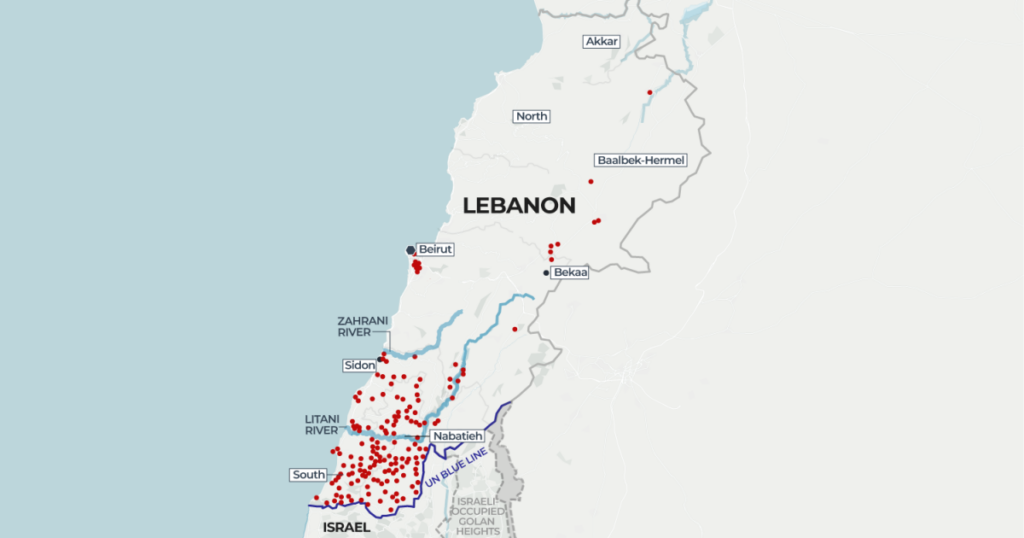
In the ongoing conflict between Israel and Lebanon, a significant humanitarian crisis is unfolding, marked by intense military operations and a massive displacement of civilians. Recently, Israel has launched new ground operations in Lebanon, exacerbating the situation and forcing nearly one in five Lebanese citizens to flee their homes. This translates to approximately one million people displaced within the country.
The Israeli attacks have predominantly targeted areas considered strongholds of militant groups, but the impact extends far beyond military installations. Civilians in these regions are facing the brunt of the violence, with many caught in the crossfire or affected by the destruction of infrastructure. Roads, homes, and essential services have been damaged or destroyed, making it difficult for residents to remain safely in their communities.
The displacement has created a ripple effect throughout Lebanon. Overcrowded shelters, shortages of food, water, and medical supplies, and interrupted access to education and healthcare are some of the urgent challenges facing displaced families. The government’s capacity to respond is strained, and international aid is being called upon to address the immediate needs.
Mapping the attacks reveals a strategic pattern aimed at weakening adversary positions but at a high human cost. The affected areas have seen repeated airstrikes and artillery fire, often leading to civilian casualties and widespread destruction. As a result, the demographic composition of certain regions is shifting dramatically as populations flee to safer locations.
Humanitarian organizations are scrambling to provide assistance amid ongoing hostilities. Efforts include setting up temporary shelters, distributing relief items, and coordinating medical care for the wounded. However, continuing violence complicates these efforts, with aid convoys sometimes unable to reach the most affected zones.
The displacement crisis underscores the broader implications of the conflict, highlighting the urgent need for diplomatic intervention and a resolution to prevent further suffering. The international community is watching closely, with many urging all parties to prioritize the protection of civilians and to seek peaceful solutions.
In summary, the Israeli ground operations in Lebanon have triggered a significant displacement crisis, uprooting one million people and challenging the country’s humanitarian response capabilities. With the situation still evolving, the focus remains on mitigating human suffering and working toward stability.