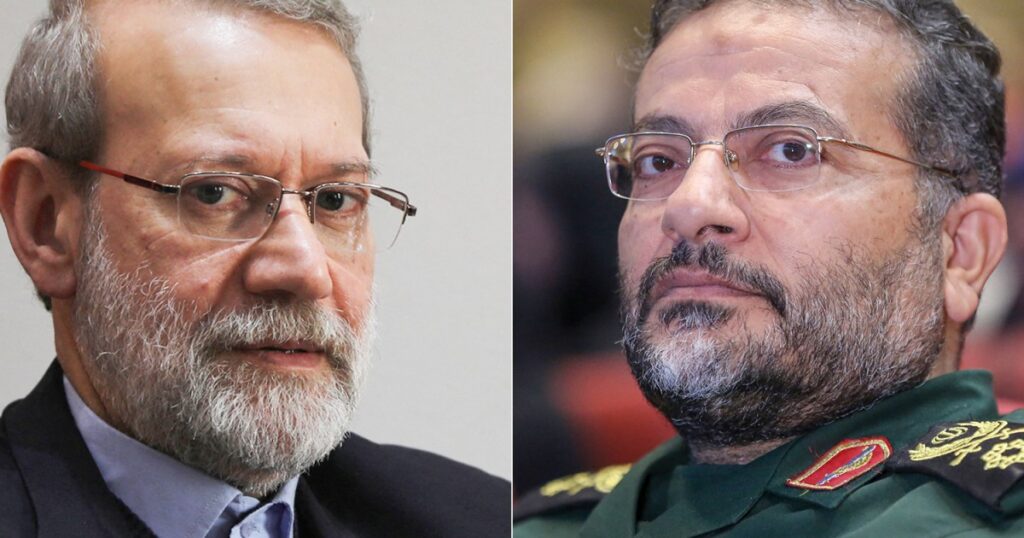
In a significant and highly sensitive development, Israel’s Defence Minister Katz has announced that Iran’s security chief, identified as Larijani, along with a top Basij commander, have been assassinated. This announcement marks a sharp escalation in the longstanding tensions and hostilities between Israel and Iran, two countries with a history of deep-seated conflicts and strategic rivalries.
The Israeli Defence Ministry, through Minister Katz, claimed responsibility for the operation, describing the event as a targeted and precise strike that successfully eliminated two key figures in Iran’s security and paramilitary apparatus. Larijani, considered a critical player in Iran’s intelligence and security landscape, reportedly held substantial influence over Iran’s internal security strategies and external covert operations. The Basij commander killed alongside Larijani was a pivotal figure in the Basij force, a paramilitary volunteer militia under the control of Iran’s Revolutionary Guard Corps, known for its role in enforcing the regime’s control and extending its influence domestically and abroad.
The timing and location details of the assassination have not been fully disclosed by Israeli officials, but the announcement underscores Israel’s ongoing commitment to counter what it perceives as existential threats originating from Iran. This operation is indicative of Israel’s intelligence and military agency capabilities, showcasing their reach and precision.
Iranian authorities have not yet confirmed the deaths, and official responses from Tehran are being closely monitored by global analysts. Typically, such high-profile losses within Iranian ranks provoke strong verbal condemnations and sometimes retaliatory actions, which could escalate regional tensions further.
Internationally, this development has sparked concern over the potential for increased instability in the Middle East. The targeted killing of such prominent figures could provoke reprisals, jeopardizing efforts to manage conflict dynamics and diplomatic engagements in the region.
Security experts point out that Larijani played a strategic role in orchestrating Iran’s security policies and was instrumental in maintaining the regime’s grip on power through intelligence and security operations. The Basij commander, equally significant, embodied the ideological and operational strength of Iran’s paramilitary forces.
Israel’s announcement is seen both as a demonstration of its resolve against Iranian influence and a message to other adversaries about its operational capabilities. This event will likely trigger shifts in the regional security configuration, impacting neighboring countries, alliances, and the broader international community invested in Middle Eastern stability.
Further updates are awaited as intelligence agencies around the world seek to verify the claims and anticipate the next moves in what remains a volatile and unpredictable geopolitical landscape. The international community is urged to monitor the situation closely as developments may have far-reaching consequences beyond the immediate regional theatre.