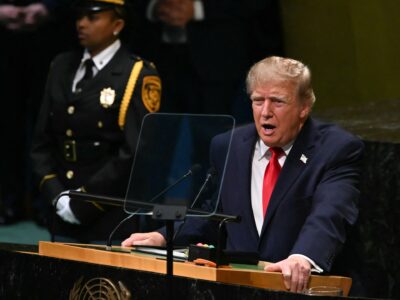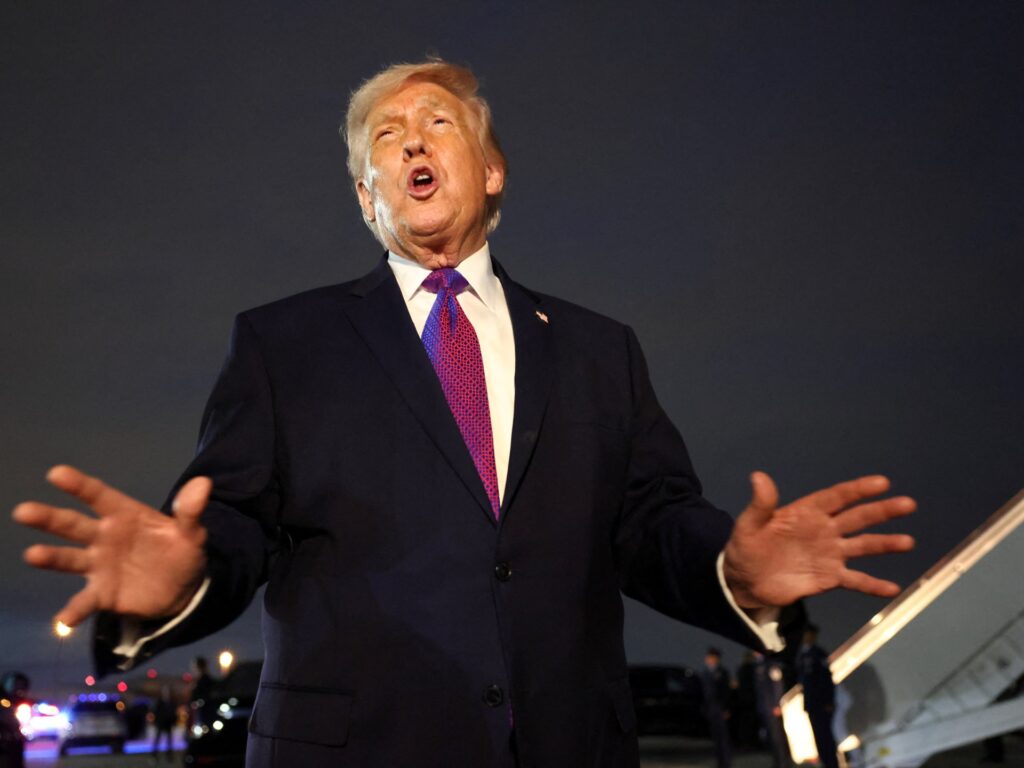
In a recent statement that has drawn global attention, former US President Donald Trump indicated that the United States might consider additional military strikes on Iran’s Kharg Island, a strategic oil hub in the Persian Gulf. Trump remarked that these potential attacks could happen “just for fun,” a comment that underscores the escalating rhetoric between the two nations.
Kharg Island is a critical point for Iranian oil exports, serving as a major loading terminal for crude oil in the region. Any military action targeting this facility could have significant implications for global oil markets and international relations.
Trump’s comments come amid ongoing tensions in the Strait of Hormuz, a narrow passage that is vital for the transit of a significant portion of the world’s oil supply. The US has been urging its allies to take a more active role in ensuring the security and openness of this maritime chokepoint, emphasizing the importance of free navigation for global energy supplies.
The former president’s casual tone about potential military action marks a stark contrast to the typically cautious language used by government officials when discussing conflicts that could escalate into warfare. This has raised concerns among international observers about the risk of destabilization in the already volatile Middle East region.
Critics argue that such statements could further provoke Iran and complicate diplomatic efforts aimed at reducing hostilities. They warn that increased military activities in the area could lead to unintended consequences, including disruptions to oil shipments and heightened conflict between regional and global powers.
Supporters of Trump suggest that a strong stance is necessary to counter Iranian influence and to protect critical shipping lanes. They believe that demonstrating military capability and willingness to act serves as a deterrent against hostile actions by Iran and other adversaries.
In response to the evolving situation, many countries are closely monitoring developments and calibrating their foreign policies accordingly. There is widespread acknowledgement of the strategic importance of the Strait of Hormuz and the need for collaborative security measures to maintain stability in the region.
The international community remains hopeful for diplomatic solutions to ease tensions and prevent conflict escalation. However, statements like those from Trump highlight the challenges that lie ahead in managing complex geopolitical dynamics and ensuring the safety of vital energy corridors.
As the situation continues to develop, all eyes will remain on the US and Iran, with the world watching to see how diplomacy and deterrence efforts unfold in one of the most geopolitically sensitive areas on the planet.