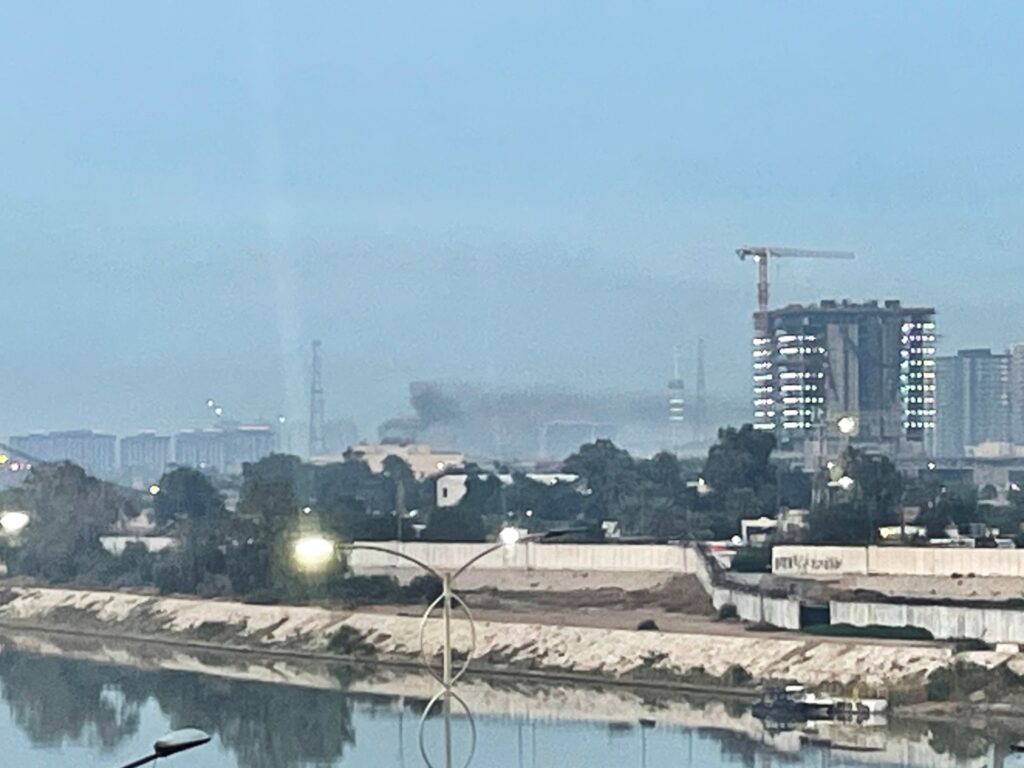
The US Embassy in Baghdad, Iraq, was recently targeted by a missile attack that caused significant damage to its premises, including the helipad. Eyewitnesses reported seeing smoke rising from the building shortly after the missile struck. The attack has raised concerns about security and stability in the region, as the embassy serves as a critical hub for diplomatic and military operations.
According to multiple sources, the missile impacted the embassy compound causing visible destruction. While no immediate casualties have been reported, the damage to the helipad complicates logistical and emergency operations. Security forces have since been deployed to secure the area and assess the full extent of the damage.
This incident marks another escalation in the ongoing tensions in Iraq, particularly affecting foreign diplomatic missions. The US Embassy holds a significant strategic position in Baghdad and has been a target in the past due to geopolitical conflicts.
Details about the perpetrators or the type of missile used are yet to be confirmed by official sources. Investigations are underway to determine the motive behind the attack and to bolster the embassy’s security measures against future threats.
The state of the embassy, the extent of structural damage, and potential impacts on diplomatic activities are currently being evaluated. Efforts to repair the helipad and other damaged infrastructure have been prioritized to restore normal operations.
Local authorities have condemned the attack, emphasizing the importance of maintaining peace and protecting diplomatic institutions. This event underscores the volatile security situation in Baghdad and the broader challenges faced by international missions operating in conflict zones.
The US government is expected to respond to this attack diplomatically while reviewing security protocols to safeguard their diplomatic staff and facilities in Iraq. Updates will be provided as more information becomes available about the incident and responses.
This missile strike highlights the ongoing risks faced by diplomatic outposts in unstable regions and the necessity for reinforced security and international cooperation to prevent similar occurrences in the future.