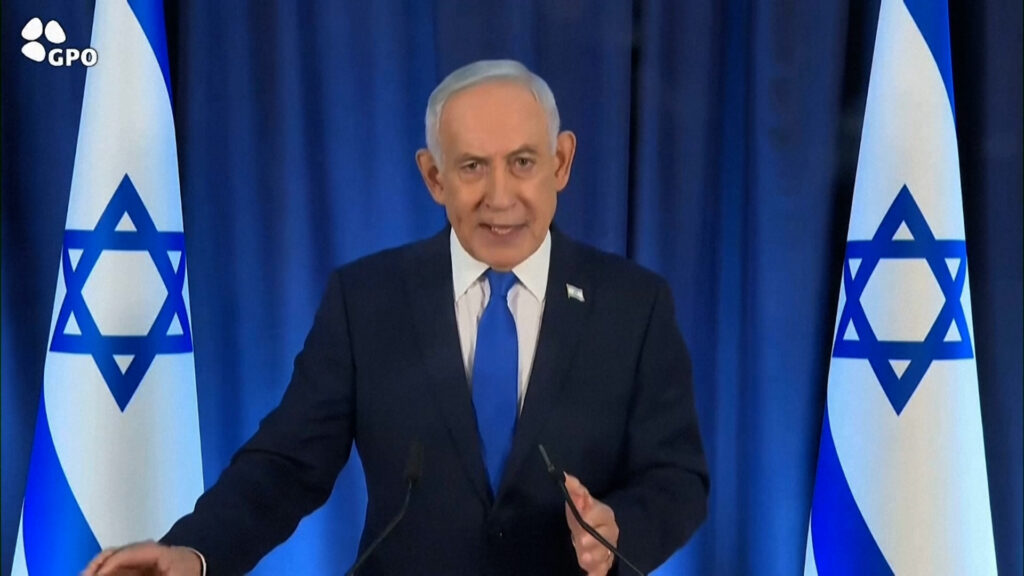
Israeli Prime Minister Benjamin Netanyahu has publicly articulated his strategic vision regarding Iran, asserting that Israel’s military actions against Iranian targets are intended to contribute to a broader goal: facilitating regime change in Tehran. This stance reflects a continuation and intensification of Israel’s longstanding concerns about Iran’s nuclear ambitions and regional influence.
Netanyahu’s comments highlight a dual-purpose approach, where immediate defensive actions serve the longer-term objective of fundamentally altering Iran’s political landscape. Israel views the current Iranian regime as a significant threat to its national security due to Tehran’s support for militant groups, ballistic missile programs, and potential development of nuclear weapons.
The Prime Minister’s call to ‘create conditions’ for regime change does not imply direct foreign intervention or a clear roadmap for overthrowing the Iranian government. Instead, it suggests a strategy focused on sustained pressure, intelligence operations, targeted strikes, and diplomatic efforts aimed at weakening the regime internally and externally.
This policy direction aligns with Israel’s broader geopolitical strategy in the Middle East, where disrupting hostile actors is seen as a pathway to enhancing regional stability and safeguarding Israeli interests. The Israeli government has repeatedly warned that it reserves the right to act unilaterally against threats emanating from Iran if international efforts are deemed insufficient.
Netanyahu’s remarks have elicited varied international reactions. Allies like the United States have expressed cautious support for measures that prevent Iran from acquiring nuclear weapons but remain circumspect about direct regime change policies. Conversely, allies of Iran and other regional actors have condemned Israel’s rhetoric as provocative and detrimental to peace prospects.
Analysts suggest that Netanyahu’s statements may be aimed both at domestic audiences and international partners, reinforcing Israel’s position in upcoming diplomatic negotiations and deterring adversaries from escalating confrontations. The Prime Minister’s emphasis on regime change marks a significant shift from previous Israeli policies focused primarily on containment.
The situation remains highly volatile, with the potential for increased military clashes between Israel and Iranian-backed militias in neighboring countries. The global community continues to monitor developments closely, concerned about the risk of broader conflict in the Middle East.
In summary, Benjamin Netanyahu’s declaration of wanting to ‘create conditions’ for regime change in Iran signals a bold strategic posture, where Israel seeks not only to defend itself but also to actively shape the political future of one of its most significant rivals. This approach may redefine Israeli-Iranian relations and influence the geopolitical dynamics of the entire region in the years to come.