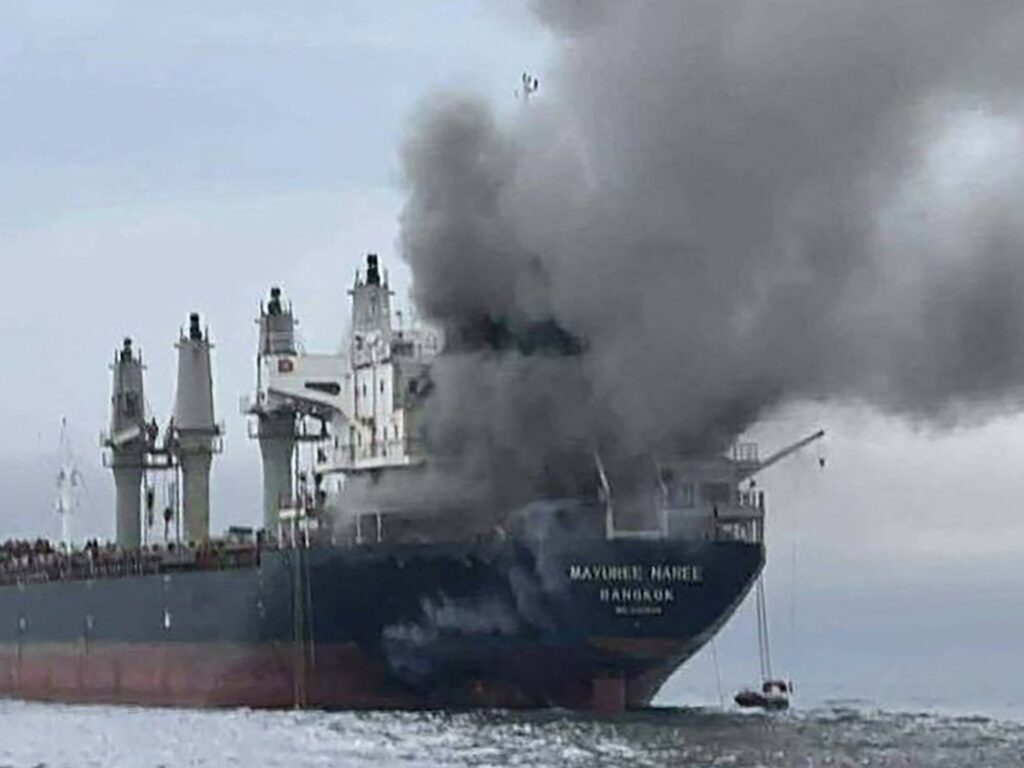
In a concerning escalation of maritime conflict, six vessels have been attacked in a series of incidents linked to Iranian drone boats and sea mines. The incidents have prompted significant disruptions in shipping and oil transport activities in the region.
Reports indicate that explosive-laden boats, suspected to be Iranian drones, have targeted several ships, causing damage and raising alarm among international maritime observers. The tactics suggest a growing sophistication and increased use of unmanned vehicles in naval confrontations.
Among the affected operations, Iraq has reportedly suspended activities at its oil terminals following attacks on two tankers in Iraqi waters. The tankers were struck by explosive-laden boats, raising concerns about the security of energy infrastructure in the area.
The exact motives behind these attacks remain under investigation, but the incidents coincide with heightened regional tensions and ongoing disputes over territorial waters and influence in the Gulf region.
Maritime security experts warn that the use of drone boats and sea mines represents a dangerous development that could lead to further destabilization and threaten vital shipping lanes. The Iranian government’s role, if confirmed, would mark a significant shift in naval engagement strategies, employing asymmetric tactics to challenge regional adversaries.
Iraq’s decision to halt oil terminal operations is a precautionary move aimed at safeguarding personnel and infrastructure while assessments and enhanced security measures are implemented. The suspension, however, underscores the vulnerability of critical energy supply routes to unconventional maritime threats.
International stakeholders have called for restraint and the establishment of clear mechanisms to prevent the escalation of maritime conflicts that could impact global energy markets and regional stability.
The recent attacks underscore the necessity for enhanced collaboration among Gulf Cooperation Council (GCC) states, Iraq, and international naval forces to monitor and secure the region’s waters more effectively.
As investigations continue, shipping companies and oil operators are advised to exercise heightened vigilance and review security protocols to mitigate risks associated with maritime operations in the Gulf region.
This development adds to the complex geopolitical landscape in the Middle East, where proxy conflicts and power struggles frequently spill over into marine domains, affecting global trade and energy supplies.
Authorities are urging all parties to de-escalate tensions and engage in dialogue to ensure safe and secure maritime navigation.
The coming days are critical as the international community monitors the situation closely, hoping to prevent further attacks and restore stability to one of the world’s most strategically important waterways.