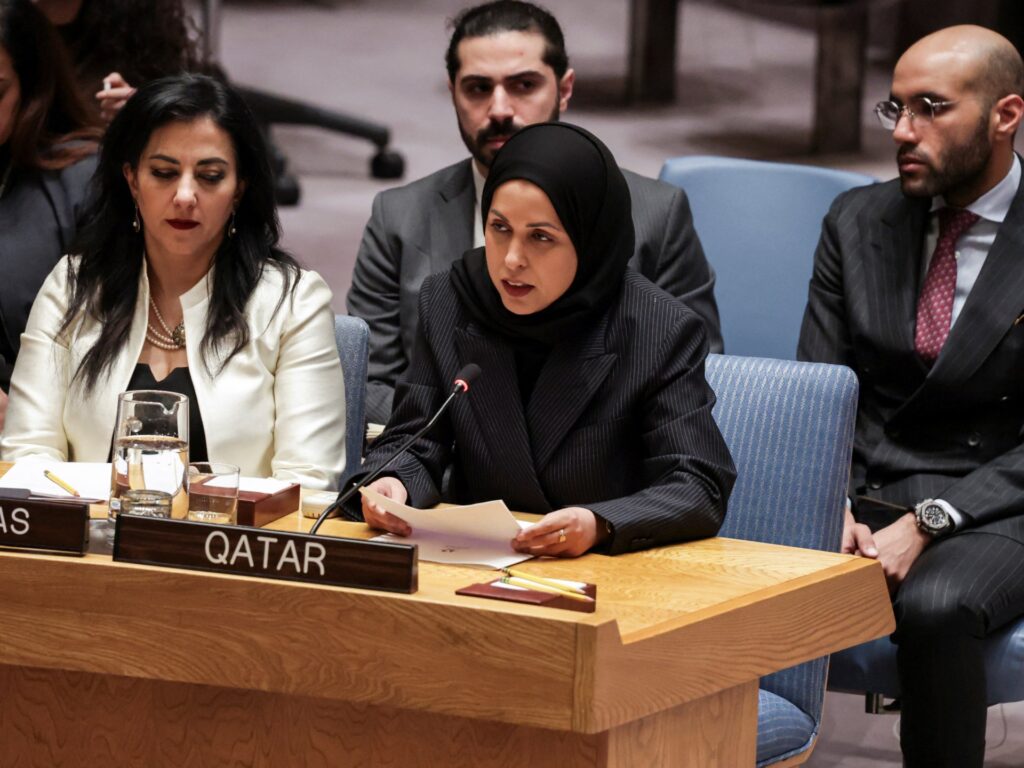
In a recent development that underscores escalating tensions in the Gulf region, Qatar’s envoy to the United Nations has voiced serious concerns over what he perceives as the UN’s failure to curb Iranian aggression. The envoy condemned the Iranian drone and missile strikes targeting several locations across the Gulf, describing these actions as a clear violation of international law.
This condemnation comes amidst growing unease over the security situation in the Gulf, where Iranian-backed operations have intensified. The Iranian strikes, involving drones and missiles, have not only caused substantial damage but have also raised alarm among Gulf countries and the international community.
Qatar’s representative emphasized that the UN’s inability to prevent such attacks sends a “dangerous signal” to other nations, potentially emboldening further violations of sovereignty and disruption of peace.
By allowing these attacks to go unchecked, the UN risks undermining its authority and the trust of member states that rely on its mechanisms for conflict resolution and peacekeeping.
The envoy’s statements highlighted the urgency for the international body to take stronger, more decisive action against Iran’s hostile maneuvers. He called for the enforcement of international law and better mechanisms to prevent such breaches.
Analysts note that the Gulf region’s stability is vital for global energy markets and international security. Increased Iranian aggressions threaten not only regional peace but also international economic interests.
Qatar’s stance reflects broader concerns shared by many nations about Iran’s expanding influence and the challenge it poses to the established international order.
The situation demands a coherent and united response from the global community, reinforcing the principles of sovereignty, non-aggression, and adherence to international law.
Failure to address these issues could lead to heightened conflict, jeopardizing years of diplomatic efforts aimed at maintaining peace in a historically volatile region.
In conclusion, Qatar’s envoy’s condemnation spotlights a critical test for the UN and the broader international community. The need for effective intervention and diplomatic pressure on Iran is imperative to restore stability and uphold international legal norms in the Gulf.