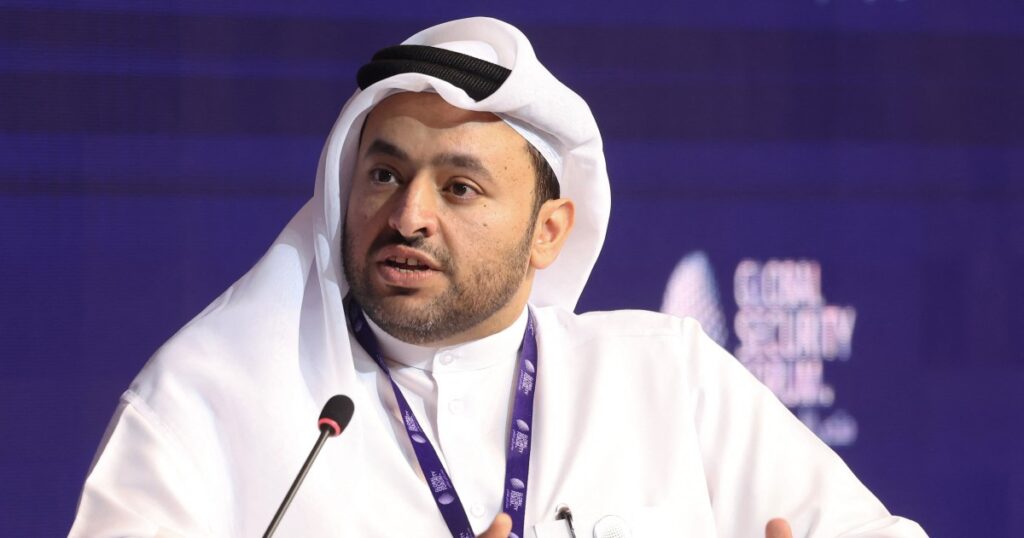
In a recent statement, Mohammed bin Abdulaziz al-Khulaifi, Qatar’s Minister of State, emphasized that regional countries should not be viewed as enemies of Iran. His remarks highlight a perspective aimed at easing tensions and fostering dialogue in the Middle East, a region often marked by complex geopolitical conflicts.
Speaking to the media, al-Khulaifi pointed out that the relationships between Iran and its neighboring countries are intricate and deeply interwoven, suggesting that antagonism may not be the prevailing framework through which these relationships should be understood. He urged regional players to pursue peaceful coexistence and diplomatic engagement.
Moreover, the Minister addressed the challenges faced by Qatar and Oman in their roles as mediators in regional conflicts. He stated clearly that these countries cannot effectively act as mediators while they themselves are under attack or facing direct threats. This admission sheds light on the limitations and difficulties inherent in mediation efforts within conflict zones, where safety and neutrality are paramount.
The comments came amid ongoing regional tensions where mediation has been sought to resolve disputes and enhance cooperation. Qatar and Oman have historically played roles as intermediaries in various conflicts, leveraging their diplomatic stature and relative neutrality. However, al-Khulaifi’s statement acknowledges that such roles are contingent on stable and secure conditions.
Al-Khulaifi’s perspective encourages a reframing of regional dynamics, moving away from viewing states as adversaries and toward recognizing shared interests and the potential for collaboration. This approach could pave the way for renewed dialogue and conflict resolution initiatives.
The Minister’s remarks have been seen by analysts as a subtle call for moderation and restraint, pushing back against narratives that exacerbate divisions. His emphasis on the inability of Qatar and Oman to mediate under attack also reflects a call for the protection of sovereign integrity and the right of states to operate without external aggression.
Qatar’s strategic position in the Gulf and its active foreign policy make such statements significant in shaping the discourse around peace and stability in the Middle East. By promoting a vision where regional countries are not enemies but partners, Qatar reaffirms its commitment to peaceful diplomacy.
Observers note that Iran’s relations with its neighbors, including those mediated by Qatar and Oman, remain critical to the broader security architecture of the Gulf region. Al-Khulaifi’s remarks may serve as a catalyst toward re-engagement on contentious issues that affect the entire region.
In summary, Mohammed bin Abdulaziz al-Khulaifi’s statements reflect a nuanced understanding of the current geopolitical landscape. They underscore the importance of reducing hostility, recognizing the difficulties of mediation under duress, and fostering a regional environment conducive to dialogue and cooperation. Such a stance is crucial for advancing long-term stability and peace in one of the world’s most strategically significant regions.