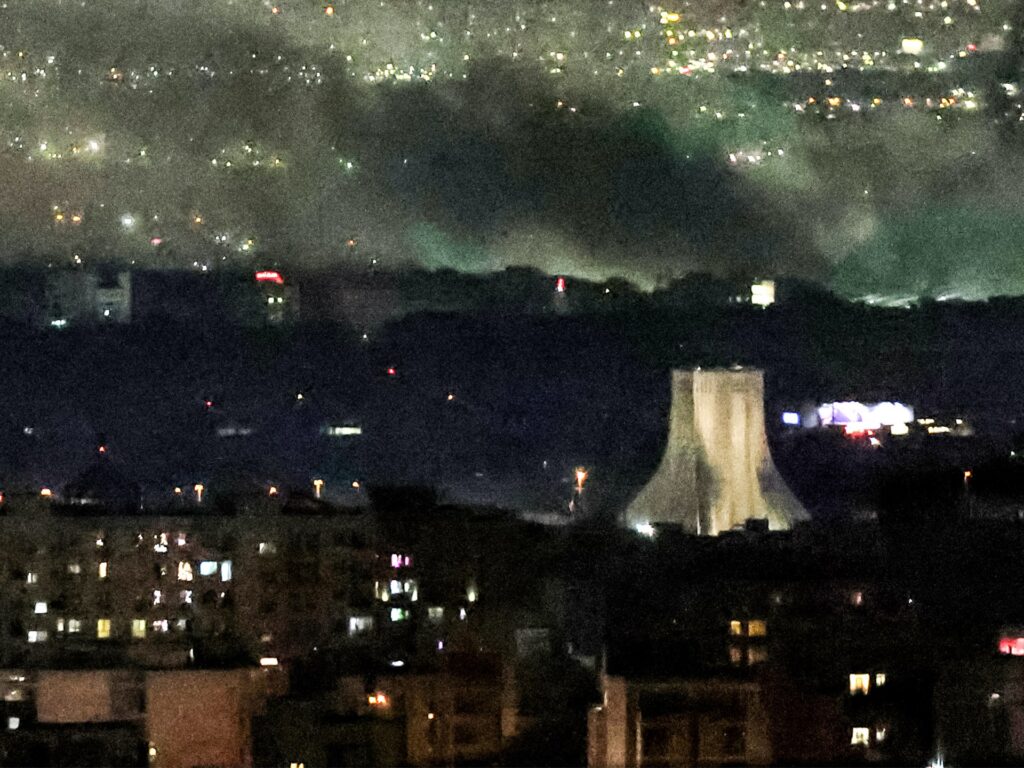
Tehran faced a harrowing night as heavy bombing carried out by Israel and the United States shook the city, leaving its residents terrified and in shock. The attacks came swiftly, deepening fears of escalating military conflict in the region. Witnesses described the city as overwhelmed by powerful explosions that sent shockwaves through buildings, shaking the very foundations and rattling the nerves of those indoors.
Just a day prior, the bombing targeted fuel reserves, causing massive plumes of thick black smoke to rise and blanket the sky. This smoke was so dense that it turned daylight into darkness, further amplifying the sense of dread among the populace. The combination of aerial strikes and the resulting environmental impact underscored the severity and strategic intent behind the operations.
Eyewitness accounts convey a city gripped by fear, with many residents describing a surreal atmosphere where the skies roared with the sounds of bombs and jets. “Our hearts were shaking,” one local stated, reflecting the palpable anxiety experienced throughout Tehran. Emergency services were reported to be stretched thin, responding to fires, structural damage, and casualties resulting from the bombings.
The fuel reserve bombing was particularly significant, as it disrupted vital energy supplies and caused secondary explosions, contributing to widespread destruction. These facilities are critical for the functioning of infrastructure and industry, making them prime targets in efforts to weaken Tehran’s operational capabilities.
International reactions have been swift, with various nations expressing concern over the escalation of violence in the area. Diplomatic channels are reportedly active as governments seek to deescalate tensions and prevent further military confrontations. Analysts warn that continued attacks could provoke retaliatory measures, risking a broader conflict with regional and global repercussions.
Tehran’s leadership has condemned the attacks, promising resilience and retaliation. Public morale, while shaken, remains defiant with calls for unity and resistance growing louder amidst the crisis. The bombings have heightened the urgency for international mediation to halt the cycle of violence and pave the way for dialogue.
As the city wakes to the aftermath of a long night of bombardment, the full extent of damage and casualties is still being assessed. Hospitals are reportedly overwhelmed, and there are pressing concerns about access to essential services in the wake of infrastructure damage.
This latest surge in violence marks a disturbing trend in the ongoing conflict, signaling a potential new phase marked by intensified direct assaults on urban centers. The resilience of Tehran’s citizens is being tested, alongside the geo-political stability of the region.
Observers and experts emphasize the need for careful monitoring and urgent intervention to prevent further deterioration. The coming days will be critical in determining whether this escalation can be contained or if the region will spiral into deeper turmoil.
In the midst of uncertainty, communities in Tehran continue to band together, supporting each other through the darkest hours. Their resolve amid adversity stands as a testament to the human spirit’s capacity to endure even in the face of overwhelming challenges.