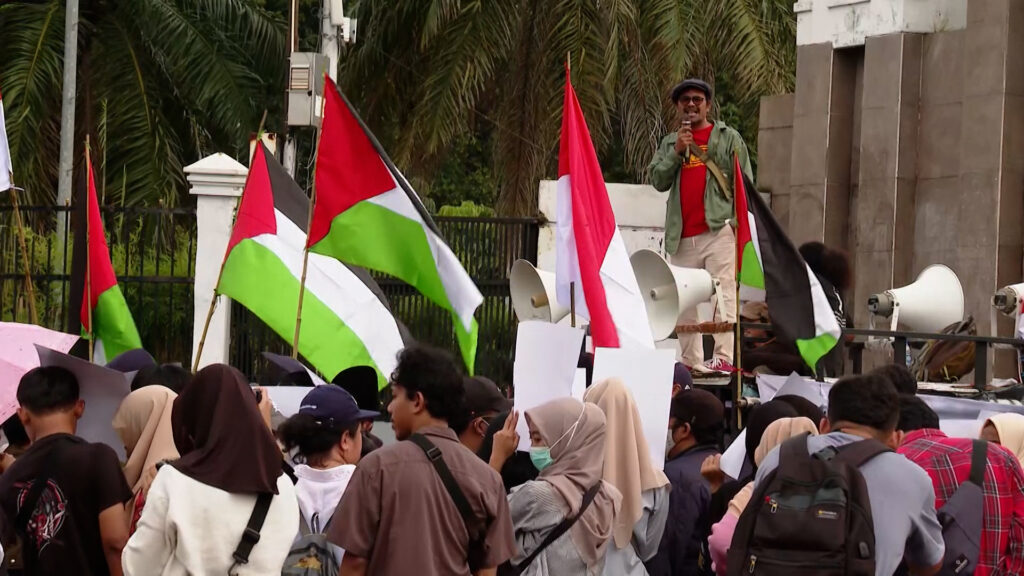
In recent developments, Indonesians have taken to the streets in significant numbers, protesting vehemently against the ongoing US-Israeli war on Iran. The demonstrations reflect widespread dissatisfaction with their government’s foreign policy, particularly its close ties to the United States.
The protests, marked by large gatherings in various cities across Indonesia, underscore a growing opposition among the populace towards their nation’s alignment with US strategic interests in the Middle East. Many Indonesians perceive their government’s cooperation with the US as contradictory to the country’s principles and detrimental to regional peace.
Participants in the rallies have expressed outrage over the conflict in Iran, criticizing the violence and instability it has unleashed. They accuse the US and Israel of aggressive policies that have exacerbated tensions in the region, leading to humanitarian crises and geopolitical instability.
Demonstrators also called for Indonesia to adopt a more independent and neutral stance in international affairs. They urged President Joko Widodo’s administration to reconsider its diplomatic and military ties with the US, advocating for policies that prioritize peace and sovereign decision-making.
The protests have brought significant public attention to the issue, with various civil society organizations and political groups voicing support for the demonstrations. They argue that Indonesia should assert a more principled foreign policy that reflects its diverse society and commitment to global peace.
Government officials have acknowledged the protests but have yet to issue a comprehensive response. Analysts suggest that the government faces a complex balancing act, trying to maintain strategic partnerships while addressing domestic concerns.
The situation highlights broader tensions in Indonesia’s foreign policy as it navigates between established global powers and the demands of its people for greater autonomy and peaceful international engagement.
Observers note that these protests might influence future policy shifts, signaling a potential recalibration of Indonesia’s relations with the United States and its approach to Middle Eastern conflicts.
As the protests continue, they underscore the critical role of public opinion in shaping national foreign policy and the significance of Indonesia’s position on the global stage.
In summary, the Indonesian protests against the US-Israeli war on Iran represent a pivotal moment of civic activism. They challenge the government’s foreign ties and advocate for a foreign policy that prioritizes peace, sovereignty, and the well-being of all involved regions.