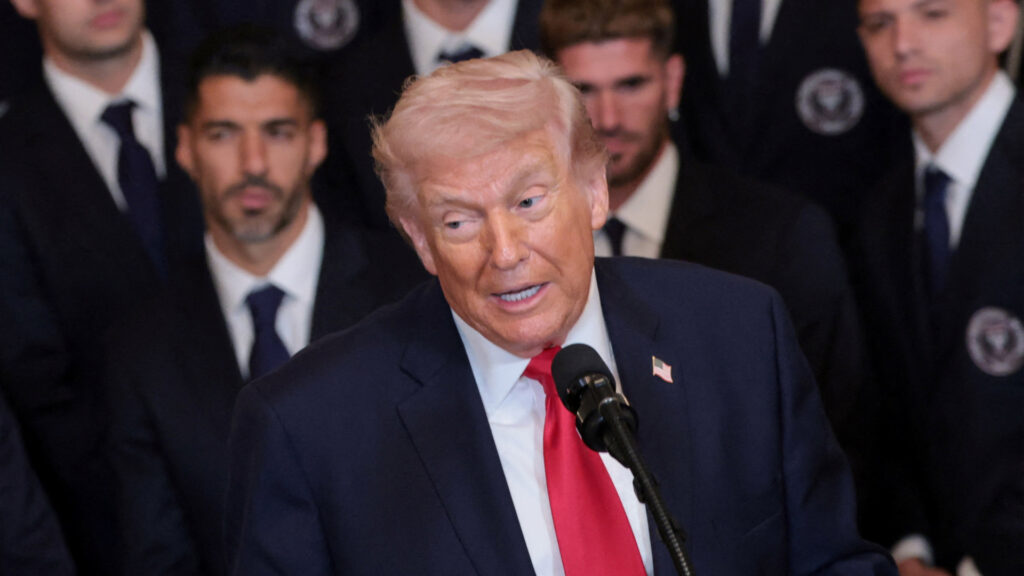
In a significant development in US-Iran relations, US President Donald Trump has offered immunity to Iranian police forces and members of the Islamic Revolutionary Guard Corps (IRGC) who choose to lay down their arms. This unprecedented offer is aimed at encouraging defections or disarmament among Iranian security forces as part of efforts to de-escalate tensions.
The Islamic Revolutionary Guard Corps, often referred to as IRGC, is a branch of Iran’s Armed Forces founded after the Iranian Revolution in 1979. It plays a critical role in Iran’s military, political, and economic spheres, often regarded as a powerful entity within Iran’s political landscape.
The offer of immunity indicates a strategic initiative by the Trump administration to weaken the IRGC from within by persuading its members and associated police forces to abandon their posts without fear of prosecution or retribution from the United States.
This move comes amidst heightened tensions between the US and Iran, particularly following aggressive stances, sanctions, and military actions taken by both countries in recent years. It represents a novel approach to conflict resolution focused on disarmament and reducing the power of Iran’s military elite.
From the perspective of the US government, granting immunity serves as an incentive for dissidents within Iran’s security forces to defect rather than continue hostilities. It opens up the possibility for those who oppose Iran’s current regime policies to find safe harbor and potentially play a role in a new political or security arrangement.
Iranian authorities have thus far not released an official response to this immunity offer. It remains to be seen how the IRGC and Iranian police will react to such a proposal, especially given their loyalty to the Supreme Leader and the existing regime.
Analysts suggest that this tactic could either lead to internal fractures within Iran’s security structure or potentially backfire by hardening resolve among the IRGC and police forces. The plan’s success largely depends on the willingness of individuals within these organizations to risk defection and on safeguarding their safety post-defection.
Historically, offers of immunity have been used in various international conflicts to encourage insurgents or combatants to surrender and reintegrate peacefully. However, extending this to key military elements in a state like Iran is unconventional and signals a serious attempt to change the status quo.
President Trump’s announcement highlights the ongoing complexities in US-Iran relations and the shifting strategies employed by the US administration to address challenges posed by Iran’s regional activities and its nuclear program.
This offer could also have broader implications in the Middle East, potentially altering power dynamics if successful defections weaken Iran’s military influence. The US may seek to capitalize on any internal dissent to promote stability through a more cooperative Iranian state structure.
Critics of the offer argue that it may be seen as interference in Iran’s internal affairs or as part of a broader campaign of intimidation. They caution that such offers might escalate tensions rather than ease them, depending on Iran’s response and the regional geopolitical environment.
Supporters, meanwhile, view the immunity proposal as a peaceful alternative to military action, hoping it might prevent further conflict and open channels for dialogue.
The international community is watching closely, as the effectiveness of this proposal could shape future diplomatic and security policies regarding Iran and the broader Middle East region.
In conclusion, President Trump’s offer of immunity to the IRGC and Iranian police represents a bold initiative aimed at fostering internal peace and encouraging defection from militant forces. Its success or failure will have significant implications for US-Iran relations, regional stability, and global diplomacy going forward.