In a notable statement that has captured significant attention, former U.S. President Donald Trump emphasized his desire to be ‘involved’ in the selection process of Iran’s next supreme leader. This declaration reflects Trump’s ongoing engagement with Middle Eastern geopolitics, particularly concerning Iran’s influential and complex political landscape.
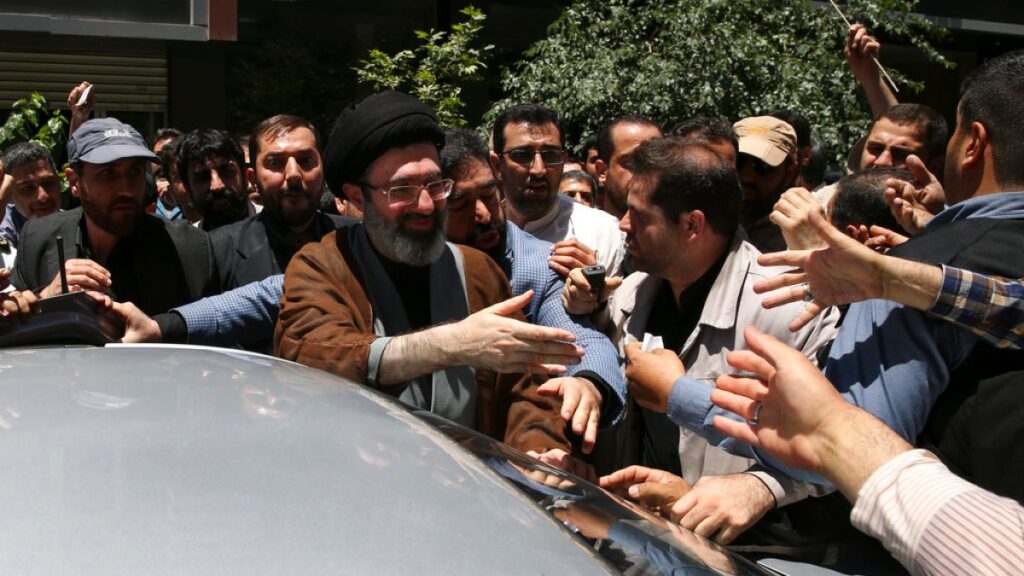
Iran’s supreme leader holds immense power within the country, influencing all branches of government and shaping the nation’s domestic and foreign policies. The current leader, Ayatollah Ali Khamenei, has been a central figure in Iranian politics for decades, and his eventual succession will be a critical juncture for Iran and the wider region.
Trump’s assertion about his involvement underscores his belief in exerting influence over international affairs even beyond his tenure in office. It also highlights the ongoing tension between the U.S. and Iran, two nations often at odds due to ideological differences and geopolitical rivalries.
However, experts and analysts remain skeptical about the feasibility of Trump’s wish to play a role in Iran’s internal political succession. One analyst noted that the U.S. president will struggle to find a figure akin to an Iranian Delcy Rodriguez—a Venezuelan opposition political leader known internationally—within the existing rigid framework of Iran’s Islamic Republic. The country’s political system, dominated by religious leadership and a tightly controlled selection process, leaves little room for external influence or sudden changes driven by foreign actors.
The Islamic Republic operates through a complex system where key religious and political elites hold sway over appointments and leadership transitions. The supreme leader selection involves the Assembly of Experts, a body made up of Islamic scholars, who are themselves appointed through stringent vetting. This closed process serves to maintain the ideological purity and continuity of the regime.
Given these dynamics, Trump’s expressed desire to be part of Iran’s political future is seen more as a reflection of his worldview and approach to international diplomacy rather than a practical pathway. The U.S. administration under Trump had often taken a hardline stance against Iran, highlighted by the withdrawal from the Iran nuclear deal (JCPOA) and the imposition of extensive economic sanctions.
Iranian officials have historically been resistant to any outside interference, viewing it as a violation of their sovereignty and an affront to their national pride. This entrenched attitude further diminishes the likelihood that any American, let alone a former president, would influence the appointment of the next supreme leader.
In conclusion, while Trump’s declaration signals his ongoing interest and involvement in global geopolitical affairs, the reality of influencing Iran’s next supreme leader selection is highly improbable. The Islamic Republic’s stringent and insular political structure, combined with deep-seated distrust of U.S. intentions, forms a formidable barrier to any external party’s involvement. As Iran approaches this pivotal transition, the international community will be closely watching, but Tehran’s internal mechanisms will likely remain decisive and impervious to foreign influence.