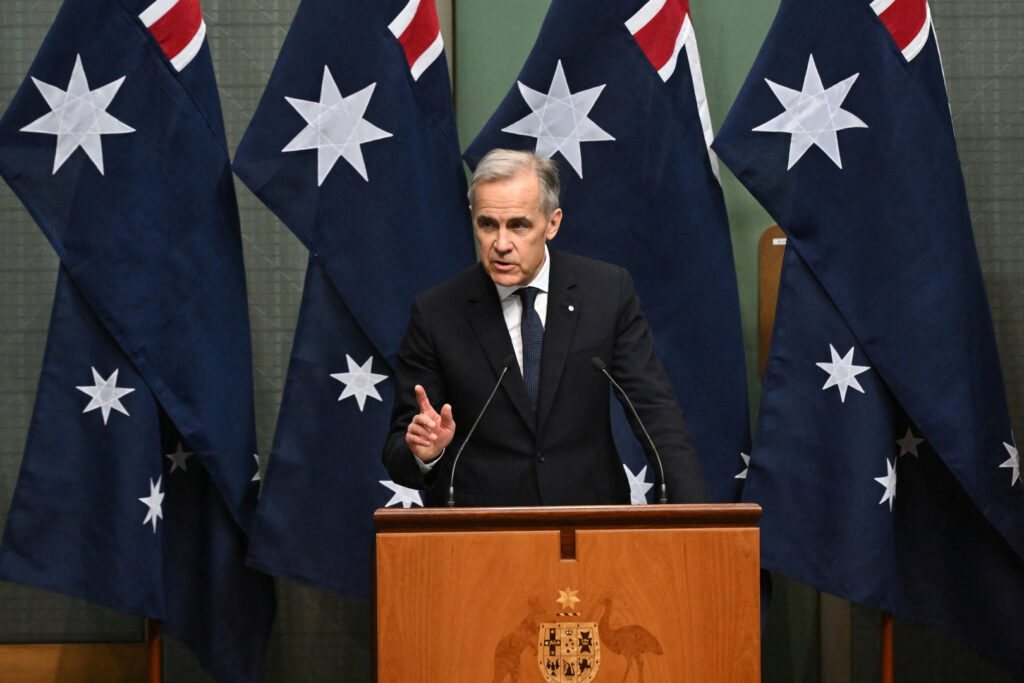
Canada's Prime Minister Mark Carney delivers an address to members and senators in the House of Representatives at the Australian Parliament House, in Canberra, Australia, March 5, 2026. AAP/Lukas Coch via REUTERS ATTENTION EDITORS - THIS IMAGE WAS PROVIDED BY A THIRD PARTY. NO RESALES. NO ARCHIVE. AUSTRALIA OUT. NEW ZEALAND OUT. NO COMMERCIAL OR EDITORIAL SALES IN NEW ZEALAND. NO COMMERCIAL OR EDITORIAL SALES IN AUSTRALIA.
In recent developments surrounding the escalating tensions in the Middle East, Canadian Prime Minister Mark Carney has stated that while he hopes for a peaceful de-escalation of the conflict involving Iran, he cannot entirely dismiss the possibility of Canadian military involvement if circumstances require it. Carney emphasized his preference for diplomatic solutions, aiming to reduce hostilities and promote stability in the region amidst ongoing Iran attacks.
The Prime Minister’s remarks reflect the complex geopolitical landscape in which Canada finds itself, balancing its commitments to international security alongside efforts to avoid exacerbating conflict. Canada, historically known for its peacekeeping roles, now faces the challenging prospect that military options could be considered in response to the volatile situation.
Mark Carney’s statement came during a press briefing where he addressed questions about Canada’s stance on potential interventions. He conveyed concern over the increased violence in the region and the risks it poses to global peace but stopped short of ruling out military measures, signaling the government’s readiness to respond if national or allied interests are threatened.
This development has drawn attention from foreign policy experts who note that Canada’s strategic partnerships, particularly with Western allies, may influence any future decisions regarding military engagement. Analysts suggest that while a military deployment remains uncertain, the government’s openness to considering it underscores the seriousness with which Canada is taking the threat from Iran-related conflicts.
Political commentators also highlight the delicate balance Prime Minister Carney must maintain between supporting international peace initiatives and responding robustly to aggression. The international community watches closely as Canada navigates its role, hoping for diplomatic breakthroughs but prepared for all outcomes.
The Canadian government’s stance underscores the broader uncertainties enveloping global responses to tensions in the Middle East. With Iran’s actions prompting widespread concern, allied nations including Canada are reassessing their policies and potential roles in ensuring regional security.
Carney’s call for de-escalation aligns with a global desire to avoid military confrontation, yet his candid admission about possible military involvement signals a pragmatic approach. It serves as a reminder that while peace remains the goal, readiness for conflict is also a necessary posture in international relations.
In conclusion, the Canadian Prime Minister’s statements have set the tone for the country’s cautious but vigilant approach to the Iran conflict. The coming weeks will be critical in observing how Canada balances diplomacy and defense in its foreign policy decisions regarding this volatile issue.