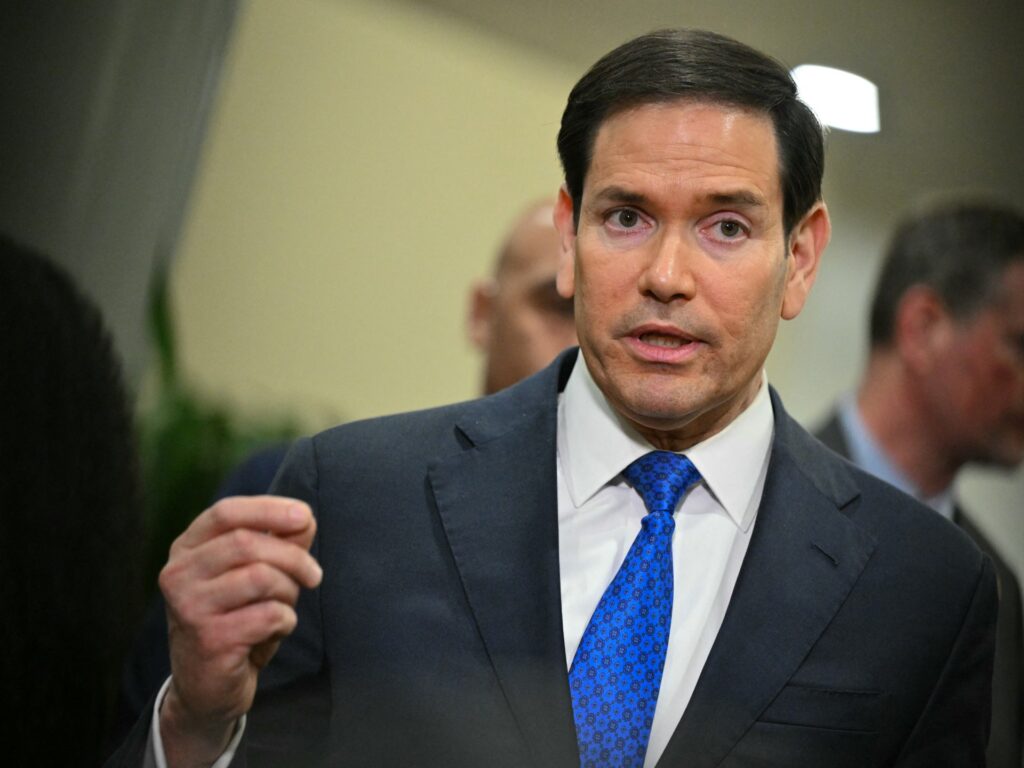
Senator Marco Rubio’s recent assertion regarding Israel’s involvement in a U.S. attack on Iran has sent shockwaves across the American political landscape, eliciting reactions from all sides of the spectrum. Despite official denials from Israeli sources, Rubio’s comments have been fervently debated, influencing public discourse and war rhetoric.
Rubio’s statement emerged during a period of heightened tensions between the United States and Iran, where the justification for military actions remains a critical issue. His claim implies that Israel played a covert but significant role in the attack, challenging the prevailing narratives put forth by government officials.
The response to Rubio’s remarks has been varied. On the one hand, many commentators from the mainstream and progressive media have scrutinized his assertion, questioning the veracity and potential motives behind bringing Israel into the fray.
Conversely, members within the MAGA base and conservative circles have latched onto Rubio’s comments as affirmation of their skepticism about the government’s transparency and the true motivations behind the military engagement with Iran. This alignment suggests that Rubio’s words have not only political ramifications but also resonate deeply with a segment of the American public that harbors distrust toward official narratives.
The Israeli government, however, has categorically denied any involvement in the U.S. attack on Iran. They emphasize maintaining diplomatic stability and deny any covert operations that would escalate conflicts in the region. This denial has done little to quell the intensity of the debate sparked by Rubio’s claims.
Historically, the Middle East has been a complex theater for American foreign policy, with Israel often viewed as a pivotal ally. Accusations of clandestine cooperation in military operations are not new but remain highly sensitive. Rubio’s statement revives these tensions and encourages scrutiny over the nature of the U.S.-Israel relationship.
The controversy unfolds amid shifting justifications for war with Iran. Initially framed around concerns for nuclear proliferation and regional security, narratives have evolved, reflecting changes in political leadership and public opinion. Rubio’s claim potentially adds a new dimension to these discussions, casting the involvement of external actors into the spotlight.
Experts warn that such accusations, whether substantiated or not, risk complicating diplomatic efforts and fueling further instability in the Middle East. The echo chamber generated by social media and political commentary amplifies these claims, often bypassing rigorous verification.
Political analysts suggest that Rubio’s assertion may be strategically timed to influence upcoming elections and consolidate support within key voter bases. The blend of foreign policy intrigue and domestic political maneuvering highlights the intricate interdependencies in contemporary American politics.
Meanwhile, public opinion polls show a divergence in attitudes toward the conflict with Iran, influenced partly by the narratives circulated following Rubio’s comments. Understanding these dynamics is crucial for policymakers aiming to navigate the complex geopolitical challenges ahead.
In summary, Senator Rubio’s claim about Israeli involvement in the U.S. attack on Iran has become a focal point of contention, despite categorical denials from Israel. The statement has been seized upon by various political factions, underscoring shifting war justifications and casting a complex shadow over U.S. foreign policy decisions in the Middle East. The ongoing debate reflects broader concerns about transparency, alliance dynamics, and the future course of American engagement in the region.