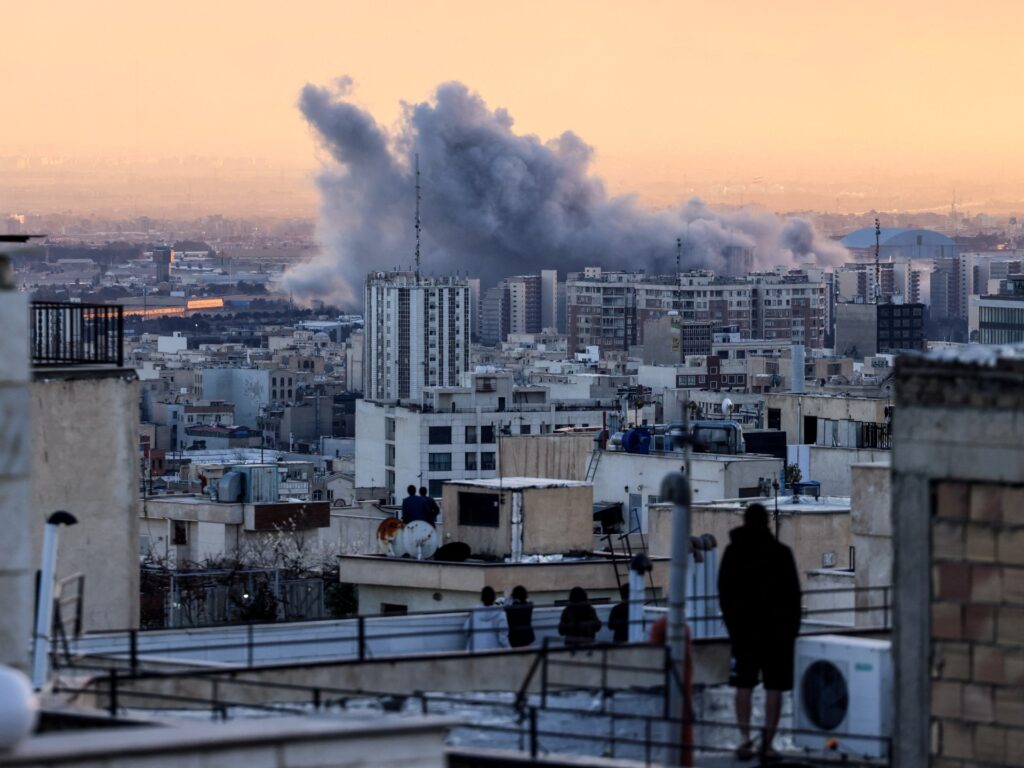
In a rapidly escalating conflict in the Middle East, the United States Embassy in Dubai has come under attack as US and Israeli forces intensify their military operations against targets in Iran and Lebanon. This development marks a significant escalation in regional tensions, with Israel conducting airstrikes on Tehran and Beirut while Tehran retaliates with counterstrikes that have disrupted vital oil flows in the Middle East.
The attack on the US embassy in Dubai reflects the expanding scope of the conflict, indicating that the hostilities are not confined to the borders of Iran and Lebanon but are spilling over into other strategic locations. Dubai, a major hub for international business and diplomacy, has long been considered a relatively safe haven, making this attack particularly alarming for the global community.
Meanwhile, Israel has launched several targeted strikes against military installations and strategic assets in Tehran and the Lebanese capital of Beirut. These strikes are part of an ongoing campaign aimed at curbing Iran’s influence in the region, particularly its support for militant groups based in Lebanon, notably Hezbollah. Israeli officials have emphasized that these actions are defensive and necessary to safeguard their national security.
Iran, not to be outdone, has responded with a series of counterstrikes that have effectively disrupted oil transportation routes in the Middle East. These disruptions pose a significant threat to global oil markets, raising concerns about rising energy prices and the stability of international supplies. Tehran’s counterattacks underscore the serious stakes involved in this conflict, with economic as well as military consequences.
The international community has expressed deep concern over the intensifying conflict. Several nations have called for immediate de-escalation and dialogue to prevent further deterioration. The United Nations and various international bodies are closely monitoring the situation, urging all parties involved to exercise restraint.
The US and Israel justify their actions as necessary measures against what they describe as threats to regional security posed by Iran and its proxies. On the other hand, Iran frames its responses as legitimate defensive maneuvers against foreign aggression and interference in its sovereign affairs.
The disruption of oil flows due to Tehran’s counterstrikes adds another complex layer to the crisis. Given the Middle East’s critical role in global energy supplies, any prolonged disturbances could have wide-reaching economic impacts beyond the immediate region, affecting countries worldwide.
As this volatile situation unfolds, the possibility of broader regional conflict looms large. Diplomats and security experts are watching closely, aware that missteps or misunderstandings could lead to an uncontrollable escalation.
In conclusion, the attack on the US embassy in Dubai, coupled with the ongoing airstrikes by Israel on Tehran and Beirut, marks a significant escalation in the conflict between these nations. Iran’s retaliatory counterstrikes that disrupt oil flows underscore the multidimensional nature of the crisis, involving military, economic, and geopolitical factors. The international community faces an urgent challenge to mediate and prevent further violence in a region already fraught with tension and instability.