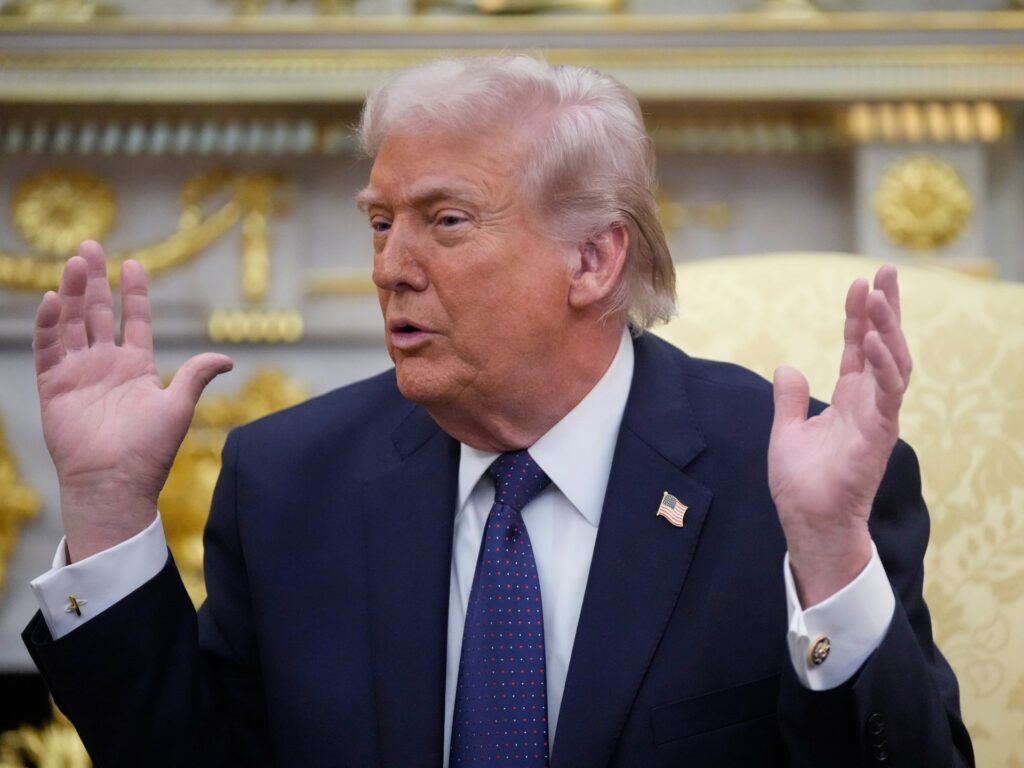
In a recent statement, former U.S. President Donald Trump discussed the possibility of replacing Iran’s Supreme Leader Ayatollah Ali Khamenei, describing it as a “worst-case scenario.” Trump’s comments signal a radical vision for the future of Iran’s government amid ongoing tensions.
Trump appeared to dismiss Reza Pahlavi, the son of Iran’s last Shah and a prominent opposition figure, as a viable alternative to Khamenei. Instead, he hinted at a transformation that would reshape Iran’s political landscape into a model similar to that of Venezuela.
This perspective implies a significant shift from Iran’s current theocratic structure towards a government more aligned with populist and authoritarian trends seen in Venezuela. Trump’s remarks came amidst heightened scrutiny of Iran’s nuclear program and its regional influence.
The former president’s comments reflect broader debates within U.S. policy circles about how to effectively engage with or pressure the Iranian regime. While some advocate for diplomacy and negotiated compromises, others support more assertive measures, including leadership change.
Experts note that replacing Khamenei would be an unprecedented move with far-reaching consequences, potentially destabilizing Iran and the wider Middle East. The complexity of internal Iranian politics and the strength of the Revolutionary Guard present significant obstacles to any forced leadership change.
Moreover, Trump’s vision raises questions about the feasibility and desirability of instating a government modeled after Venezuela, a country facing its own economic and political crises. Critics argue that such a comparison oversimplifies the challenges Iran faces and risks promoting unrealistic expectations.
The dismissal of Reza Pahlavi contrasts with some Western hopes that the Iranian opposition could play a more prominent role in shaping Iran’s future. Pahlavi has advocated for a secular democratic government and has support from various groups inside and outside Iran.
This latest development adds to the complex and often contentious discourse on Iran’s future amid fluctuating U.S. foreign policies. It also highlights how leadership perceptions influence international relations and strategies.
In conclusion, Trump’s ideas on replacing Khamenei and reshaping Iran’s government to resemble Venezuela’s reveal a stark and contentious approach. The implications of such a scenario would be monumental, affecting not only Iran but also regional stability and global diplomatic dynamics.