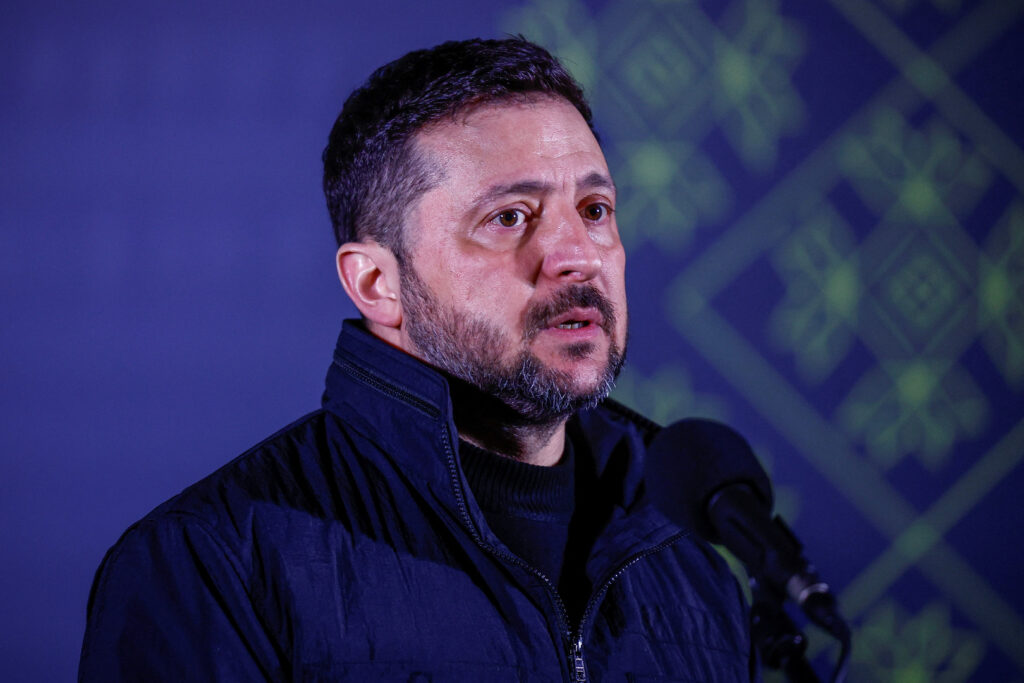
Ukraine’s President Volodymyr Zelenskiy speaks to media after he shared an iftar, meal to break fast at sunset, during the holy month of Ramadan, with Ukrainian Muslim service members, near a mosque in Kyiv, Ukraine March 2, 2026. REUTERS/Alina Smutko
Ukrainian President Volodymyr Zelenskyy has recently proposed a strategic ‘swap’ deal aimed at bolstering the defense capabilities of Gulf states. This offer marks a significant step in Ukraine’s efforts to forge stronger military and diplomatic ties beyond its immediate region amidst ongoing security challenges.
In the wake of persistent threats and the evolving geopolitical landscape, Ukraine is leveraging its military expertise and defense resources to assist Gulf countries, known for their strategic importance and substantial economic influence. The proposed swap involves an exchange where Ukraine provides advanced defense support and training, while benefiting from Gulf states’ technological and financial resources.
President Zelenskyy’s initiative underscores Ukraine’s intent to diversify its international partnerships and enhance mutual defense cooperation with regions far from Eastern Europe. The Gulf states, which include key players such as Saudi Arabia, the United Arab Emirates, and Qatar, can potentially gain access to Ukraine’s combat experience and tactical knowledge, particularly valuable given Ukraine’s recent real-world combat exposure.
This deal could facilitate the sharing of military technology and joint training programs, strengthening surveillance, cyber defense, and counter-terrorism capabilities. For Ukraine, the swap represents an opportunity to modernize its forces while securing new allies and supporters in a complex global environment.
Experts suggest that such collaboration could also serve to stabilize the region by reinforcing defense systems against emerging threats, including missile attacks and cyber warfare. The move comes at a time when Gulf states are seeking to upgrade their militaries through diversification of alliances amid regional tensions.
This proposal highlights Ukraine’s proactive diplomacy and strategic innovation as it navigates the dual demands of combat readiness and alliance-building. Both parties stand to benefit significantly from this partnership, which may pave the way for broader security cooperation across continents.
In conclusion, Ukraine’s offer to Gulf countries reflects a novel approach to defense collaboration, centered on mutual support through resource and capability exchange. As discussions progress, the global community will be watching closely to see how this deal shapes the future of international defense relations and regional stability.