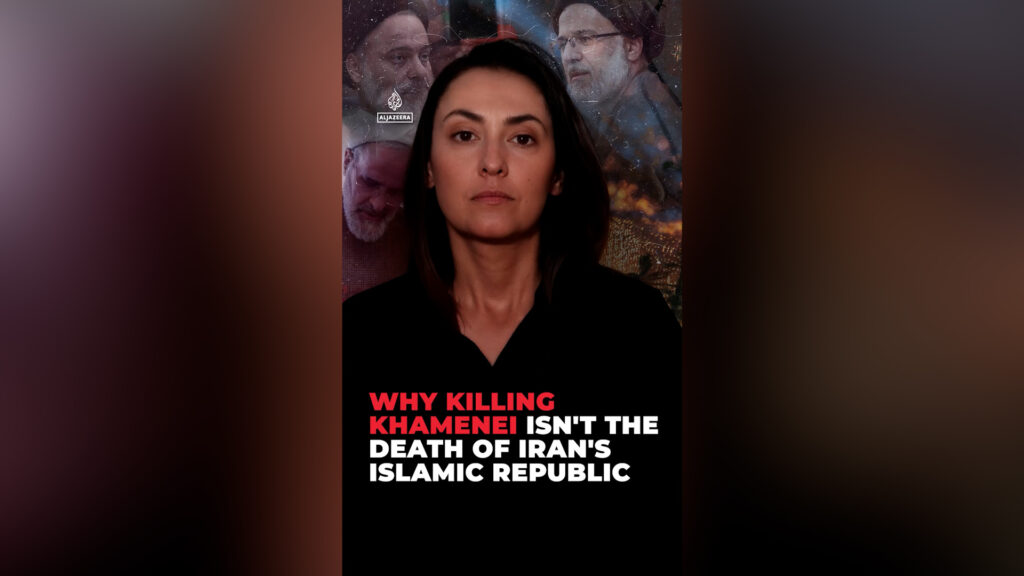
The recent killing of Iran’s Supreme Leader Ayatollah Ali Khamenei by U.S. officials has been hailed by some in the West as a decisive blow that could lead to the collapse of the Islamic Republic. However, the reality is far more complex. While Khamenei is undoubtedly a central figure in Iran’s political system, his death alone is unlikely to spell the end of the Islamic Republic.
The Islamic Republic of Iran is not a one-man system but a robust, deeply entrenched political and religious structure that has developed over four decades. Ayatollah Khamenei became Supreme Leader in 1989, following the death of Ruhollah Khomeini, the founder of the Islamic Republic. Over the years, Khamenei has consolidated immense power, but the system he leads is larger than himself.
Iran’s governance relies on a unique mixture of religious legitimacy, political control, and institutional resilience. The Supreme Leader holds significant authority over the military, judiciary, and media, but a wide network of clerics, Revolutionary Guards, intelligence agencies, and political factions also sustains the regime.
Even if Khamenei were removed, the succession process dictated by Iran’s Assembly of Experts, a body of senior clerics, would swiftly install a new Supreme Leader. This successor would likely be a figure aligned with Khamenei’s policies and ideology, ensuring continuity rather than collapse.
Moreover, the Islamic Republic has thrived on a powerful ideological narrative that merges Shiite Islamic principles with a revolutionary ethos. This narrative is deeply ingrained in the culture and politics of Iran, influencing everything from education to foreign policy. Removing one leader will not erase this narrative or the institutional loyalty it commands.
The regime has also survived significant internal and external pressures, including massive protests, economic sanctions, and diplomatic isolation. These challenges have tested its resilience but have not caused systemic breakdown. The security apparatus, especially the Revolutionary Guards, protects the regime from internal revolt and external threats.
Critics who suggest that the killing marks an end underestimate the adaptability of the Islamic Republic. Historically, the regime has shown an ability to evolve and reform internally when necessary, balancing hardliners and pragmatists to maintain control.
Additionally, Iran’s geopolitical strategies and regional influence contribute to the regime’s durability. Its network of proxies and alliances in the Middle East bolsters its standing and deters external efforts to destabilize it definitively.
Khamenei’s death may create a temporary power vacuum or trigger instability, but the system’s architecture is built to absorb shocks and ensure continuity. The leaders who will follow are likely to maintain the core tenets of the Islamic Republic, preserving both its ideological and political frameworks.
In conclusion, while the killing of Iran’s Supreme Leader is a major event with potential repercussions, it does not represent the immediate death of the Islamic Republic. The regime’s layered and institutionalized nature, its ideological foundations, and its geopolitical resilience all point to a more complex and enduring reality than simply the loss of a single figurehead.