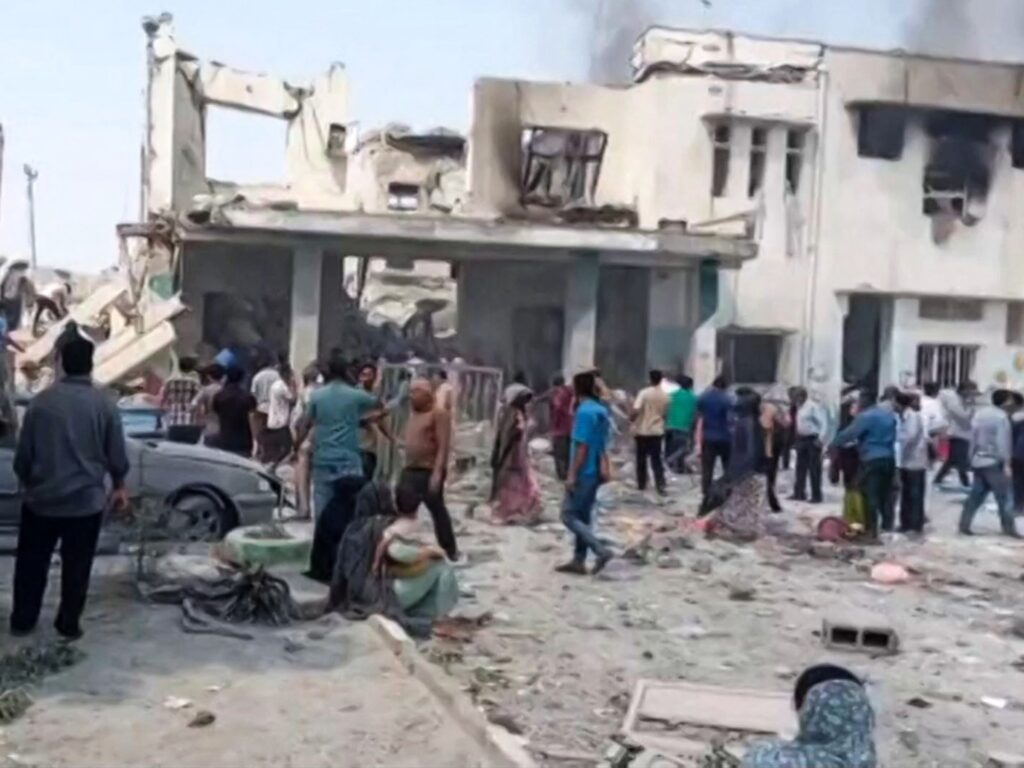
Tensions in the Middle East have dramatically escalated as the United States and Israel have launched multiple airstrikes against cities in Iran, including the capital, Tehran. This unprecedented military action marks a significant intensification in the already volatile relations between these countries. In response, Iran has retaliated by firing missiles into Israeli territory, heightening fears of a broader regional conflict.
The background to these attacks lies in years of complex geopolitical discord, primarily revolving around Iran’s nuclear program, its support for proxy groups across the Middle East, and longstanding hostility toward Israel. The US and Israel have repeatedly accused Iran of destabilizing the region through its support of militants in Lebanon, Syria, and Gaza, as well as pursuing nuclear capabilities that could lead to weapons development.
This recent military strike signifies the most direct confrontation the parties have engaged in recently. The attacks targeted several Iranian cities, with Tehran being heavily impacted. The choice of targets appears to be strategic, aiming at critical military and infrastructure sites to undermine Iran’s ability to wage asymmetric warfare and missile attacks.
Iran’s missile response underscores its capacity and willingness to retaliate swiftly and decisively. This exchange has raised global alarm, prompting the international community to call for de-escalation and diplomatic engagement to prevent further conflict that could engulf the entire region.
Analysts suggest that the US and Israel’s aggressive posture may be driven by a desire to preemptively diminish Iran’s military capacity and nuclear ambitions. At the same time, Iran’s counterattack sends a message of deterrence, signaling that it will not tolerate foreign aggression. The cycle of attack and retaliation reflects deep-seated mistrust and unresolved geopolitical issues that extend far beyond the immediate events.
The impact of these hostilities is already being felt across the region, with fears of disruption to global oil markets and increased instability. Civilians on both sides face heightened risks, and international organizations are rushing to address humanitarian concerns amid the conflict.
While details continue to emerge, it is clear that these recent military actions are part of a larger, ongoing struggle for power and influence in the Middle East. The international community remains hopeful that diplomatic channels will reopen before the situation escalates into a full-scale war, but for now, the region remains on edge, awaiting the next developments in this dangerous confrontation.