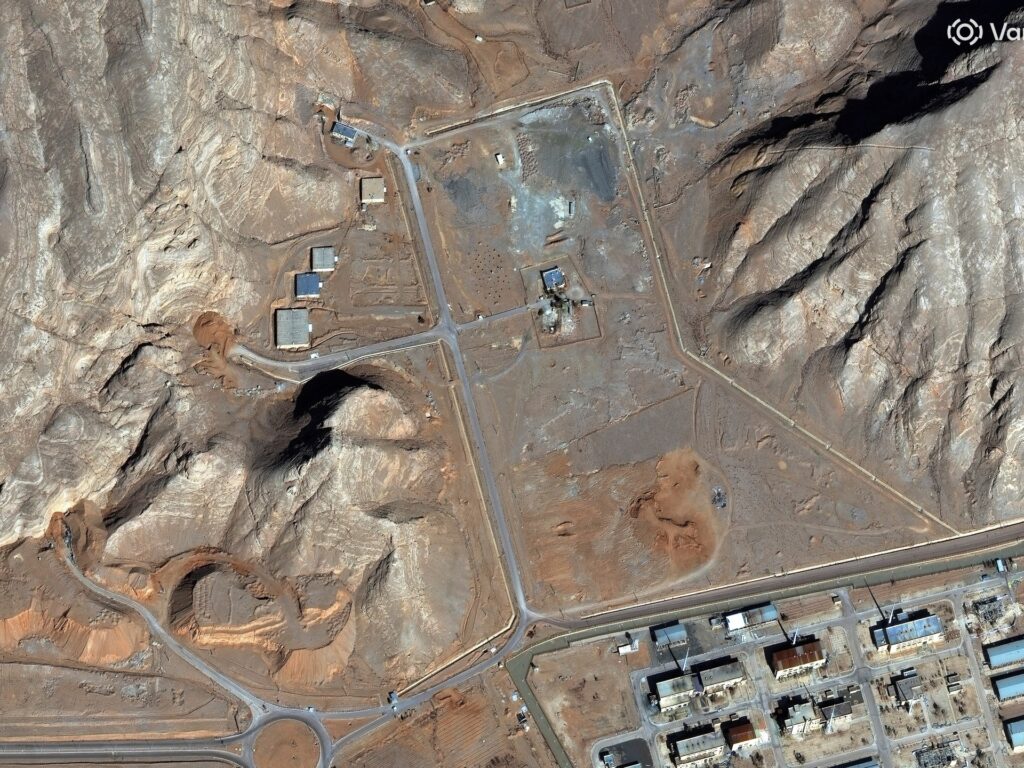
The International Atomic Energy Agency (IAEA) has issued a strong appeal to Iran to allow comprehensive inspections at its nuclear sites amid ongoing global concerns over Tehran’s nuclear activities. Central to the IAEA’s latest report is the revelation that Iran has stored the majority of its highly enriched uranium within an underground tunnel complex located at its Isfahan nuclear facility.
The Isfahan site, historically known for its nuclear infrastructure capabilities, is now under heightened scrutiny following the IAEA’s disclosure. The agency’s inspectors underscore the strategic importance of the storage location, emphasizing the challenges of monitoring highly enriched uranium assets that are secured deep underground.
This development amplifies tensions between Iran and the international community, particularly as nuclear non-proliferation efforts hinge heavily on transparency and adherence to inspection protocols. The IAEA’s current mandate includes verifying that nuclear materials in member states are used solely for peaceful purposes, with special attention to uranium enrichment levels that could indicate nuclear weapons development.
Highly enriched uranium (HEU) is a critical material because its concentration of uranium-235 isotopes can be weapons-grade, distinguishing it from low-enriched uranium used for civilian energy production. The capacity of the Isfahan facility to house and potentially expand HEU storage raises concerns about Iran’s nuclear intentions and compliance with its international commitments.
Iran, for its part, has maintained that its nuclear program is peaceful and geared towards energy generation and medical research. However, the IAEA’s call for full access to the Isfahan site signals that there may be gaps or ambiguities in Iran’s declarations that need closer examination.
International stakeholders, including major world powers and regional actors, have long urged Iran to open its nuclear sites to rigorous inspection regimes. The presence of underground storage facilities compounds the complexity and urgency of these demands by potentially limiting physical access to materials and increasing the technical challenges associated with verification.
The IAEA’s findings come at a sensitive geopolitical juncture, with diplomatic efforts to revive nuclear agreements facing obstacles. Recent dialogues hint at an impasse over inspection procedures and the extent of Iran’s cooperation with the agency.
Experts highlight that the stability of the region and global non-proliferation norms depend on transparent and verifiable oversight of nuclear materials. The IAEA’s insistence on inspecting the Isfahan facility is thus a critical step towards restoring confidence and preventing any covert weaponization.
As the situation evolves, the international community watches closely for Iran’s response to the IAEA’s demands. The inclusion of the Isfahan complex in inspection plans could mark a pivotal moment in addressing longstanding nuclear anxieties and advancing peaceful solutions.
In conclusion, the IAEA’s request underscores the imperative for Iran to facilitate unrestricted inspections and clarify the status of its uranium storage practices. The revelations about the Isfahan underground tunnels not only deepen the narrative about Iran’s nuclear capabilities but also intensify calls for transparency that are foundational to global nuclear security efforts.
The unfolding developments will likely influence ongoing diplomatic negotiations and the broader discourse on nuclear non-proliferation, making Iran’s next steps crucial for the future of international nuclear governance and regional peace.