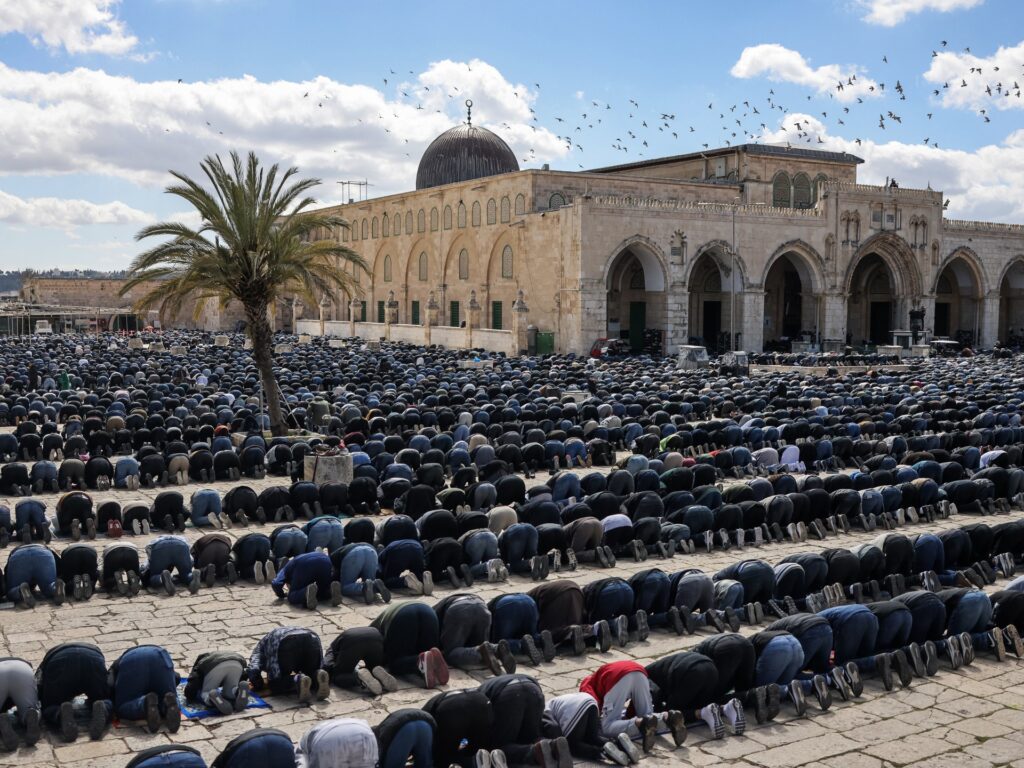
On the second Friday of Ramadan, approximately 100,000 worshippers gathered to pray at the Al-Aqsa Mosque, one of Islam’s holiest sites. This massive turnout occurred despite significant Israeli security restrictions and permit limitations imposed amid heightened tensions. Thousands of other worshippers who tried to attend were turned away, despite carrying the required permits as mandated by the Israeli authorities. Al-Aqsa Mosque, located in East Jerusalem, holds deep religious significance for Muslims worldwide, marking the site of the Prophet Muhammad’s Night Journey and a focal point for religious practice, especially during Ramadan.
The Israeli government had announced strict regulations to control access to the mosque, citing security concerns and aiming to prevent overcrowding during the holy month. These measures limited the number of permits issued to Muslim worshippers, sparking criticism and unrest among Palestinians and international observers who view the restrictions as measures that undermine religious freedoms.
Despite these limitations, tens of thousands gathered in the compound, demonstrating a strong commitment to worship at Al-Aqsa during Ramadan’s most significant days. Many came from Jerusalem and the West Bank, while others joined from neighboring regions, showcasing the mosque’s central role in Palestinian identity and religious life.
Israeli security forces were deployed in large numbers around the mosque and its surroundings, conducting checks and controlling entry points. At some locations, confrontations between worshippers and security personnel were reported, although authorities worked to maintain order and prevent major incidents.
The restrictions also led to frustration and distress among worshippers who were denied access despite possessing valid permits. Human rights groups criticized the Israeli authorities for the permit system’s lack of transparency and the resultant exclusion of many worshippers from one of the most important religious sites in Islam.
The event underscores the continuing tensions in Jerusalem surrounding access and control over sacred spaces, reflecting broader political and religious conflicts in the region. The large turnout at Al-Aqsa during Ramadan’s second Friday is viewed by many as an act of peaceful resistance and a demonstration of the significance of religious freedom.
Community leaders and religious officials called for calm and respect during the gatherings, urging worshippers to maintain peaceful conduct. They emphasized the spiritual importance of praying at Al-Aqsa during Ramadan and the need for unity among Palestinians in the face of restrictions.
International reactions included calls for respect of religious rights and an end to restrictive measures that impede access to holy sites. Muslim-majority countries and international organizations highlighted the need for dialogue and peaceful solutions to ensure free access to places of worship in Jerusalem.
As Ramadan continues, the situation remains delicate, with both worshippers and authorities navigating the challenges of religious observance amidst security concerns. The second Friday prayers at Al-Aqsa serve as a poignant reminder of the complex interplay between faith, politics, and security in Jerusalem, and the enduring resilience of worshippers determined to uphold their religious traditions despite adversity.