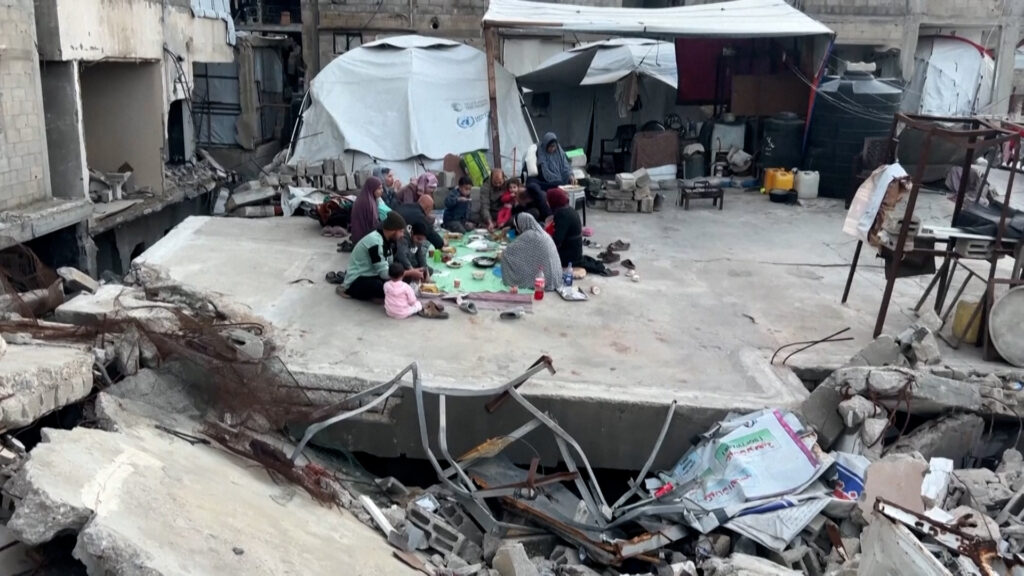
In the heart of Gaza, despite ongoing hardships, millions of Palestinians maintain their age-old traditions to celebrate Ramadan with resilience and faith. Ahmed Abu Naji is among those who embody the spirit of this holy month. Ramadan, a time of fasting, prayer, and community, holds deep significance for Palestinians, especially in Gaza, where challenges are daily realities.
For Ahmed and many others, Ramadan is not just a religious obligation but a powerful act of cultural preservation amid adversity. Gaza, often marked by economic struggles and political conflict, sees its residents uniting even more strongly during this sacred time. Families gather to break their fast, sharing simple meals yet rich in meaning.
The streets of Gaza come alive with the sound of prayers and the gentle glow of lanterns known as ‘fanous,’ symbolizing hope and light amid darkness. Children participate eagerly, learning the values of compassion, patience, and charity that Ramadan instills.
Community support flourishes, with local organizations providing food parcels and essentials to the needy, ensuring that the spirit of giving remains vibrant. Mosques become centers of solace and strength, welcoming worshippers for nightly prayers known as Taraweeh.
Despite restrictions and limited resources, Palestinians in Gaza retain their joyous spirit, exemplified by Ahmed’s dedication to preparing traditional dishes and organizing communal iftars. These acts reinforce social bonds and sustain morale, reminding all that even in hardship, faith and tradition endure.
The celebration of Ramadan in Gaza stands as a testament to the resilience of Palestinians, highlighting their unwavering commitment to cultural identity and spiritual devotion. Ahmed Abu Naji’s story shines a light on the collective will of a community determined to overcome obstacles and cherish their faith during this sacred month.