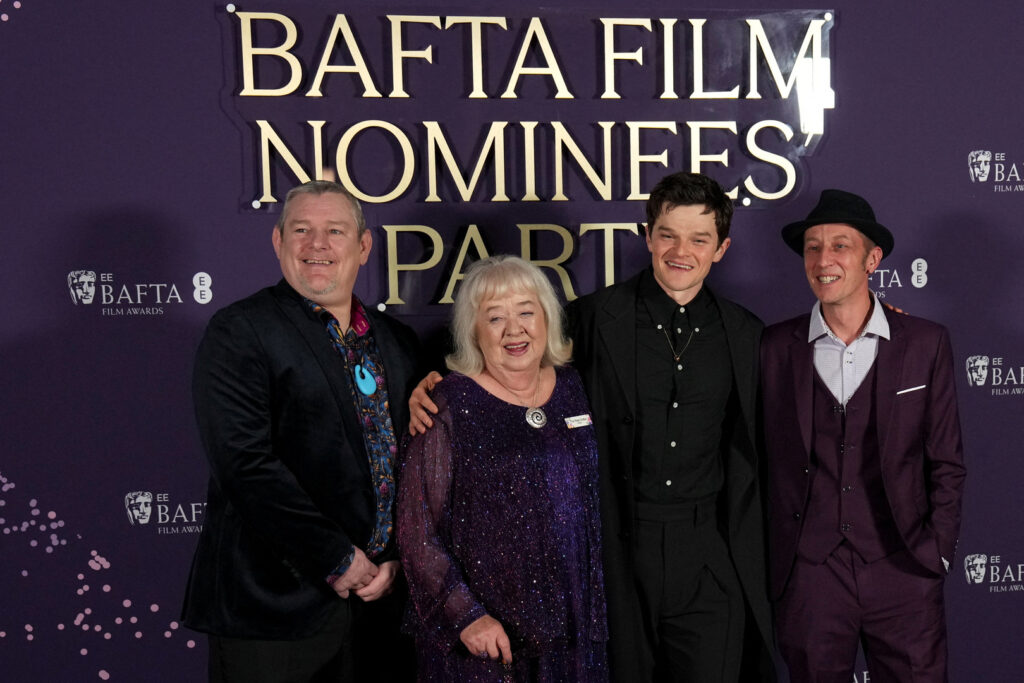
John Davidson, Dottie Achenbach and Robert Aramayo attend the BAFTA Film Awards Nominees' Party at The National Gallery, in London, Britain, February 21, 2026. REUTERS/Carlos Jasso
During the recent BAFTA Film Awards, a widely watched event broadcast by the BBC, an unexpected incident occurred involving a guest with Tourette syndrome. The individual, who campaigns for awareness about the condition, involuntarily shouted a racial slur during the ceremony. This episode highlighted the challenges faced by people with Tourette syndrome, a neurological disorder characterized by involuntary tics and vocalizations. The moment took viewers by surprise, raising discussions about the need for greater understanding and sensitivity towards individuals coping with such conditions. Tourette syndrome can cause sudden, uncontrollable movements or sounds, which may include inappropriate or offensive words, known as coprolalia, affecting a minority of those with the disorder. While the appearance of the slur was unintentional and beyond the individual’s control, some audience members and viewers expressed discomfort and confusion, showing the complexity of responding to involuntary actions in public settings. Medical experts and advocates emphasize that Tourette syndrome sufferers are not acting out of hostility or malice when such incidents occur. The BAFTA committee and the BBC issued statements explaining the context of the incident, acknowledging the inadvertent nature of the outburst and reaffirming support for those living with neurological disorders. This incident has sparked important conversations about accessibility and empathy in public events, as well as the representation of disabled individuals in media and popular culture. Campaigners call for more public education on neurological disorders to prevent misunderstandings and unfair judgments. The guest affected has a known history of advocacy for Tourette syndrome, using their platform to increase awareness and fight stigma tied to the condition. Many commentators and social media users showed support for the individual, recognizing the challenges presented by Tourette’s and urging others to be more compassionate. The episode underscores the need for event organizers to consider accommodations and preemptive measures that could assist guests with neurological disabilities, ensuring a respectful and inclusive environment for all participants. Overall, the incident has brought urgent attention to the realities of living with Tourette syndrome and the misconceptions that often surround it. It serves as a reminder that involuntary symptoms can sometimes manifest in ways that may distress others but do not reflect the character or intentions of those affected. The BAFTA ceremony proceeded with dignity and respect following the event, with organizers committed to fostering inclusivity in future gatherings. This moment marks a significant point in the public discourse on disability inclusion, emphasizing empathy and understanding in the face of neurological diversity.