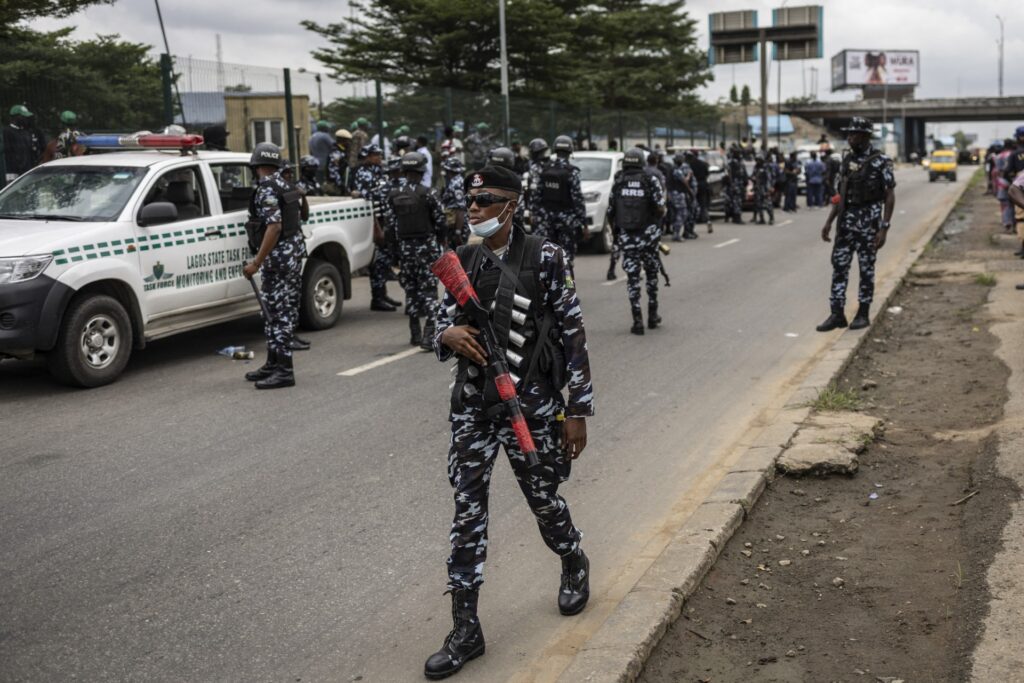
Nigerian Police officers deploy ahead of an anti government demonstration in Lagos, on October 1, 2024. (Photo by Olympia DE MAISMONT / AFP)
In a tragic and violent incident in northern Nigeria, gunmen on motorcycles launched attacks on three communities, resulting in the deaths of at least 32 people according to residents’ accounts. The armed assailants not only killed dozens but also abducted numerous individuals, plunging the region into further turmoil. Witnesses describe the attackers as motorcycle-riding gunmen who struck swiftly and with lethal force, targeting multiple villages in the area.
This alarming escalation in violence marks a significant concern for the safety and security of communities in northern Nigeria, a region that has been grappling with instability and armed conflicts for years. The affected communities are now mourning the loss of their loved ones while grappling with the trauma and repercussions of the attacks.
Authorities have yet to release an official statement with detailed information about the incident or confirm the exact number of casualties and abductees. However, local residents and eyewitnesses emphasize the profound impact of the attacks on the local populace.
The use of motorcycles in such attacks is a common modus operandi in the region, facilitating quick and mobile assaults that make it challenging for security forces to respond or track the attackers effectively. The scale and brutality of the recent attacks underscore the persistent security challenges facing northern Nigeria, including the presence of armed groups and bandits who exploit the region’s vulnerabilities.
In response to the attacks, local leaders and community members have called for enhanced security measures to protect civilians and prevent further violence. The incident also brings renewed attention to the need for coordinated efforts between government authorities, security agencies, and community stakeholders to address the root causes of violence and to restore peace and order.
Humanitarian groups and agencies are expected to increase their support for affected communities, providing necessary aid and assistance to those displaced or impacted by the violence. The international community continues to monitor the situation closely, urging all parties involved to prioritize peace and stability in the region.
This tragic event is a stark reminder of the ongoing threats faced by civilians in conflict-prone areas of northern Nigeria and highlights the urgent need for comprehensive strategies to address security, protect human lives, and foster long-term stability in the region.