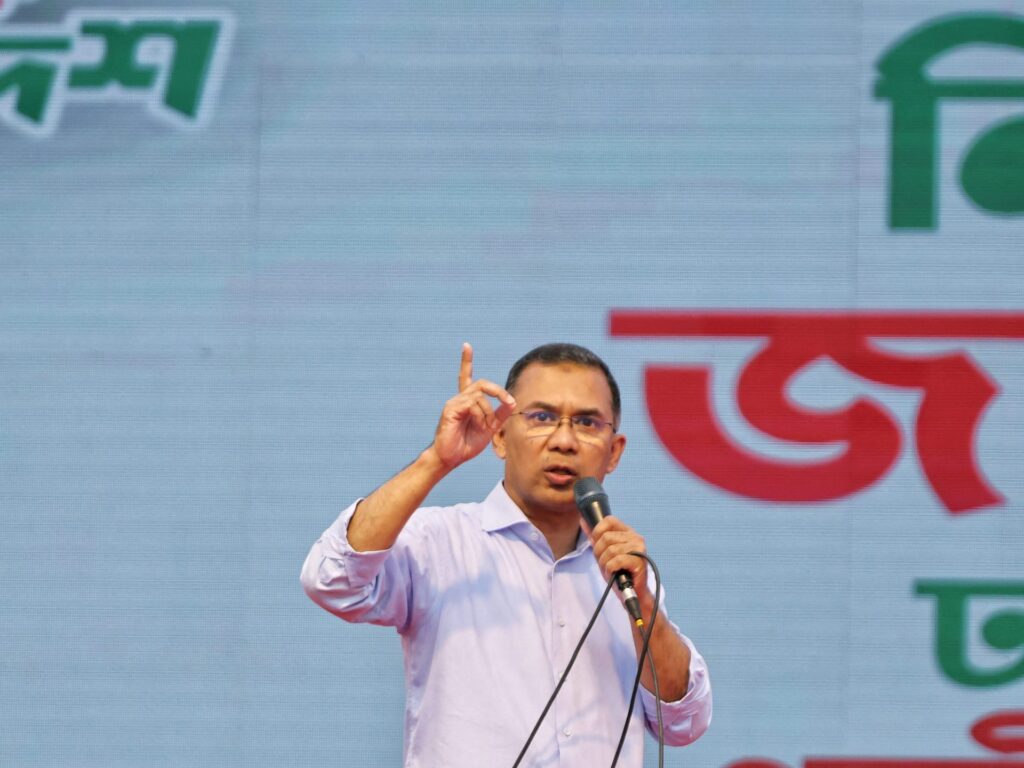
The recent landslide victory of Tarique Rahman and his Bangladesh Nationalist Party (BNP) marks a potentially transformative moment in the geopolitical landscape of Bangladesh and the wider South Asian region. After years of governance under Prime Minister Sheikh Hasina, whose administration maintained a strong pro-India stance, this electoral shift could signal a redrawing of regional alignments.
Tarique Rahman’s overwhelming win is more than just a political milestone—it may herald a significant change in Bangladesh’s foreign policy direction. Under Hasina, Bangladesh’s close ties with India shaped much of its external relations, fostering cooperation in areas such as trade, water sharing, and security. However, Hasina’s policies sometimes sparked domestic criticism, particularly regarding perceived compromises on sovereignty and national interests.
The BNP’s victory raises questions about the future trajectory of these relationships. Historically, the BNP has positioned itself as a party advocating for a more balanced foreign policy, seeking to diversify Bangladesh’s international partnerships. This approach could lead to a recalibration of ties not only with India but also with other key regional players such as China and Myanmar.
Regional analysts suggest that a BNP-led government might pursue a more assertive stance on issues critical to Bangladesh’s national interests, including border disputes and water resource management. It may also aim to reduce perceived overdependence on India, thereby altering the strategic calculus in South Asia.
Moreover, Tarique Rahman’s leadership could influence Bangladesh’s role in regional forums like the South Asian Association for Regional Cooperation (SAARC) and the Bay of Bengal Initiative for Multi-Sectoral Technical and Economic Cooperation (BIMSTEC), promoting a more multifaceted regional engagement.
However, this transition will not be without challenges. The BNP will need to carefully navigate the complexities of regional diplomacy, balancing domestic expectations with international realities. The shift may also provoke responses from neighboring countries, potentially leading to adjustments in regional cooperation frameworks.
Domestically, the change reflects public sentiment desiring a departure from the status quo and a reevaluation of Bangladesh’s geopolitical positioning. It underscores a broader trend in South Asian politics where national sovereignty and strategic autonomy are increasingly prioritized amidst global and regional power shifts.
In conclusion, BNP’s landslide victory under Tarique Rahman indeed has the potential to open a new geopolitical chapter for Bangladesh. This change might reshape South Asia’s diplomatic landscape, affecting not only bilateral relations but also the broader regional order. Observers worldwide will keenly watch how Bangladesh navigates this pivotal moment in its political and strategic evolution.