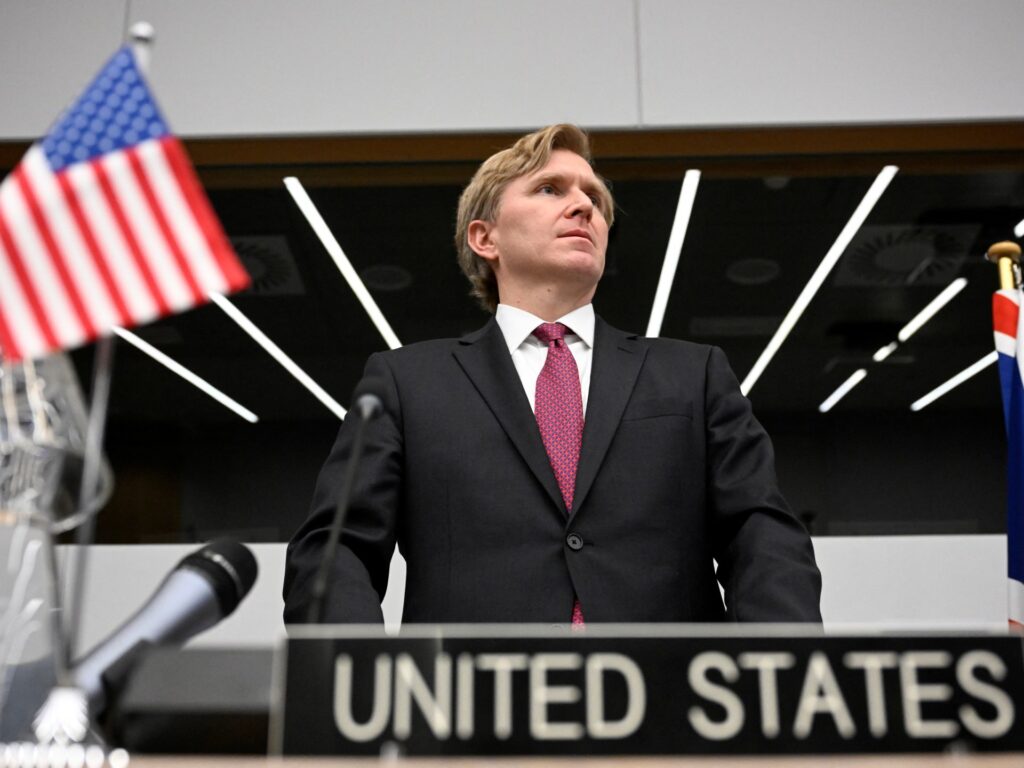
The United States has called on Europe to assume a more prominent role in the defense leadership of the North Atlantic Treaty Organization (NATO). Elbridge Colby, the Pentagon’s policy chief, expressed concerns that the existing NATO strategy is “no longer fit for purpose,” highlighting the need for a strategic overhaul to address emerging global threats effectively.
In recent statements, Colby emphasized that while the US remains committed to NATO’s collective defense, the current burden-sharing and defense posture within the alliance require significant recalibration. He urged European allies to enhance their defense capabilities, investment, and operational leadership to better contribute to the alliance’s security objectives.
The call for Europe to step up comes amid evolving geopolitical challenges, including the resurgence of strategic competitors and new forms of conflict that demand agile and coordinated responses. NATO, established in the aftermath of World War II to deter Soviet aggression, has seen its strategic environment shift dramatically, prompting debates on how to modernize and adapt the alliance.
Colby’s remarks reflect broader US concerns about the sustainability and effectiveness of NATO in the face of increased defense spending pressures and complex international dynamics. He pointed out that Europe’s heavy reliance on US military power needs to be balanced with greater European ownership and responsibility.
European nations have varied defense budgets and military capabilities, contributing to challenges in achieving a unified and robust NATO stance. The US perspective, as articulated by Colby, advocates for a more decentralized leadership model where European countries take the initiative in regional security matters.
This approach also aligns with recent efforts to strengthen European defense frameworks, such as the European Union’s Permanent Structured Cooperation (PESCO) and the European Defence Fund, aimed at fostering collaboration and capability development among member states.
NATO Secretary-General and European leaders have acknowledged the call for increased burden-sharing and have embarked on initiatives to boost defense spending and interoperability. However, transforming NATO’s defense posture will require sustained political will, funding, and coordination across member states.
The US remains committed to NATO’s core principle of collective defense as enshrined in Article 5 of the NATO treaty, but recognizes that evolving threats demand a more agile and balanced alliance. As the geopolitical landscape continues to shift, NATO’s effectiveness will hinge on Europe’s capacity to take a leadership role alongside the US.
In summary, the Pentagon’s appeal for Europe to lead NATO defense reform signals a pivotal moment in transatlantic relations, urging strategic adaptation to meet 21st-century security challenges. This call may drive increased European defense integration and reshape the future of NATO’s collective defense framework.