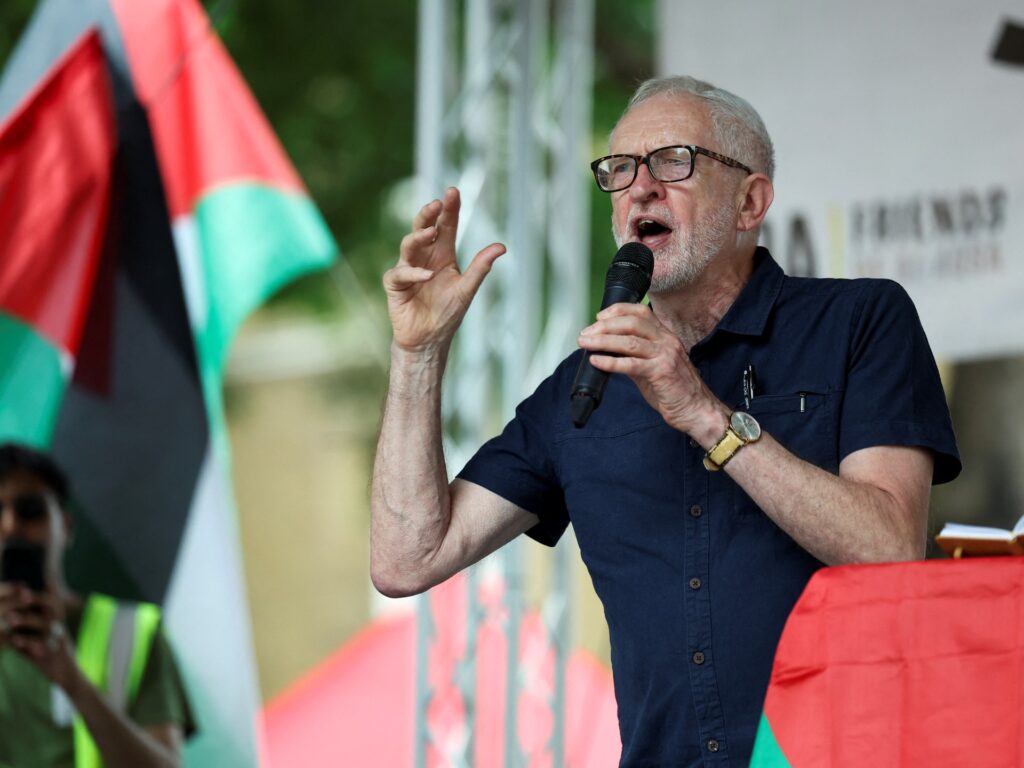
In a heated political exchange, former Labour leader Jeremy Corbyn has accused the UK government of “complicity” following statements made by government minister Wes Streeting. Streeting recently admitted to the occurrence of war crimes by Israeli forces in Gaza, sparking a wave of criticism and demands for accountability.
During a parliamentary session, Corbyn confronted Streeting, questioning why he has not resigned from his ministerial position despite acknowledging these serious violations. Corbyn argued that acknowledging the gravity of these actions but maintaining a government role signals tacit acceptance and a failure to hold Israel accountable for its conduct in the conflict.
Streeting, in his admission, recognized that Israeli military operations in Gaza have involved actions that constitute war crimes, highlighting the complex and deeply troubling nature of the ongoing conflict in the region. However, he defended the UK government’s position, emphasizing the importance of diplomatic efforts and the balance of maintaining strategic alliances.
The former Labour leader’s remarks reflect a broader criticism of UK foreign policy concerning the Israel-Palestine conflict. Corbyn has long been an outspoken critic of Israeli government actions and has urged the UK to take a firmer stance in condemning human rights abuses and supporting international investigations.
The controversy erupted after a public acknowledgment by Wes Streeting, who, amidst mounting evidence and humanitarian concerns, chose to openly recognize alleged war crimes linked to Israeli military operations in Gaza. This admission has led to heightened calls within the political arena for accountability and a reassessment of the UK’s ethical responsibilities in international conflicts.
Corbyn’s direct challenge to Streeting underscores a growing frustration among certain UK political factions and human rights advocates who believe that current government policies do not adequately address or condemn infringements against civilians and legal norms in conflict zones.
The issue also concerns the wider international community’s response to the Gaza situation, where civilian casualties and infrastructural destruction have prompted global outcry. The UK’s position as a key player in international diplomacy has been put under scrutiny, with critics urging a more principled and transparent approach.
Streeting’s refusal to step down despite his explicit admission has been interpreted by Corbyn and others as a sign of the government’s reluctance to fully confront or take responsibility for its foreign policy decisions and their implications.
This political clash highlights the tension between public accountability and governmental diplomacy, especially when dealing with allies accused of human rights violations. It further ignites the debate on ethical governance and the role of ministers in responding to international law breaches.
As the situation in Gaza remains volatile, the calls for clearer UK government policies and stronger responses to alleged war crimes continue to grow louder. Jeremy Corbyn’s accusations against the government mark a significant moment in the ongoing discourse around the UK’s responsibility in international human rights advocacy and its diplomatic stance on Israel-Palestine relations.
The parliamentary confrontation has ignited discussions among constituents, political analysts, and human rights organizations, urging for a reevaluation of the UK’s foreign policy priorities. Many voices have rallied behind the notion that recognizing war crimes should entail tangible political consequences for those in power.
In summary, Jeremy Corbyn’s allegations of UK complicity following Wes Streeting’s admission have brought to the forefront critical questions about political accountability, ethical leadership, and the UK’s role in addressing or perpetuating international conflict and alleged war crimes. The ongoing political debate emphasizes the need for transparency and justice in global affairs.