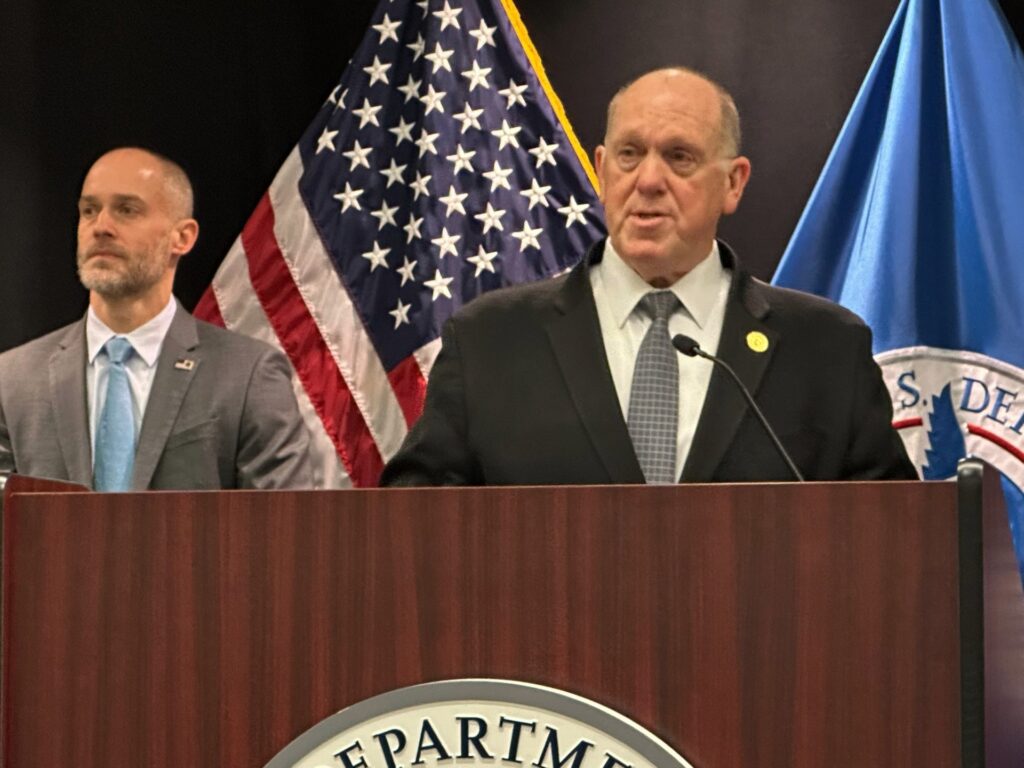
Tom Homan, the US border chief, recently announced the conclusion of “Operation Metro Surge,” a federal immigration enforcement operation in Minnesota. The operation involved the deployment of 700 immigration agents aimed at addressing immigration-related issues in the region. With the operation now ending, these agents are set to leave Minnesota and return to their usual duties elsewhere.
“Operation Metro Surge” was launched as part of a broader strategy to support local law enforcement and enhance border security efforts within interior regions of the United States, focusing on areas with significant immigration challenges. By temporarily positioning a large number of federal agents in Minnesota, the federal government sought to more effectively apprehend and process individuals violating immigration laws.
Tom Homan expressed gratitude to the local law enforcement agencies for their cooperation during the operation and highlighted that the surge helped disrupt criminal activities linked to illegal immigration. He emphasized that the conclusion of the operation did not signify a decrease in the federal government’s commitment to immigration enforcement but marked a shift back to standard operational tempo and resource allocation.
The presence of 700 federal immigration agents for months in Minnesota helped target human smuggling networks and illegal employment practices, which had been persistent concerns for the state. By conducting numerous investigations and enforcement actions, the operation contributed to enhancing public safety and border integrity.
Though the agents will be withdrawn from Minnesota, federal officials assured that the work to uphold immigration laws would continue unabated across the country. Future deployments may be driven by evolving immigration patterns and needs identified through ongoing assessments by the Department of Homeland Security and Immigration and Customs Enforcement (ICE).
Local officials and communities responded to the conclusion of “Operation Metro Surge” with mixed reactions. Some appreciated the crackdown on illegal immigration and criminal enterprises, while others voiced concerns about civil rights and the impact on immigrant communities.
Moving forward, federal authorities plan to maintain partnerships with state and local law enforcement agencies to collaboratively address immigration-related challenges. Tom Homan reiterated that protecting the nation’s borders and interior security remains a top priority for the government.
In summary, the end of “Operation Metro Surge” signifies a rebalancing of federal immigration enforcement activities in Minnesota, closing a chapter of intense operations while reaffirming ongoing national efforts to manage immigration effectively and lawfully.