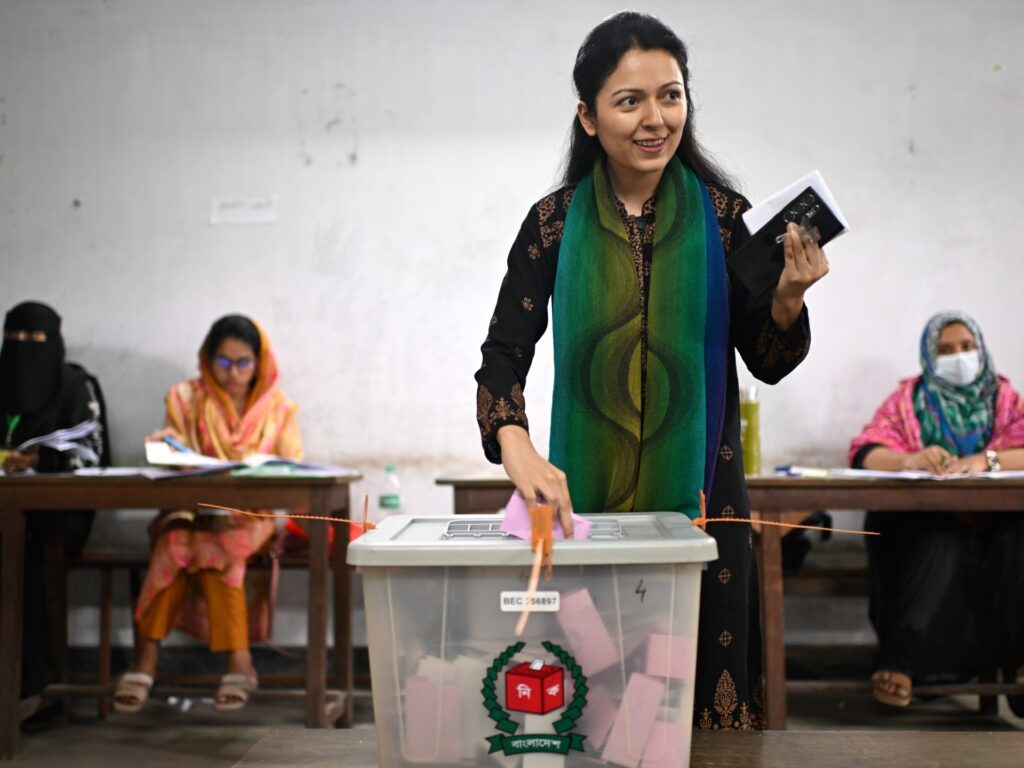
Bangladesh witnessed a significant democratic milestone as millions of its citizens turned out in record numbers to participate in parliamentary elections and a referendum on constitutional reforms. The atmosphere throughout the country was described by many as joyous and celebratory, with voters likening the day to the festive spirit of Eid, one of the most important religious celebrations in the country.
For many Bangladeshi citizens, this election was historic, marking the first time in 17 years that such a nationwide electoral exercise has taken place with this level of public engagement. The prolonged interval had created a palpable sense of anticipation and enthusiasm among the electorate.
Polling stations across Bangladesh saw long lines of voters from the early hours, with families and communities gathering collectively to cast their votes. The enthusiasm was not limited to a particular region or demographic; it was a nationwide phenomenon, reflecting a renewed civic spirit and interest in the political process.
Observers and political analysts remarked on the peaceful nature of the voting day, which contrasted with past elections occasionally marred by unrest and protests. Security forces maintained a strong presence but emphasized a commitment to facilitating a safe and orderly process for all citizens.
This election was especially pivotal because it featured not only the selection of members of parliament but also a referendum on constitutional changes. The proposed reforms aim to address longstanding issues concerning governance and political transparency in Bangladesh.
The government described the election day as a “celebration of democracy,” encouraging voters to exercise their rights freely and responsibly. Social media platforms were awash with images and messages of voters proudly showing their inked fingers, a symbol of having cast their ballots.
Political parties campaigned vigorously leading up to the election, with many stressing the importance of democratic participation for national development. The turnout numbers, which are significantly higher than in past years, were seen as a positive indicator of public trust and engagement.
Many citizens expressed hope that this election would usher in a new era of stability and progress in Bangladesh. The international community also praised the country for successfully conducting a large-scale election under challenging circumstances.
As the polls closed, attention turned to the counting process and the announcement of results, which are expected to shape Bangladesh’s political landscape for years to come. Election officials assured the public that the process would be transparent and thorough.
The collective mood across the nation was one of pride and optimism, with many describing their experience of voting after nearly two decades as a deeply meaningful act of citizenship. As one voter stated, “Today feels like Eid because it is a day of hope and new beginnings for Bangladesh.”