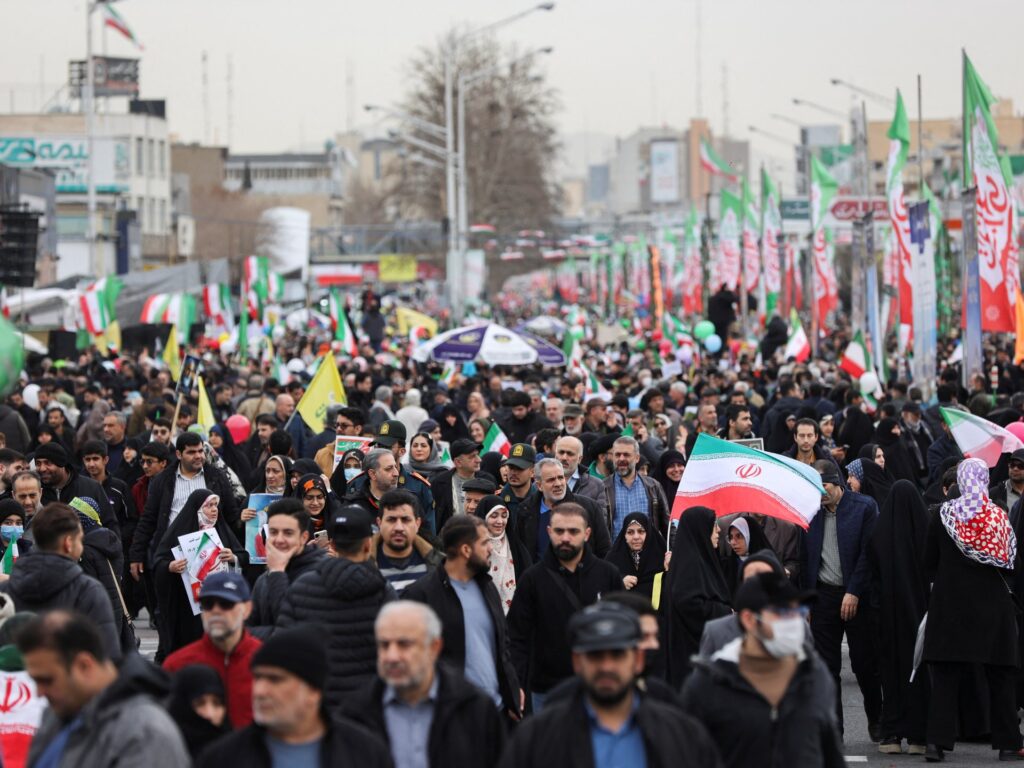
During the annual celebrations marking the 1979 Islamic Revolution, Iran’s leaders vehemently condemned the United States, accusing it of inciting ‘sedition’ in the country. These statements come at a time when a significant portion of Iranian society is deeply anguished and outraged over the deaths of thousands of protesters in recent demonstrations.
The 1979 Islamic Revolution is a cornerstone event in Iran’s modern history, marking the overthrow of the Shah’s regime and the establishment of the Islamic Republic. Every year, the anniversary is commemorated with grand rallies and speeches that reaffirm the government’s narrative and ideology.
This year, the celebrations took on added intensity as leaders sought to bolster national unity in the face of unrest. The government blamed foreign adversaries, particularly the United States, accusing them of fomenting chaos and attempting to undermine Iran’s sovereignty through support of internal dissent.
However, the public mood contrasts starkly with the government rhetoric. Over recent months, mass protests have erupted across Iran in response to economic hardships, political repression, and demands for greater freedoms. The state’s harsh crackdown has resulted in thousands of casualties, sparking grief and anger among many Iranians.
Silence from official channels regarding these deaths has fueled widespread frustration. Social media and underground networks have become vital platforms for citizens to share their stories and express dissent.
Human rights organizations have condemned the violent suppression of protests, calling for accountability and respect for basic liberties. Despite this international criticism, Iran’s leadership remains defiant, emphasizing resistance against what it terms Western interference.
Analysts suggest that the leaders’ strong rhetoric during the revolution anniversary reflects a strategy to rally their supporters and delegitimize opposition voices. By framing the unrest as a foreign plot, the government aims to justify continued repression and divert attention from the underlying causes of discontent.
Meanwhile, ordinary Iranians continue to grapple with the consequences of recent events. Families mourn lost loved ones, and the societal fabric is strained by ongoing tensions between government authority and public demands.
The situation remains fluid, with the potential for further unrest if dialogue and reforms do not address the grievances of the populace. As Iran marks the milestones of its revolution, the nation faces a critical juncture where the aspirations for justice and peace confront entrenched political realities.