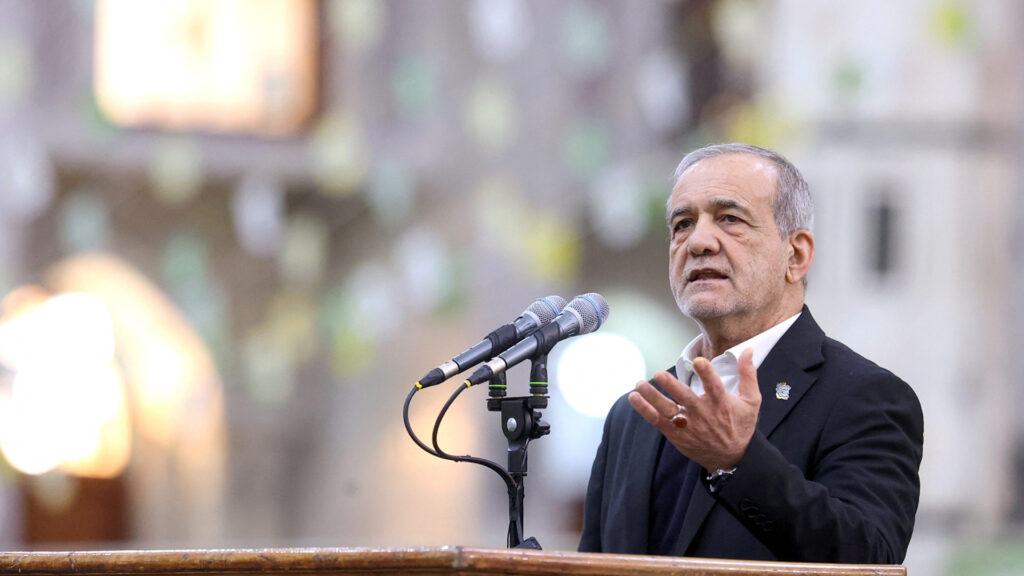
In a significant public address during a rally, Iran’s President Masoud Pezeshkian openly condemned what he described as a “conspiracy from imperial powers.” He specifically criticized intervention by “alien Westerners,” highlighting ongoing tensions between Iran and Western countries. Pezeshkian’s remarks reflect long-standing grievances held by Iran regarding foreign interference in its internal affairs, a theme frequently echoed by Iranian leadership. During the rally, he emphasized the need for national unity and resilience against external pressures, suggesting that foreign influence attempts are strategies to destabilize the country. This statement may escalate diplomatic strains at a time when Iran remains under scrutiny for its regional policies and nuclear ambitions. The president’s rhetoric aligns with Iran’s broader narrative of resistance to Western domination, framing external parties as hostile forces undermining sovereign governance. Analysts note that such condemnations often serve dual purposes: rallying domestic support while sending a stern message to international actors. As Iran continues to navigate complex geopolitical dynamics, the leadership’s stance underscores a focus on self-reliance and resistance to perceived imperialism. This declaration adds to a series of similar condemnations, reinforcing the narrative of an ongoing struggle against interference by Western powers, which Iran views as infringing upon its sovereignty and national dignity. The rally, marked by fervent speeches and patriotic displays, reiterated calls for vigilance against external manipulation and affirmed the leadership’s commitment to safeguarding the nation’s independence. The president’s words resonated strongly with the domestic audience, reflecting widespread sentiments of mistrust toward Western intentions. Observers suggest that this rhetoric may be intended to strengthen Iran’s negotiating position internationally, signaling a posture of defiance as discussions around nuclear and regional issues continue. The condemnation also comes in the backdrop of economic sanctions and diplomatic challenges faced by Iran, which Tehran attributes partly to Western actions. Pezeshkian’s comments reinforce the idea that Iran perceives itself as a target of persistent Western interference aimed at curbing its influence and progress. The rally showcased the administration’s resolve to confront external threats and maintain sovereignty despite pressures. In conclusion, the president’s condemnation of Western intervention during the rally highlights a continued narrative in Iran’s political discourse that underscores resistance to foreign domination and the quest for national integrity amidst persistent external challenges.