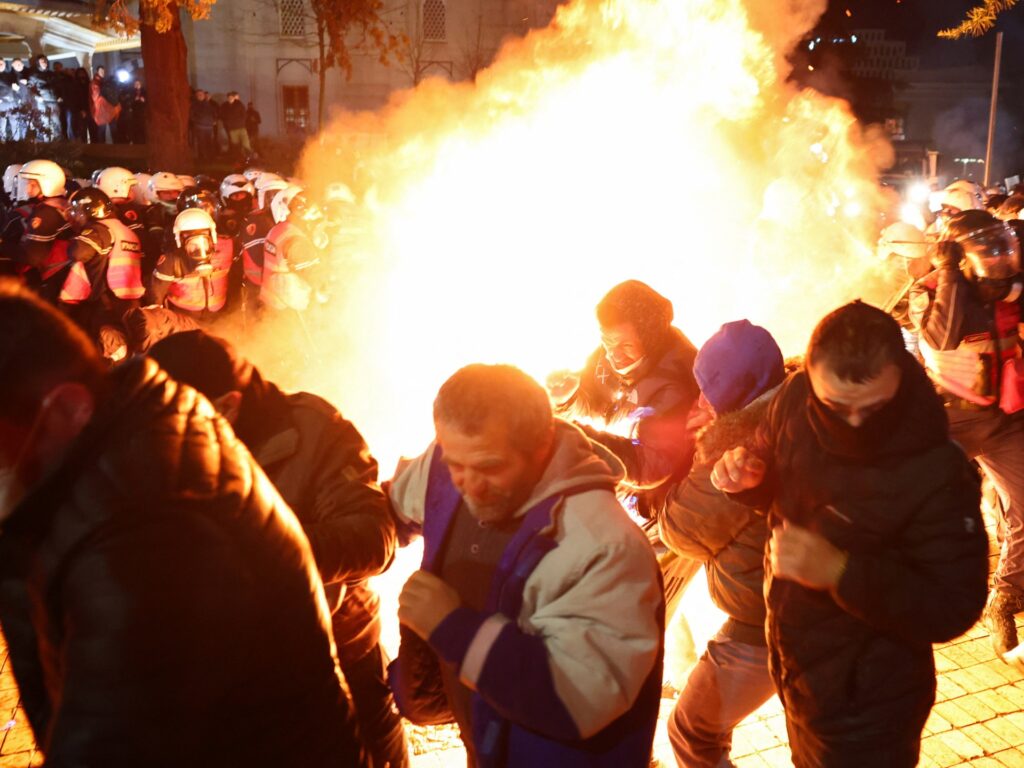
Antigovernment protests in Albania have turned violent, with police using force against demonstrators in the capital city, Tirana. The protests reflect growing unrest among the population, who are demanding the resignation of Prime Minister Edi Rama. Over the course of the demonstrations, at least 13 protesters have been arrested as tensions escalated between security forces and the crowd.
The unrest marks a significant moment of political instability for Albania, as citizens express deep dissatisfaction with the government’s policies and leadership. The demonstrators have voiced concerns over corruption, economic challenges, and lack of transparency within the administration.
The clashes began as peaceful protests but soon escalated when some participants engaged in confrontations with police. Security forces responded with measures intended to disperse the crowds, including the use of force, contributing to the increasing number of arrests.
The Albanian government has condemned the violence but also urged calm and dialogue between the opposing sides. Prime Minister Edi Rama, whose leadership is at the center of the protests, has not yet indicated any plans to resign, standing firm despite the pressure.
International observers have expressed concern over the situation, emphasizing the need for peaceful resolution and respect for citizens’ rights to protest. The Albanian political landscape remains tense as the nation looks for ways to address the demands of its people while maintaining order and stability.
Protests in Albania have been a recurring phenomenon in recent years, often sparked by various socio-political issues. However, the latest wave is notable for its intensity and the direct calls for the prime minister’s resignation.
The government faces mounting challenges as it tries to navigate through a period of political turmoil. How the situation develops in the coming days will be crucial for Albania’s future political climate and governance.
Meanwhile, the international community watches closely, hoping for a peaceful and constructive outcome that can restore confidence in Albania’s democratic processes and institutions.
As the situation evolves, citizens remain engaged, signaling their continued demand for accountable leadership and meaningful reforms. The events in Tirana serve as a reminder of the powerful dynamic between government and people, especially in times of political uncertainty.